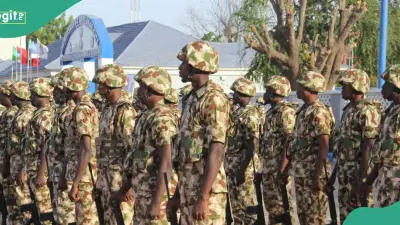
In a decisive move to bolster Nigeria's domestic security framework, President Bola Ahmed Tinubu has appointed Major General Adeyinka A. Famadewa (Retd) as the inaugural Special Adviser on Homeland Security. This new federal office reflects a pragmatic and forward-looking response to the country's evolving security threats.
Understanding Homeland Security
Homeland security involves a coordinated network of domestic agencies collaborating with international partners to share intelligence, harmonize responses, secure borders, protect trade routes, and defend cyberspace. For instance, the U.S. Department of Homeland Security operates a vast global network across over 75 countries. Similarly, the Schengen Information System links law enforcement within the European Union, while NATO's Civil Emergency Planning Directorate coordinates responses to disasters and CBRN threats among member states.
These frameworks have achieved notable successes through synergy and proactive measures. The U.S. Container Security Initiative prescreens high-risk containers at over 50 overseas ports before they reach American shores, significantly reducing the risk of weapons entering supply chains. The C-TPAT program has certified over 10,200 partners worldwide, enforcing stringent security standards through more than 19,300 on-site evaluations, bolstering international trade security without hindering legitimate commerce.
Beyond cargo protection, the U.S. Secret Service operates cyber units with over 20 attaché offices in more than 18 countries. In 2021, collaboration between Dutch police and Europol dismantled major ransomware gangs that had attacked 1,800 victims across 71 countries, preventing over $2 billion in potential annual cyber losses. These agencies have also advanced aviation security, resolved missing persons cases, tracked fugitives, and developed interoperable CBRN action plans across NATO's 46 member and partner countries, with real-time monitoring via the NATO Situation Centre.
Nigeria's New Direction
President Tinubu's creation of the Office of the Special Adviser on Homeland Security and the appointment of Major General Famadewa signal a clear departure from outdated 20th-century command-and-control structures. Threats like banditry, terrorism, kidnapping, cyber-attacks, and organized crime demand integrated, intelligence-driven solutions rather than fragmented efforts by siloed agencies. General Famadewa is exceptionally qualified for this historic role, with over 30 years of distinguished service in the military and intelligence community.
Between 2015 and 2021, as Principal General Staff Officer to the National Security Adviser, he played a pivotal role in establishing the Intelligence Fusion Centre at the Office of the National Security Adviser. This centre integrated the Defence Intelligence Agency, National Intelligence Agency, Department of State Services, Nigeria Police Force, and Armed Forces into a unified platform for joint threat assessment and coordinated response. He also authored the influential monograph Policing and National Security in Nigeria, providing practical frameworks for civil-security collaboration.
As a Senior Research Fellow at the Nigerian Army Resource Centre, General Famadewa has engaged in high-level discussions on policing reforms, civil-military cooperation, and security sector transformation. His work diagnoses critical breakdowns in Nigeria's intelligence cycle and proposes actionable remedies. His strategic approach rests on a tripod of principles: intelligence fusion, inter-agency coordination, and inclusive civil-security partnerships. He advocates moving beyond fragmentation toward a unified 'one threat picture, one response plan' model that bridges gaps between the Army, Police, DSS, NIA, and other stakeholders.
This vision champions a shift from reactive, brute-force deployments to proactive, intelligence-led operations, emphasizing civil-security cooperation, police reform, community policing, and trust-building initiatives that engage citizens as active security participants. These ideas align with post-9/11 homeland security doctrines adopted by the United States and the United Kingdom, which successfully integrated civilian and military agencies for holistic threat management.
At a time when insecurity challenges various regions and public demand for better coordination grows amid rising misinformation and daily incidents, this dedicated office within the Presidency elevates homeland security to a cabinet-level priority. Importantly, it complements rather than duplicates the National Security Adviser's mandate on external threats. General Famadewa's intimate knowledge of Nigeria's security architecture positions him to scale successful coordination mechanisms nationally. His appointment reflects President Tinubu's Renewed Hope Agenda and a genuine commitment to restoring public confidence in the government's capacity to safeguard lives and property.
By moving Nigeria from ad-hoc crisis responses to an institutionalized, proactive risk management system, President Tinubu has demonstrated pragmatic and transformational leadership. The appointment of Major General Famadewa as Special Adviser on Homeland Security lays a bold foundation for a more integrated, resilient, and effective security architecture capable of addressing contemporary realities. The journey ahead requires sustained implementation, resources, and political will, but this decisive step provides a strong starting point.