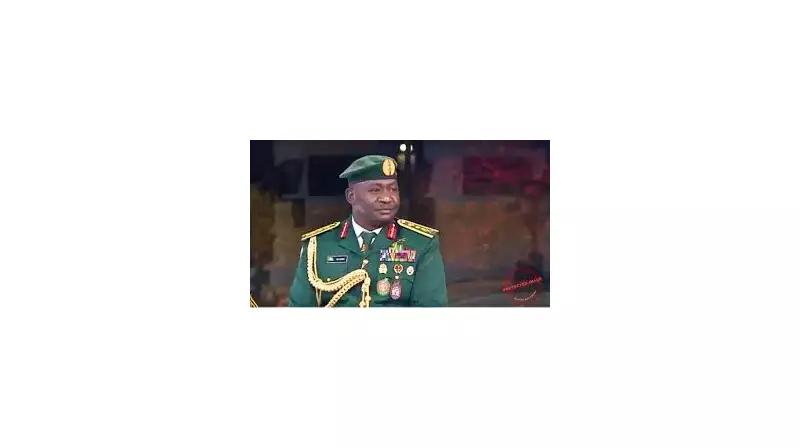
President Bola Ahmed Tinubu has made a significant and strategic appointment, nominating the recently retired Chief of Defence Staff, General Christopher Gwabin Musa, as the new Minister of Defence. This move, announced on December 2, 2025, has ignited widespread celebration across Nigeria's Middle Belt region and is being analyzed as both a political masterstroke and a crucial step in tackling the nation's security challenges.
A Welcome Return and a Regional Healing
The announcement, made by presidential aide Bayo Onanuga, comes barely a month after General Musa's retirement from active military service on October 24, 2025. His initial retirement had sparked disappointment and debate, particularly among his kinsmen in Southern Kaduna and the wider Middle Belt. The community had even postponed a grand reception planned for November 29, an event that is now set to become a dual celebration honouring his military career and his dramatic political return.
President Tinubu, in a letter to Senate President Godswill Akpabio, requested the legislative confirmation of General Musa to succeed Alhaji Badaru Abubakar, who resigned on Monday. This appointment is widely perceived as a powerful gesture of inclusion, signalling to the Middle Belt states—including Kaduna, Plateau, Benue, Nasarawa, Taraba, Niger, Kogi, Adamawa, and Kwara—that they remain integral to Nigeria's political and security architecture.
Musa's Profile and Tinubu's Confidence
General Christopher Musa, who was born in Sokoto in 1967 and will turn 58 on December 25, 2025, brings a formidable record to the role. A recipient of the prestigious 2012 Colin Powell Award for Soldiering, his career includes several key positions:
- Deputy Chief of Staff (Training and Operations)
- Commander, Sector 3 Operation Lafiya Dole
- Theatre Commander, Operation Hadin Kai
- Commander, Nigerian Army Infantry Corps
His two-year tenure as the 18th Chief of Defence Staff, which began on August 26, 2023, was noted for humility, bridge-building, and inclusive leadership that transcended ethnic and religious lines. President Tinubu has expressed strong confidence in Musa's capacity to strengthen Nigeria's defence structure and lead the ongoing reforms in national security management.
Strategic Implications for Security and Politics
Analysts view this appointment as a multi-faceted strategy. Firstly, it is seen as a direct effort to reinvigorate Nigeria's fight against persistent threats like terrorism, kidnapping, and rural banditry. These crimes have seen a recent surge in states such as Kebbi, Niger, Kwara, and Kogi, and Musa's experience in theatre commands is expected to be crucial.
Secondly, the move provides a significant political boost to the ruling All Progressives Congress (APC). By bringing a respected figure from the Middle Belt into a core security position, the administration consolidates support and acknowledges the region's vital role in the nation's history and future.
The return of General Musa to the government's highest security echelon is more than a cabinet reshuffle; it is a statement. It underscores an attempt to heal regional perceptions while deploying proven tactical expertise against the nation's most pressing security emergencies. The Senate's confirmation will be the next step in watching this strategic defence plan unfold.