The era of strict non-alignment is fading as wars, rivalries, and shifting power balances push nations to seek firmer military partnerships. The 2026 US-Israel war with Iran exposed a harsh truth: diplomatic ties alone do not guarantee military support. Iran’s relations with China and Russia lack NATO-style obligations, underscoring the growing importance of formal defense treaties.
NATO: The Undisputed Leader
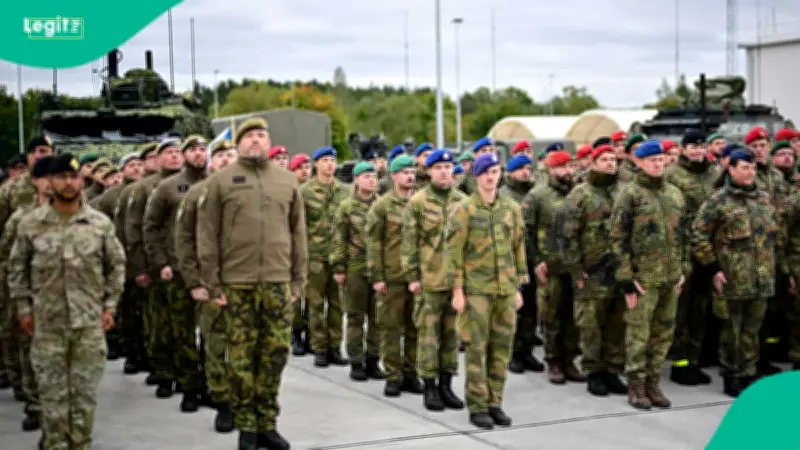
NATO remains the largest collective-defense alliance, with Article 5 treating an attack on one member as an attack on all. In 2025, NATO members spent $1.581 trillion, accounting for 55% of global military expenditure. The alliance’s only Article 5 invocation came after the September 11, 2001 attacks.
According to official NATO reports, the alliance has expanded its eastern flank in response to Russian aggression, with new permanent deployments in Poland and the Baltic states. This has further solidified its position as the world's most powerful military bloc.
Russia–North Korea Alliance
Formalized in 2024, this treaty commits both nations to mutual defense. Russia’s $149 billion defense budget combines with North Korea’s nuclear and missile capabilities. North Korea has already sent troops and supplied missiles to Russia during the Ukraine war, according to intelligence reports.
This partnership has raised concerns among Western analysts, as it marks a significant shift in the global balance of power, bringing together two of the most heavily sanctioned nations.
China–North Korea Alliance
Rooted in the Korean War, the 1961 treaty binds both nations to assist each other if attacked. China contributes nuclear weapons, advanced aircraft, and submarines, while North Korea adds its nuclear arsenal and heavily militarized forces.
This alliance remains a cornerstone of Asian security dynamics, with China repeatedly reaffirming its commitment to North Korea's defense in the face of UN sanctions.
Saudi Arabia–Pakistan–Türkiye Pact
According to Business Insider, signed on August 7, 2026, the Mecca Joint Defense Agreement treats an attack on one as an attack on all three. Saudi Arabia is a top military spender, Pakistan is nuclear-armed, and Türkiye has one of NATO’s largest militaries.
The pact was signed in Mecca amid escalating tensions with Iran, signaling a new axis of power in the Middle East. It includes provisions for joint military exercises and intelligence sharing.
Collective Security Treaty Organisation (CSTO)
Russia leads this Eurasian bloc, which includes Belarus, Kazakhstan, Kyrgyzstan, Tajikistan, and Armenia. It deployed 2,000 personnel to Kazakhstan in January 2022, but Armenia has since distanced itself, weakening cohesion.
The CSTO has struggled to project power beyond its immediate sphere, with member states increasingly wary of Russian dominance. Analysts suggest that the organization's future is uncertain as some members seek closer ties with the West.
US–Japan Alliance
A cornerstone of Indo-Pacific security, combining American nuclear deterrence with Japan’s advanced maritime and missile-defense capabilities. The alliance is repeatedly tested over the disputed Senkaku Islands.
In 2026, the two nations announced a new framework for defense cooperation, including joint patrols and the deployment of US forces to new bases in Okinawa. This has strengthened their position against Chinese assertiveness in the region.
US–South Korea Alliance
Forged during the Korean War and formalized in 1953, this alliance remains central to deterring North Korea. More than 28,000 US troops are stationed in South Korea, with extensive defense coordination and arms transfers.
The alliance has evolved to include trilateral exercises with Japan, reflecting a broader regional security strategy. South Korea has also increased its defense spending to 2.8% of GDP, according to the Pentagon.
US–Philippines Alliance
Established in 1951, this alliance has regained importance amid South China Sea tensions. In 2026, Washington reaffirmed its “ironclad” commitment and allocated $144 million for defense sites.
The Philippines has granted the US access to additional military bases, including a site near the disputed Spratly Islands. This has drawn criticism from China but has been welcomed by regional allies.
Alliance of Sahel States
Burkina Faso, Mali, and Niger formed this bloc after breaking with ECOWAS. They rely heavily on Russia for military support, with a joint force of 5,000 personnel battling insurgencies across the Sahel.
The alliance has been effective in coordinating counter-terrorism operations, but its dependence on Russian mercenaries has raised human rights concerns. Despite this, the bloc remains a key player in the region's security landscape.
ECOWAS Security Framework
Despite losing three members, ECOWAS continues to strengthen its Standby Force. After Niger’s July 2023 coup, it threatened intervention but stopped short of deployment.
ECOWAS is now focusing on economic integration and political stability, with plans to revive its standby force by 2027. The organization has also engaged in dialogue with the breakaway states, aiming for a peaceful resolution.
China and North Korea maintain a long-standing defense treaty that continues to shape Asian security dynamics. Photo credit: John MACDOUGALL / AFP via Getty Images
Trump's NATO Exit Threat
Legit.ng earlier reported that President Donald Trump of the United States has disclosed that he was considering pulling his country out of NATO, following the failure of members to support the US military operation against Iran in the Middle East.
The US president described the alliance with NATO as a "paper tiger," noting that removing the country from the defense alliance was now "beyond reconsideration." This has sent shockwaves through the international community, with European leaders urging the US to reconsider.