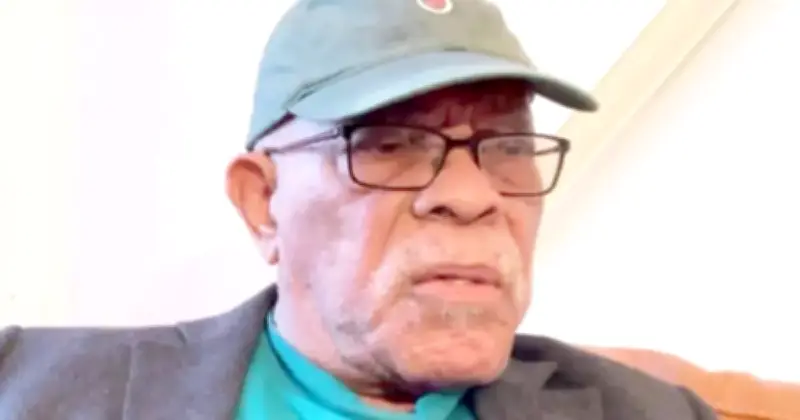
Dr Patrick Wilmot, the Jamaican-born professor deported from Nigeria in 1988, remains a divisive figure in the country's political and academic history. His 18 years at Ahmadu Bello University (ABU), Zaria, his sudden removal by the Babangida regime, and his alleged role in the Nigeria-Biafra War continue to generate strong reactions decades later.
18 Years at Ahmadu Bello University
Wilmot taught Political Sociology at ABU, Zaria, for 18 years, becoming one of the most recognisable foreign academics in Nigeria's university system. He was known for his outspoken views, radical politics, and strong criticism of apartheid and government policies. Born in Jamaica in 1942, he studied at Yale University and Vanderbilt University before entering academia.
He became connected with Nigeria's left-wing intellectual movement during the post-independence era and was invited to the country by northern political figures, including Aminu Kano and M.D. Yusuf. Yusuf, then Nigeria's Inspector-General of Police, reportedly introduced him to ABU's Vice Chancellor, Professor Ishaya Audu, who later employed him.
Wilmot worked alongside influential Marxist scholars such as Yusuf Bala Usman, Yusuf Bangura, Bjorn Beckman, Jibrin Ibrahim, and Raufu Mustapha. His supporters saw him as a fearless intellectual who challenged injustice, while critics accused him of taking controversial positions on major Nigerian political questions.
The 1988 Deportation and Its Aftermath
In 1988, Wilmot's long relationship with Nigeria ended dramatically. According to reports, Nigerian security agents picked him up near his residence in Zaria, forced him into a vehicle, and took him away without his shoes, passport, or personal belongings. He was later flown to London after the military government of then Head of State, General Ibrahim Babangida, declared him a security threat.
The government reportedly accused him of being a “foreign spy,” a claim that angered students and sparked protests at ABU. The incident became one of the most controversial deportations involving an academic in Nigeria's history. Many students and academics protested, arguing the government was targeting a respected lecturer because of his political opinions. Critics, however, defended the government's action, citing national security concerns.
The Biafra Connection and Ongoing Debate
Years after his deportation, Wilmot's comments about the Nigerian Civil War continued to attract attention. In an interview with Daily Trust published in 2023, titled “Why I cannot live in Nigeria Again,” Wilmot said he worked with Nigerian intelligence officials and others to prevent France from recognising Biafra and supplying support to the separatist movement during the 1967–1970 war.
Speaking about his ABU appointment, Wilmot said: “Because M.D. Yusuf thought I would do a better job at the ABU rather than Southern Universities. So, he sent me to Ishaya Audu (the vice chancellor) and he gave me a job.” In his 2007 book, “Interventions VI: Nigeria: The Nightmare Scenario,” he also wrote that those who brought him to ABU believed he could help transform the university into a more African-focused intellectual centre.
More than 35 years after his deportation, Wilmot remains a divisive figure. To some Nigerians, he represents the foreign intellectual who became deeply involved in the country's politics and conflicts. To others, he represents an academic who challenged power and paid the price for speaking openly. His story continues to reopen bigger conversations about Nigeria's civil war, unresolved issues around ethnicity, federalism, resource control, and whether the country's political structure has truly addressed the grievances that existed before and after the war.