The escalating insecurity across Nigeria has pushed the contentious debate over establishing state police forces to the forefront of national discourse. Leading legal experts, government officials, and security professionals presented sharply contrasting views on the implementation of this reform during a major symposium in Lagos.
A Symposium at a Critical Crossroads
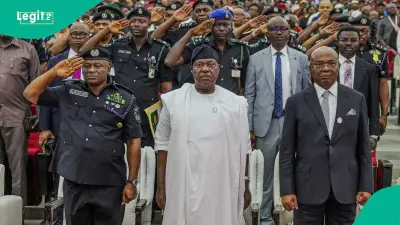
The event was organised by the Directorate of Citizens’ Rights (DCR) of the Lagos State Ministry of Justice to mark the 2025 World Human Rights Day. It was held on Tuesday at the Lagos Chamber of Commerce and Industry (LCCI) in Alausa, Ikeja. The gathering reached a consensus that while state policing may be a necessary step, its success hinges entirely on meticulous design, robust safeguards, and genuine institutional capacity to prevent a repetition of past failures.
Renowned human rights lawyer and constitutional expert, Mr. Jiti Ogunye, delivered the lead paper. He declared that the sheer scale of violence has made the creation of state police "inevitable." He cited mass killings, banditry, terrorism, kidnapping, and other violent crimes that have overwhelmed the Nigeria Police Force and shattered public trust in the government's ability to protect citizens.
Ogunye traced the root of the crisis to Nigeria's centralized policing system, which he described as fundamentally flawed. He faulted Sections 214 to 216 of the 1999 Constitution for prohibiting any police force outside the national structure, arguing this strips states and local governments of meaningful law enforcement power. With approximately 372,000 police officers serving a population exceeding 200 million, he stated the force is critically under-resourced and structurally incapable of effective policing.
Divergent Perspectives on Decentralisation
Lagos State Attorney-General and Commissioner for Justice, Mr. Lawal Pedro (SAN), echoed the call for change. He described Nigeria as being at a "critical crossroads," framing insecurity as not just a security issue but a profound human rights and economic crisis. Pedro highlighted the contradiction of state governors being labelled chief security officers while operational control of the police remains with the President via the Inspector-General of Police.
While acknowledging fears that governors could misuse state police, Pedro proposed strong constitutional safeguards. These include independent state police service commissions, legislative oversight, judicial review, and clear limits on executive control.
However, a more cautious note was struck by the Lagos State Commissioner of Police, Jimoh Olohundare. He warned against a hasty move to state policing without broader systemic reforms. Olohundare suggested that states could first experiment with decentralisation through correctional services. He also noted that state police structures are rare in Africa, raising questions about their immediate suitability for Nigeria.
Learning from Past and Present Security Outfits
Adding a practical dimension to the debate, Dr. Segun Awosanya, President of the Social Intervention Advocacy Foundation (SIAF), urged stakeholders to move "beyond rhetoric to reality." Drawing from his experience in security sector reform, he warned against creating political police forces or fragmenting policing without solid constitutional frameworks.
Awosanya pointed to the challenges faced by existing regional security outfits like Amotekun and Ebube Agu, as well as the defunct SARS unit, as critical lessons. He cautioned that many states have struggled to manage these structures effectively, underscoring the risks of premature reform without adequate capacity and oversight.
The symposium concluded that Nigeria's journey towards any form of decentralised policing will be complex. It requires not just political will but a carefully crafted legal and operational blueprint to ensure it strengthens, rather than undermines, national security and human rights.