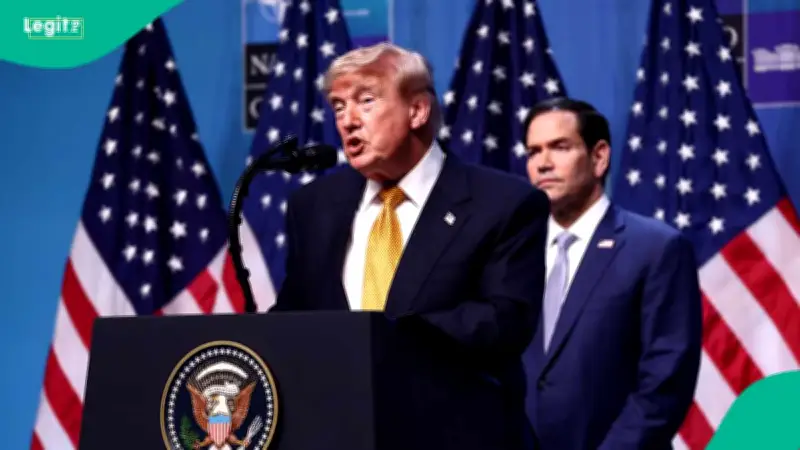
President Donald Trump announced on Friday, August 1, 2025, that CNN, MSNBC and Politico are banned from the White House, accusing the outlets of persistent fake news reporting and warning that more media organisations could face similar consequences.
Ban Announced on Social Media
According to the Associated Press (AP), Trump posted the announcement on his own social media platform, stating the ban was effective immediately. In the post, he wrote: "I am banning" CNN, MSNBC and Politico "from the White House as a result of their constant 'reporting' FAKE NEWS!"
He added: "Media Outlets shouldn't be able to constantly write or report FICTION and LIES when they're covering the President of the United States, the Trump Administration, or the United States of America. Other Fake News Media Outlets to follow."

The president provided no details in the post about how the ban would be enforced. The announcement came just moments before he spoke to reporters in the Oval Office during a health care event, after which he was scheduled to travel with the press pool to his golf club in Virginia for an event sponsored by his Super PAC.
Potential Disruption to Press Pool
Of particular concern is the potential impact on CNN's place in the traditional five-network television pool, a long-standing arrangement through which selected broadcasters travel with the president to provide independent coverage on behalf of all American media and the wider world. Removing CNN from that system would mark a significant break with decades of precedent.
Trump's friction with the press is not new. In February 2025, he barred Associated Press journalists from the Oval Office, Air Force One and smaller White House events after the outlet declined to adopt his preferred name for the Gulf of Mexico. The AP took legal action over that decision and the case remains unresolved in court.
Legal Battles and First Amendment Concerns
Since returning to office, Trump has also pursued separate legal action against several major news organisations, including The New York Times, The Wall Street Journal and the BBC, in disputes linked to coverage his administration has described as inaccurate or unfair.
The latest ban is being viewed as another test of First Amendment protections, which guarantee freedom of the press in the United States. It is not yet clear whether the affected outlets plan to challenge the decision through the courts, as the Associated Press did earlier this year. The situation remains fluid as media organisations assess their legal options and the broader implications for press access to the White House.