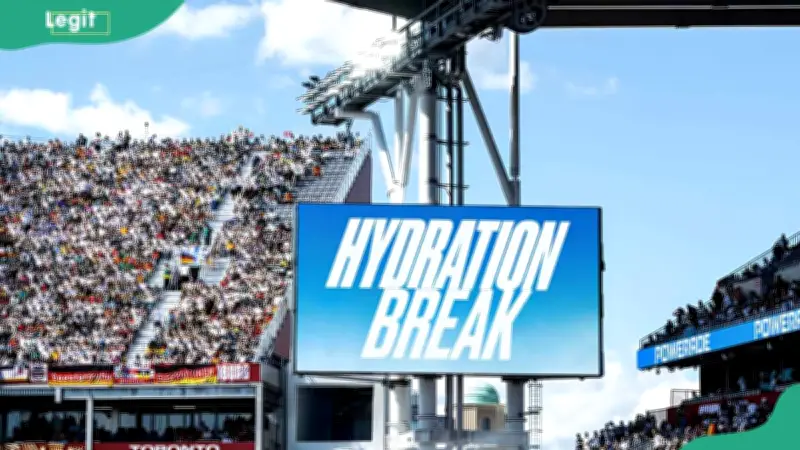
For the first time in football history, FIFA has mandated three-minute hydration breaks for all 104 matches at the 2026 World Cup, regardless of local weather conditions or stadium climate control. These compulsory pauses, scheduled around the 22nd and 67th minutes, allow players to rehydrate and cool down, safeguarding them from heat-related illness while offering managers a rare mid-game tactical reset.
What Is a Hydration Break in Football?
A hydration break is a brief water pause designed to protect players from heat stress, fatigue, and serious climate-related health risks. As summer temperatures climb and the physical demands of football intensify, these breaks have become a permanent fixture at the international tournament. During the stoppage, the match clock continues to run. Game officials track the exact time spent resting and add it back as stoppage time at the end of each half.
The hydration rule states that players must remain on the field of play for the next three minutes. Team medical staff and kit managers hand out chilled water, electrolyte drinks, and ice towels to drape over the players' necks and shoulders. This rapid cooling process lowers internal body temperature, reducing strain on the cardiovascular and central nervous systems.
Why Is FIFA Implementing Hydration Breaks?
The decision stems from growing medical concerns regarding exertional heat illness. When elite athletes push their limits in humid or high-temperature environments, their internal temperatures can spike, leading to severe cramping, dizziness, and, in extreme cases, heat stroke. By introducing a blanket policy, FIFA ensures equity across the tournament. No team gains or loses a physical advantage or disadvantage based on the climate of its specific host city. The Chief Tournament Officer, Manolo Zubiria, announced in Washington: "For every game, no matter where the games are played, no matter if there's a roof, (or) temperature-wise, there will be a three-minute hydration break. It will be three minutes from whistle to whistle in both halves."
Core Benefits of Scheduled Hydration Breaks
Hydration breaks offer many benefits to players and management. Below are the key advantages:
- Preventing heat illness: Scheduled pauses minimise the risk of dangerous heat strokes and quickly replace fluids lost through heavy sweating.
- Maintaining performance: According to Human Kinetics, losing just 2% of body weight through dehydration visibly reduces endurance and sprinting power. Brief hydration breaks help players sustain their high-intensity output.
- Sharper concentration: Proper hydration supports quick decision-making and mental sharpness, reducing unforced mistakes typically caused by late-game fatigue.
- Rapid core cooling: Teams use the window to apply ice towels and cold sprays, which effectively lower core body temperature.
- Mid-game tactical resets: Coaches and captains get a vital on-pitch moment to share tactical adjustments without waiting until half-time.
- Commercial revenue: The predictable three-minute windows allow broadcasters to run advertisements. According to BBC Sport, this streaming and TV ad structure is expected to generate more than $250 million in the USA alone.
Despite the obvious health advantages, the hydration break rule has faced criticism. Critics argue that a forced three-minute stop kills attacking momentum and disrupts the natural rhythm of the match. Meanwhile, some sports scientists warn that brief breaks only mitigate, not eliminate, the risk of heat illness.
How Long Is the Hydration Break?
The hydration break takes exactly three minutes out of the standard 90-minute match. The referee halts play around the 22nd minute of the first half and the 67th minute of the second half.
What Happens If a Player Refuses to Drink?
While players cannot be forced to take fluids, team doctors and nutritionists strongly encourage rehydration. Skipping fluid intake increases the risk of muscle cramps, sluggish decision-making, and premature exhaustion.
Are Hydration Breaks Used in Domestic Leagues?
Domestic competitions such as Major League Soccer (MLS) and top-flight leagues in Southern European countries use cooling breaks. However, unlike FIFA's current tournament protocol, domestic leagues typically use them only when local stadium temperatures exceed a specific heat threshold.
Does the Hydration Break Apply to Extra Time?
If a knockout match finishes level after 90 minutes and goes to extra time, referees can allow a brief drinks break between the two 15-minute periods, especially if conditions allow.
Although short, hydration breaks play an important role in player welfare and match management. They keep the matches highly competitive, help athletes regulate their bodies, and protect the world's best players from dangerous heat-related illnesses.