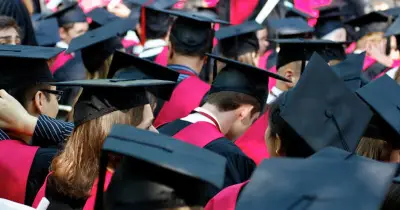
The United States issued significantly fewer F-1 student visas to Indian and Chinese nationals between May and August 2025, according to data from the State Department and analysis by the Centre for Immigration Studies. Indian nationals received 22,149 visas during that period, a 60% drop from the 2017–2024 average of 55,717 (excluding 2020, when Covid-19 disrupted processing). This also represents a 62% decline from the 58,694 visas issued in the same period in 2024.
Sharp Decline for Chinese Nationals
Chinese nationals saw a similarly steep decrease: 40,034 visas were issued, down 46% from the eight-year average of 73,853 and 34% lower than the 61,075 recorded in 2024. The May-to-August window was chosen for comparison because it accounts for the bulk of annual F-1 issuance. In 2024, 77% of all F-1 visas issued to Indian nationals and 76% of those issued to Chinese nationals were processed during this period.
Scale of Foreign Student Enrolment
According to the Institute of International Education's 2024/25 annual census, a total of 1,177,766 foreign students were enrolled at the post-secondary level in the US. Indian nationals accounted for 363,019 of those, or 31%, while students from the People's Republic of China numbered 265,919, making up 23%. Together, the two nationalities represent more than half of all international students in the country.
Optional Practical Training and Its Impact
Beyond enrolment figures, one in four foreign students, totalling 294,253, had already completed their degrees but remained in the US under Optional Practical Training (OPT), a programme that allows F-1 visa holders to work for US employers after graduation. Of those, 70% were Indian (143,740) or Chinese (61,981) nationals. Under the STEM-OPT extension, graduates in science, technology, engineering, and mathematics can work in the US for up to 36 months.
Concerns Over Labour Costs and National Security
Immigration and Customs Enforcement figures from 2024 show that 68% of the 165,524 STEM-OPT participants were Indian or Chinese citizens. Critics argue the programme places American graduates at a disadvantage. Because F-1 holders on OPT are classified as students by the IRS even after completing their degrees, their employers are not required to pay federal payroll taxes for Social Security and Medicare, saving roughly 7.65% in labour costs per worker compared with hiring American graduates.
On the security side, analysts have raised concerns about the concentration of Chinese students in STEM fields. A staff report of the US-China Economic and Security Review Commission noted that Chinese President Xi Jinping has "made clear that overseas Chinese students and scholars are key to his plans to transform China into an innovative and militarily formidable world power." Former CIA officer Joe Augustyn has said: "We know without a doubt that anytime a graduate student from China comes to the US, they are briefed when they go, and briefed when they come back."
US Announces New Visa Rules
Legit.ng earlier reported that the United States has outlined key reasons why visa applications may be denied, reminding Nigerians and other foreign applicants that meeting the basic application requirements does not automatically guarantee visa approval. In updated guidance published by the U.S. Department of State, the agency explained that every visa application is assessed individually under U.S. immigration laws, with consular officers making the final decision after reviewing an applicant's eligibility.