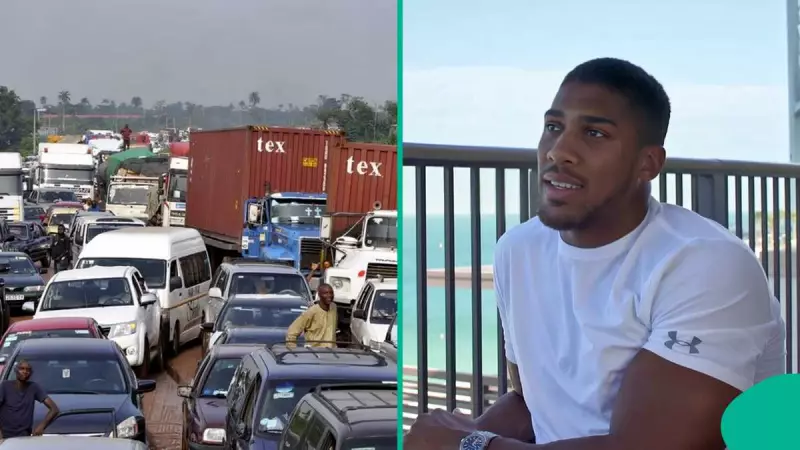
Two individuals have tragically lost their lives following a road accident that involved world-famous heavyweight boxer, Anthony Joshua, on the notorious Lagos-Ibadan Expressway. The incident, which occurred recently, has once again cast a harsh spotlight on what is widely considered Nigeria's busiest and most perilous interstate road.
The Lagos-Ibadan Expressway: A Vital Yet Deadly Artery
The Lagos-Ibadan Expressway stretches 127.6 kilometers as a dual carriageway, connecting Lagos, Ogun, and Oyo States. It serves as the critical link between Nigeria's northern, southern, and eastern regions, handling thousands of vehicles every single day. Despite its economic importance, it has earned a grim reputation for being the country's most fatal highway.
Data from the first quarter of 2025 alone paints a stark picture: 175 recorded crashes, resulting in 73 deaths and 393 injuries. January 2025 saw the highest number of crashes, while February was the deadliest month in terms of fatalities.
Ongoing Reconstruction and Persistent Peril
Major rehabilitation projects have been underway on the expressway, divided into two key sections. Section I, from Lagos to Shagamu (43.6 km), is being handled by Julius Berger Nigeria Plc (JBN), while Section II, from Shagamu to Ibadan (84 km), is managed by Reynolds Construction Company Nigeria Ltd (RCC). By the third quarter of 2023, both projects were reported to be 94% complete.
However, even with reconstruction nearing completion, safety concerns remain critically high. The road continues to account for the highest number of road fatalities nationwide, indicating that infrastructure improvements alone may not be enough to curb the carnage.
Why Accidents Keep Happening: Human Error and Hotspots
Authorities consistently point to human behavior as the primary culprit behind the frequent accidents. Excessive speeding, reckless overtaking, and loss of vehicle control are repeatedly cited as leading causes. The pressure on commercial drivers, who often face fatigue from long hours and the urge to maximize trips, exacerbates the risk.
Heavy-duty trucks and tankers also contribute significantly, with mechanical failures and spills leading to catastrophic collisions and fires. Environmental factors like heavy rainfall and poor visibility at night further compound the dangers, as do poor road conditions such as potholes and inadequate signage that force drivers into sudden, dangerous maneuvers.
Certain stretches of the highway have become notorious accident black spots:
- Kara Bridge and Otedola Bridge: Frequent scenes of trucks plunging into rivers or bursting into flames after collisions.
- The Mowe/Ibafo axis, Ogere stretch, and Ayetoro region: Regularly report fatal crashes involving buses and trailers.
In light of the recent tragedy involving Anthony Joshua, officials from the Federal Road Safety Corps (FRSC) and the Lagos State Traffic Management Authority (LASTMA) have renewed calls for motorists to exercise extreme caution. They urge drivers to adhere to speed limits, avoid dangerous overtaking, and follow real-time traffic advisories issued by these agencies.
The accident serves as a somber reminder of the urgent and ongoing need for comprehensive road safety measures, responsible driving, and sustained public awareness campaigns to tame Nigeria's deadliest highway.