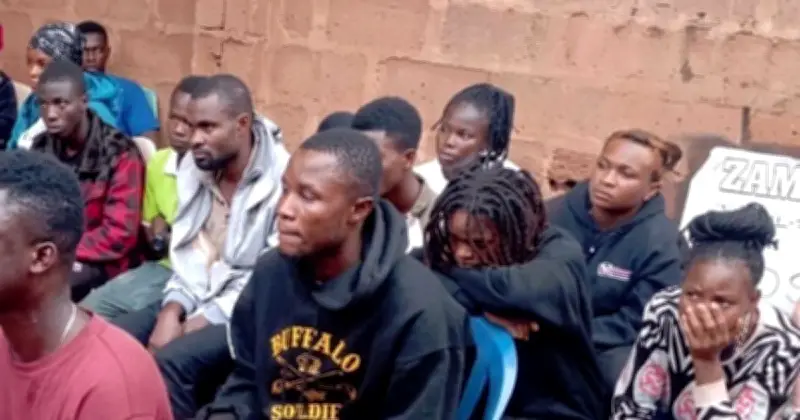
Thirty-three Ghanaians, including 12 women, were found at a camp in Anyigba, Kogi State, Nigeria, after some reportedly paid up to GH¢300,000 (about ₦34.27 million) in the hope of travelling to the United Kingdom. The group was discovered during a raid by a special team from Ghana, following concerns raised by relatives about repeated demands for more money.
How the Ghanaians ended up in Kogi
According to reports, some of the Ghanaians sold businesses and parted with significant sums of money after being led to believe their stay in Nigeria was linked to plans to travel to the UK or elsewhere in Europe. The camp is one of several in the Anyigba area of Dekina Local Government Area.
The Ghanaians reportedly did not agree with the suggestion that they were being prepared for illegal migration. Some said they had travelled to Nigeria for network marketing, rather than as part of a plan to illegally enter Europe.
Relatives' concerns triggered the rescue
The concern reportedly began after relatives noticed that some of those who had travelled to Nigeria were repeatedly asking for more money. That raised questions about what they had been told before leaving Ghana and why additional payments were allegedly being requested.
The case comes shortly after Ghana's Ministry of Foreign Affairs warned citizens about deceptive travel and employment schemes. On September 8, Foreign Affairs Minister Samuel Okudzeto Ablakwa said the government was stepping up public education on human trafficking and the tactics used to lure Ghanaians abroad, while urging prospective travellers to verify recruitment agencies and travel opportunities through official channels.
Broader context of irregular migration risks
The Kogi incident also comes as investigative journalist Fisayo Soyombo documents the darker end of the journey some African migrants take in search of Europe. In his latest undercover investigation, Soyombo spent 47 days travelling from Nigeria through Niger and into Libya, documenting migrants being subjected to abduction, extortion, physical abuse, forced labour and other forms of exploitation along the route.
His findings do not establish any connection between the 33 Ghanaians in Kogi and the networks he encountered in Libya, but they offer a sobering picture of the risks that can await migrants who enter irregular routes in search of Europe.