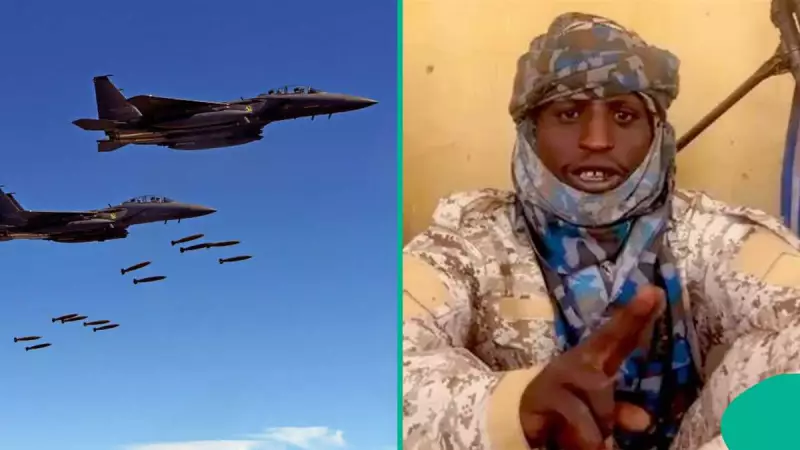
The United States government has officially designated several militant organisations operating across Nigeria and the African continent as groups of particular concern, highlighting their persistent threat to regional stability and international security. This identification underscores the violent campaigns and deep connections these groups maintain with global jihadist networks.
Nigeria's Persistent Insurgent Threats
In Nigeria, three major groups continue to destabilise the nation. Boko Haram, founded in 2002 by Mohammed Yusuf and known officially as Jama'atu Ahlis Sunna Lidda'awati wal-Jihad (JAS), remains a primary adversary. The group launched its armed rebellion in July 2009 with the goal of overthrowing the government and establishing a state under a strict interpretation of Islamic law.
A splinter faction, Ansaru (Jama'atu Ansarul Muslimina fi Biladis Sudan), emerged in 2012. This al-Qaeda-aligned group, active in Nigeria's northwest and north-central regions, reportedly broke away in protest against Boko Haram's indiscriminate targeting of Muslim civilians.
Perhaps the most strategically significant is ISIS-West Africa (ISWAP). This faction broke from Boko Haram in 2016 and has grown into one of the Islamic State's most critical affiliates globally. As of late 2025, ISWAP maintains a major threat presence in Nigeria's northeast, with newer ISIS-linked factions expanding operations into the northwest.
ISIS's Expanding African Footprint
The Islamic State's influence extends far beyond Nigeria. In Central Africa, ISIS-DRC (ISIS–Central Africa), locally known as the Allied Democratic Forces (ADF), conducts violent campaigns primarily in the eastern Democratic Republic of the Congo and Uganda.
Similarly, ISIS-Mozambique, or the Islamic State – Mozambique Province (ISMP), operates in the northern Cabo Delgado province, seeking to overthrow the government and impose Sharia law.
The al-Qaeda-linked coalition Jama’at Nusrat al-Islam wal-Muslimin (JNIM) has also extended its reach from the Sahel into Nigeria, claiming responsibility for attacks and marking a dangerous expansion of its operational zone.
Regional Hotspots and Lingering Dangers
In the fragile Liptako-Gourma border region where Mali, Burkina Faso, and Niger meet, ISIS in the Greater Sahara (ISIS-Sahel) operates as an official Islamic State branch, exploiting the area's instability.
ISIS-Libya (Islamic State – Libya Province) emerged from the chaos following the 2011 uprising, once controlling cities like Derna and Sirte and committing atrocities such as the 2015 beheading of Coptic martyrs. While degraded by counter-offensives, remnants are believed to remain active.
In North Africa, Ansar al-Shari’a in Tunisia (AAS-T), founded in 2011 and later designated a terrorist organisation, is largely inactive due to security crackdowns. However, reports suggest its remnants may still operate underground or under new banners.
The US assessment comes amid reports of militant movements in northern Nigeria following recent US military actions. Credible community sources indicated that suspected terrorists began relocating in small numbers after US missile strikes on Christmas Day, December 25, highlighting the fluid and adaptive nature of the threat.