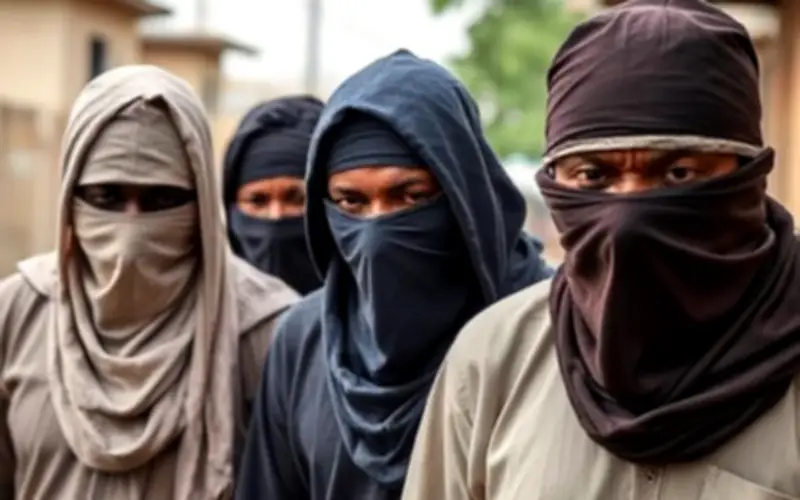
Alhassan Niworo, former Chairman of the Niger State Universal Basic Education Board (NSUBEB), has detailed his harrowing 225-day captivity at the hands of armed bandits, describing a nightmare of torture, death threats, and protracted negotiations that ended with his release in May.
Speaking to journalists in Minna, the state capital, Niworo recounted his abduction on 29 September 2025 while travelling from New Bussa, headquarters of Borgu Local Government Area, to Minna. He said he was freed on 10 May after spending more than eight months in the custody of the kidnappers.
Abduction on the Road to Minna
Niworo explained that his ordeal began when his vehicle was intercepted about 12 kilometres from Zugurma at roughly 1:30 p.m. The attackers, he said, were disguised in police uniforms and had laid an ambush along the road.
“I saw vehicles parked by the roadside, not knowing they were heavily armed Fulani bandits dressed in police uniforms,” he told journalists.
The former education board chairman revealed that he had initially planned to visit his farm that week but changed course after receiving a call to attend a meeting on the disbursement of ward development funds. That decision, he said, put him directly on the path of the waiting gunmen.
Held in Kainji National Park Before Zamfara Forest
Niworo stated that he and several other victims were first held inside the Kainji National Park for about one month. From there, they were moved on motorcycles through bush paths and cattle routes to a forest in Zamfara State, a journey that took four days.
“Many of us captured were first kept in Kainji National Park for one month before we were moved to Zamfara Forest through cattle routes. We travelled for four days on motorcycles before arriving at the forest where we were kept in Fulani huts,” he said.
Describing life in captivity, Niworo said he was chained, tortured, and repeatedly threatened with execution. His captors demanded a ransom of ₦150 million, using his sister as the go-between in negotiations.
“At Zamfara Forest, I was chained, tortured and sometimes forced to do frog jumps. They threatened to slaughter me if my sister, who was negotiating for my release, failed to bring the ₦150 million they demanded,” he recounted.
Release After ₦80 Million Raised
According to Niworo, family members, friends, and religious organisations eventually pooled together ₦80 million, which secured his freedom. He said he did not witness any fellow hostage being killed during his captivity, but he claimed that many victims were released only after their families paid between ₦5 million and ₦10 million, along with a motorcycle as part of the ransom.
He also alleged that the bandits communicated freely using walkie-talkies, apparently without being detected by security agencies, a detail that raises further questions about the capacity of surveillance operations in the region.
Abducted Alongside NSIEC Commissioner
Niworo said he was abducted alongside one Ahmed, a lawyer and permanent commissioner with the Niger State Independent Electoral Commission (NSIEC), as well as the commissioner’s driver and a personal assistant. The driver’s body was later recovered, while the personal assistant regained his freedom. However, Niworo claimed that Ahmed remained in captivity as of the time of his release.
Worsening Security Situation in Niger State
Niworo’s account adds to growing concerns over the deteriorating security situation in Niger State, where banditry, mass abductions, and attacks on rural communities have become increasingly frequent. Recent months have witnessed multiple incidents, including military operations targeting bandit enclaves in Shiroro Local Government Area.
In May 2026, Amnesty International called for an independent investigation after alleging that a military airstrike near Kusasu killed civilians. The Defence Headquarters denied the claim, insisting that about 70 bandits were neutralised in the operation.
Government Measures and Continuing Attacks
The Niger State Government has introduced a permit system and profiling exercise for pastoralists entering the state, as part of efforts to curb insecurity. Security agencies have continued operations against cattle rustlers and criminal gangs across several local government areas, but large swathes of the state remain vulnerable.
Despite repeated military offensives and government interventions, areas such as Shiroro, Munya, Rafi, Mariga, and parts of Borgu continue to experience attacks by armed groups. These persistent assaults have made Niger State one of the worst affected by insecurity in Nigeria’s North-central region, with Niworo’s ordeal serving as a stark reminder of the danger facing residents and travellers alike.