Yemen's Houthi movement launched a sweeping assault on four cities in southern Saudi Arabia on Tuesday, September 8, wounding at least 73 people and triggering fires at oil facilities across the region. The Iran-backed group said it had mounted a broad operation deep inside Saudi territory, deploying drones and missiles against a military airbase in Khamis Mushait and oil infrastructure belonging to the Saudi state energy company in Abha, Najran, and the Red Sea port city of Jazan, which holds a major refinery and power plant.
Coordinated Attacks Target Southern Saudi Cities
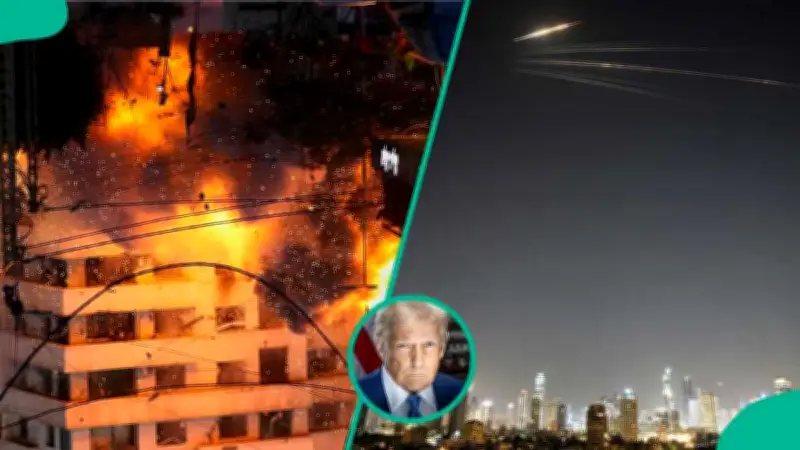
Saudi authorities confirmed the blazes and said the injured included women and children. The scale of casualties made the strikes among the most serious Saudi Arabia has faced since the United States and Israel began military operations against Iran in February 2026. The attacks targeted four southern cities, with oil installations set on fire across Abha, Najran, Jazan, and the Saudi airbase in Khamis Mushait during the coordinated strikes.
The Houthi offensive marked a significant escalation in the regional conflict, which had seen a month of relative calm in August. The group's spokesperson, Yahya Saree, said Riyadh had provoked the escalation by carrying out air strikes inside Yemen, and warned of further Houthi responses. Houthi-controlled media later reported that Saudi warplanes conducted four air strikes in Yemen's Jubah district, east of the capital Sanaa, on the same day.

Oil Markets React as Gulf Fighting Resumes
The attacks rattled global energy markets. Brent crude climbed more than 2% on Tuesday to above $99 a barrel, returning to levels not seen since July. The Gulf had seen a month of relative quiet in August, but renewed clashes between Iran and the United States over the weekend reignited tensions across the region.
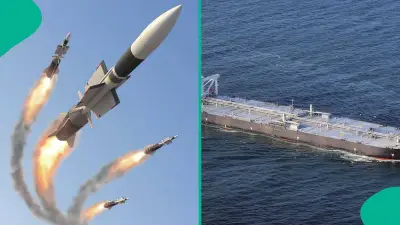
About a fifth of global oil and liquefied natural gas shipments pass through the Strait of Hormuz. Tehran has announced plans for a "maritime exclusion zone" stretching from the perimeter of the American blockade through the strait and into the Gulf itself. Washington fired on Iranian tankers over the weekend in response to Iranian attacks on US warships, with Iran claiming it deployed new, more capable ballistic missiles in those strikes.
Mohsen Rezaei, secretary of Iran's Supreme National Security Council, wrote on X: "Economic warfare will be met by a maritime exclusion zone across the Persian Gulf to the blockade perimeter. The operational posture toward U.S. warships and bases has been fundamentally recalibrated."
Saudi Coalition Vows Retaliation
Colonel Turki al-Malki, spokesperson for the Saudi-led Arab coalition, said in a statement on X: "The coalition will take all necessary operational measures to deter this terrorist militia and resolutely confronts its hostile approach." The statement underscored the coalition's commitment to respond to the Houthi attacks, which have heightened fears of a broader regional war.
The International Organisation for Migration said more than 18,500 people had fled their homes due to fighting along Yemen's west coast over the preceding three days. The displacement highlights the humanitarian toll of the conflict, which continues to escalate despite international calls for de-escalation.
US President Donald Trump acknowledged the economic pain caused by the conflict, saying on social media that oil prices would fall sharply once the United States prevailed in the war with Iran, predicting prices could eventually drop below two dollars a gallon. Diesel fuel in the United States currently stands at a record average retail price of more than $5.90 a gallon.
Iran Moves to Change Hormuz Shipping Corridor
Previously, Legit.ng reported that Iran warned the United States that American oil and gas facilities in the Gulf region will face retaliation if Washington launches further strikes on Iranian assets, escalating an already volatile confrontation between the two countries. Iranian Parliament Speaker Mohammad Baqer Qalibaf issued the warning on Monday, saying the energy production infrastructure across the region was "sprawling, accessible, and exposed" and that US oil and gas companies operating around those waters and facilities were equally at risk.

The renewed hostilities have raised concerns about global energy security, with the Strait of Hormuz remaining a critical chokepoint for oil shipments. The Houthi attacks on Saudi Arabia, coupled with Iran's threats to disrupt shipping, signal a dangerous phase in the Middle East conflict that could have far-reaching economic consequences. As the coalition vows retaliation and the Houthis warn of further strikes, the region braces for continued instability, with oil prices likely to remain elevated in the near term.