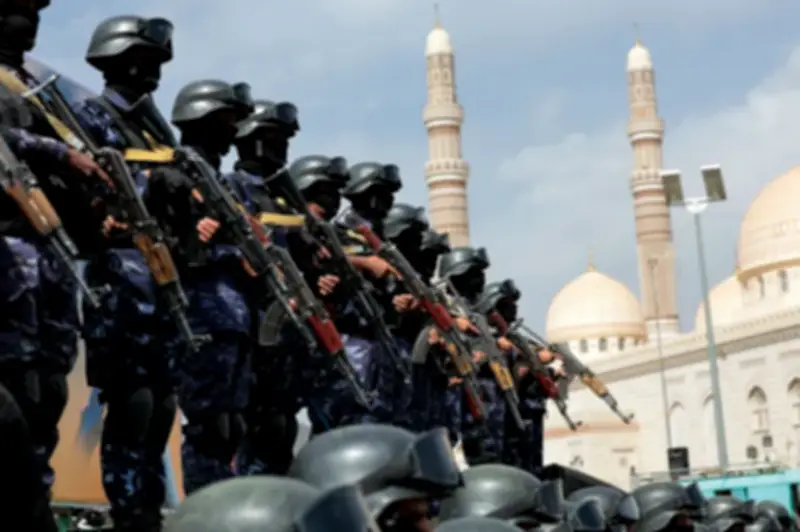
Yemen's Iran-aligned Houthi militant group has announced a naval blockade on Saudi Arabia, opening a new front in the ongoing conflict between the United States and Iran. The move expands threats to global energy supplies and trade beyond the Gulf region, potentially escalating global oil prices.
Blockade Announcement and Immediate Impact
The Houthi armed forces declared in an official statement "a maritime embargo against the criminal Saudi enemy, based on the equation of 'an eye for an eye', effective immediately." They characterized the embargo as a direct response to what they described as "an unjust and oppressive siege" enforced on Yemen by Saudi Arabia. Saudi Arabia did not immediately issue a public response.
Oil prices initially spiked following the Houthi announcement but subsequently receded as traders weighed hopes for a diplomatic breakthrough. Iran had reportedly been urging the Houthis to shut down the Bab el-Mandeb gateway to the Red Sea should the U.S. continue targeting Iranian power infrastructure.
Global Oil Supply at Risk
A total closure of the Bab el-Mandeb strait would cut global oil supply by 7 percent, as it would prevent the majority of Saudi oil exports from leaving the region. Such a disruption would compound existing cuts to global oil flows from the Gulf conflict, which has already reduced shipments by 10 percent.
The declaration came despite indications that Tehran and Washington were seeking to resume diplomatic efforts to halt an escalating cycle of attacks that has severely damaged a fragile interim agreement signed last month.
Diplomatic Efforts Amid Escalation
A senior Iranian official revealed on Monday that Tehran received a proposal from mediators for a 10-day ceasefire aimed at salvaging the interim deal. The original agreement was intended to pave the way toward a lasting resolution to the war that began on February 28 following U.S.-Israeli strikes on Iran.
Iran's Foreign Ministry confirmed that mediators recently presented several proposals to Tehran, indicating that diplomatic channels remain active. Neither the ministry nor the official provided further specifics regarding the proposed ceasefire terms.
Concurrently, two Pakistani government sources indicated that Iranian Interior Minister Eskandar Momeni, making his second trip to Islamabad in less than a week, requested that Pakistan resume its role as a mediator in the conflict between Iran and the United States.
Military Operations Continue
The diplomatic push unfolded against the backdrop of another night of U.S. airstrikes on Iranian cities and retaliatory attacks by Iran's Revolutionary Guards on American military assets across the region. Under growing domestic political pressure due to rising gasoline prices, U.S. President Donald Trump defended the latest operations as honoring the deaths of up to three American service members killed in recent Iranian strikes.
The Islamic Revolutionary Guard Corps (IRGC) reported that two oil tankers exploded after attempting to navigate the strait through an "unsafe" route. This follows an IRGC statement from Sunday noting that two vessels had been involved in an "accident" in the same area, though it remains unclear if the incidents are linked. The IRGC provided no details regarding vessel identities or potential casualties.
In a separate incident, the United Kingdom Maritime Trade Operations agency reported that a vessel off the coast of Oman, near the Strait of Hormuz, was hit by an unknown projectile. The ship was left adrift, though the crew was reported safe.
Strikes and Infrastructure Damage
U.S. Central Command stated that its ninth consecutive night of strikes against Iran focused on "degrading" the nation's capacity to target commercial shipping in critical maritime corridors. Within Iran, explosions were reported in Tabriz, Chabahar, Konarak, Bandar Mahshahr, and Bandar Imam Khomeini, with state news agency IRNA reporting one fatality and several injuries southwest of Tabriz.
The IRGC claimed responsibility for launching ballistic missile strikes against U.S. aircraft at Jordan's Aqaba airport, alongside targeting military positions in Syria and U.S. assets at Kuwait's Al-Adiri camp and Ali Al Salem Air Base. Sirens sounded in Bahrain throughout Monday, while Kuwaiti forces reported intercepting additional Iranian drones.
Kuwaiti authorities stated that a desalination plant was hit for a second consecutive day on Sunday, sparking a fire. Officials condemned the action as a direct strike on essential civilian infrastructure. Desalination facilities provide the vast majority of drinking water across Gulf states, serving tens of millions of residents in the region.
Iran, which accused the U.S. on Saturday of striking one of its own desalination plants, has repeatedly warned that it would target similar infrastructure across Gulf states in response. The U.S. has not confirmed striking any Iranian desalination facilities.
Official Statements on Continued Action
U.S. Secretary of State Marco Rubio affirmed that American forces would continue military actions against Iran as long as attacks on global commercial shipping persist. "As long as Iran insists on controlling an international waterway, we're gonna have to respond to that. The United States always remains open to a diplomatic solution," Rubio said.
Iran's Foreign Ministry similarly signaled that Tehran has not closed the door to potential negotiations. Ministry spokesperson Esmaeil Baghaei confirmed the receipt of diplomatic proposals, stating that the diplomatic apparatus has remained active as ideas from mediators continue to arrive.
Meanwhile, Iranian state media reported casualties from recent U.S. operations, including three deaths in the southern province of Hormozgan and eight deaths across Khuzestan province following strikes on dozens of locations over the past ten days.