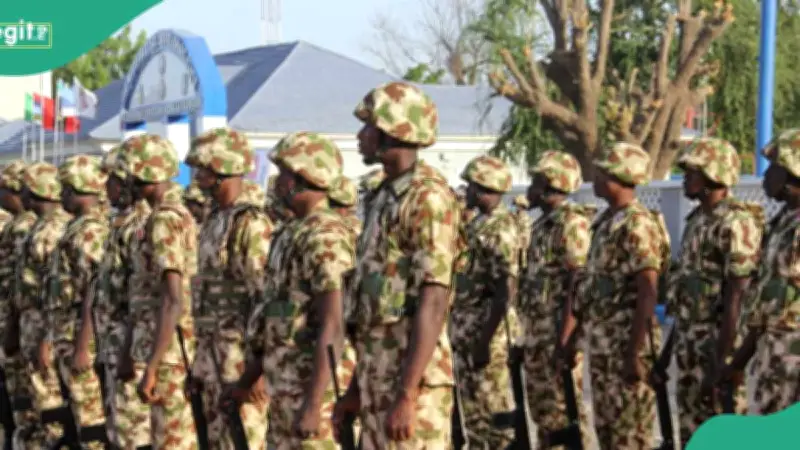
Eight Nigerian soldiers were killed on Saturday when their patrol vehicle struck a landmine planted by Islamic State West Africa Province (ISWAP) militants in Borno State, close to the border with Cameroon, according to defence sources who spoke to AFP.
Explosion During Clearing Operation in Kinuba Village
The incident happened in Kinuba village, roughly 25 kilometres from the town of Gamboru. Troops were accompanying anti-jihadist militia members who were clearing dense thickets along a highway when the explosion occurred. Jihadists routinely use such vegetation as cover to launch ambushes against soldiers and civilian motorists, as reported by Daily Trust.
A military officer in the region confirmed the full extent of the loss, stating, "All eight soldiers in the vehicle were killed in the explosion." Ibrahim Liman, an anti-jihadist militia member working alongside the military, also confirmed the death toll. He provided details on how the device was triggered, explaining, "The explosive was planted on the dusty road and remotely detonated by a detonating cord." Liman added that a militia member overseeing the clearing operation was wounded by shrapnel.
Army Chief's Visit to Maiduguri Coincides With Attack
The attack occurred on the same day Nigerian Army Chief Lieutenant General Waidi Shaibu was in Maiduguri, the Borno State capital. His visit was to assess the fallout from a separate jihadist assault on a military base earlier in the week. That earlier attack killed 15 soldiers and five anti-jihadist militia members.
ISWAP and its rival group Boko Haram have increasingly turned to landmines on highways to target both military convoys and civilian traffic in Nigeria's north-east. This tactic has become a hallmark of the ongoing insurgency in the region.
Years of Jihadist Violence in Nigeria's North-East
Jihadist violence in Nigeria first erupted in 2009 and reached its deadliest peak about a decade ago. Although the intensity dropped in the years that followed, the last two years have seen a marked rise in attacks across the region. The prolonged conflict has claimed tens of thousands of lives and forced about two million people from their homes in Nigeria's north-eastern states.
The instability has also spilled over into neighbouring Niger, Chad, and Cameroon, leading to the formation of a regional military coalition aimed at combating the militants. The ongoing violence continues to pose a significant security challenge to the region.