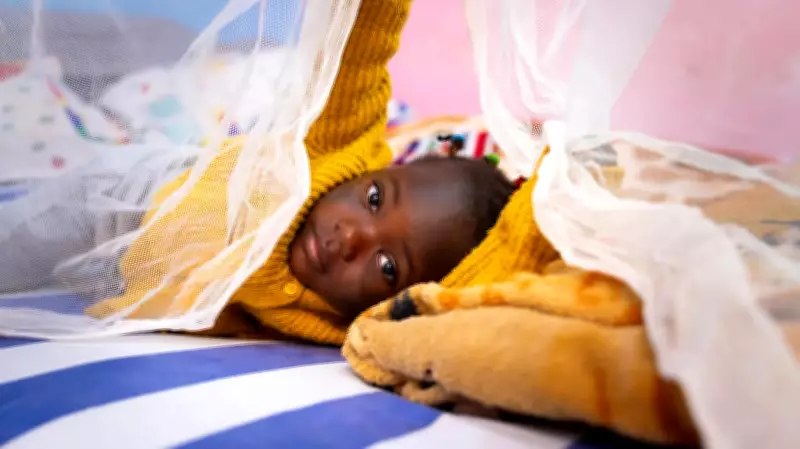
As the world marks World Malaria Day, global efforts to eliminate the disease continue, even as it caused an estimated 282 million cases and 610,000 deaths in 2024. The World Health Organization (WHO) reports significant progress since 2000, with about 2.3 billion cases and 14 million deaths averted. Forty-seven countries have been certified malaria-free, including two in 2024 and three in 2025. The number of malaria-endemic countries dropped from 108 to 80 between 2000 and 2024, while countries with fewer than 10,000 cases rose from 27 to 46. In 2024, 37 countries reported fewer than 1,000 cases. Currently, 25 countries, including Nigeria, are rolling out malaria vaccines to protect 10 million children annually.
Despite these gains, malaria remains a serious global health challenge. The WHO warns that hard-won progress is threatened by drug and insecticide resistance, extreme weather events, and declining investment, leaving more communities exposed. In Nigeria, malaria is a severe public health crisis, with 97% of the population at risk. According to the 2025 World Malaria Report, Nigeria bears the highest burden globally, accounting for 24.3% of global cases and 30.3% of deaths. The country represented 54.6% of malaria cases in West Africa in 2024, attributed to its large population, poor sanitation, and vegetation that favors mosquito breeding.
Economic and Investment Impact
Nigeria loses about $1.1 billion annually to malaria treatment, prevention, and lost productivity, according to Malaria Consortium. The Global Fund has invested $365 million in malaria control in Nigeria under the GC7 grant covering 2024-2026. However, the U.S. President’s Malaria Initiative (PMI), which supported 11 states before 2025, has scaled down to seven states. Despite these challenges, the Nigeria Malaria Indicator Survey (NMIS) 2025 shows a significant reduction in national malaria prevalence from 42% in 2010 to 15% in 2025.
Progress and Remaining Gaps
Dr. Nnenna Ogbulafor, National Coordinator of the National Malaria Elimination Programme (NMEP) in the Federal Ministry of Health and Social Welfare, stated that the NMIS 2025 indicates a drop from 42% in 2010 to 22% in 2021 and 15% in 2025. This means that among 100 children aged 6-59 months tested, about 15 have malaria parasites. She described this as a giant stride in malaria control, showing improvements in prevention, treatment, and awareness. However, significant gaps remain, leaving pregnant women and children under five at continued risk.
Nigeria has developed a new National Malaria Strategic Implementation Plan (2026–2030) focusing on strengthening high-impact interventions and accelerating elimination within four years. The plan aims to reduce parasite prevalence by 50% and malaria-attributable deaths by 50% nationally, with sub-national goals of very low prevalence in two low-transmission states and 30% reduction in moderate-transmission states. The final cost is expected to run into trillions of naira.
Transmission Status and Drug Efficacy
According to WHO classification, Nigeria no longer has any states in high transmission mode. Lagos and Plateau are now low-transmission states with a prevalence rate of 2.6%, while the remaining 34 states and the Federal Capital Territory (FCT) are moderate transmission. Dr. Ogbulafor noted that approved anti-malaria drugs remain effective, with efficacy above the 90/95% benchmark. Therapeutic drug efficacy studies are conducted to monitor molecules. The government is scaling up malaria vaccination to more states, adding Bauchi and Ondo to the initial pilot states of Kebbi and Bayelsa.
Insecticide Resistance and Vector Control
Nigeria has recorded pyrethroid resistance since the 1950s. Since 2012, coordinated insecticide resistance surveillance has been conducted, covering 27 states by 2025. This data informs decisions on insecticide net types. Due to pyrethroid resistance, new dual AI nets and Piperonyl Butoxide (PBO) nets have been developed. Dr. Ogbulafor confirmed that these new-generation nets remain effective. Additionally, larval source management (LSM) was approved by the National Council on Health in 2025 as a complementary vector control intervention, piloted in five states. LSM involves targeted management of mosquito breeding sites to reduce larvae and pupae density.
Challenges and Way Forward
Tajudeen Ibrahim, Executive Director of the Country Coordinating Mechanism (CCM) of the Global Fund, noted significant progress through strengthened surveillance, wider distribution of insecticide-treated nets, expanded seasonal malaria chemoprevention, and improved case management. However, challenges persist, including a detection gap of nearly 40%, poverty, undernutrition, overcrowding, unemployment, and poor funding. Nigeria’s investment in malaria response is increasing, but more funding is needed. The Global Fund supports grants for nets, chemoprevention, case management, and data systems. Ibrahim emphasized sustaining investments, strengthening healthcare systems, improving access to services, and addressing socio-economic determinants. Collaboration between government, private sector, and communities is crucial.
Ibrahim expressed concern over pyrethroid resistance, confirmed in 48 of 53 reporting countries by WHO. Alternative strategies include dual AI nets and LSM. The Rethinking Malaria concept is yielding results through new tools like vaccines and improved local manufacturing. To combat Anopheles stephensi, spreading across Africa, Nigeria should enhance surveillance, improve vector control, and develop urban interventions.
Community Participation and Local Production
Ayo Ipinmoye, National Coordinator of Civil Society in Malaria Control, Immunisation and Nutrition (ACOMIN), identified resourcing as a major challenge. He called for government, private sector, and philanthropist investment to sustain gains. He emphasized community ownership and participation, lamenting that some community members misuse nets for fishing or clothing. He urged people to sleep under nets, take medicines on time, get tested before treatment, and keep environments free of stagnant water. Ipinmoye stressed the importance of technology and local manufacturing to reduce capital flight from imported resources.
Prof. Martin Madu Meremikwu, Professor of Pediatrics and Clinical Epidemiology at the University of Calabar, highlighted the need for new innovations and scientific research. He noted that drug resistance is a major challenge, often due to misuse or underuse of drugs. Nigeria conducts drug efficacy studies on ACTs, showing no resistance unlike in East and Southern Africa. He emphasized the complex nature of malaria and ongoing research on chemicals and climate impacts.
Synthetic Drug Development
Olatomide Fadare, Associate Professor of Chemistry at Obafemi Awolowo University, advocated for a strategic shift toward synthetic drug development. He warned that overreliance on imported Active Pharmaceutical Ingredients (APIs) slows progress. His research group uses computational techniques (rational drug design) to develop new anti-malarial compounds, targeting key metabolic processes in the parasite. Unlike plant-derived compounds, which often face stability and pharmacokinetic challenges, synthetic derivatives are more reliable. Fadare stressed that local API production would improve quality assurance and public confidence. Nigeria has the technical expertise but needs stronger academia-industry collaboration to reduce costs and accelerate local manufacturing.