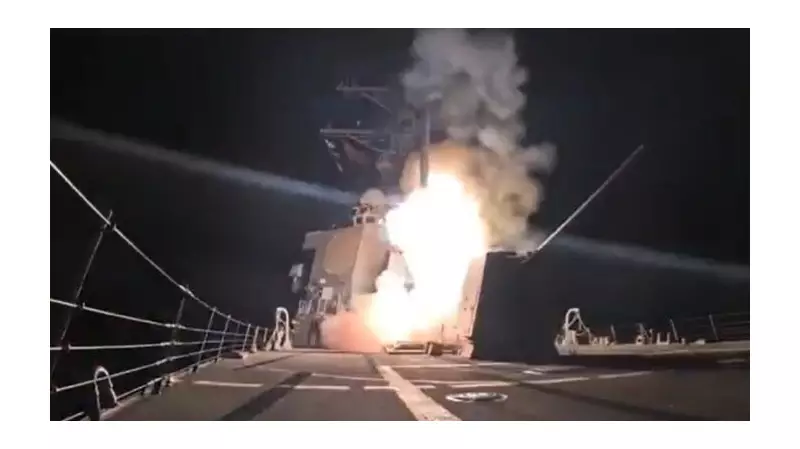
Nigerians have been sharing a wide spectrum of reactions following a confirmed United States military operation against an Islamic State (ISIS) hideout in Sokoto State, located in Nigeria's north-west region. The strike, ordered by US President Donald Trump and executed by the US Africa Command (AFRICOM), has ignited a national conversation about security, sovereignty, and the role of foreign powers.
Divided Opinions on Airwaves and Social Media
The incident quickly became a hot topic on platforms like Nigeria Info 99.3 FM's Morning Crossfire programme and across social media, especially on X. Callers to the radio show presented sharply contrasting views. One enthusiastic supporter described the action as "the best Christmas gift from Trump," emphasizing that the target was terrorists, not the Nigerian government, which had already declared such groups as enemies.
However, this perspective was not universal. Another contributor voiced strong discomfort, questioning the need for external military intervention on Nigerian soil. "I'm beginning to look at it for a country to have its own leadership," he stated, linking the issue to broader frustrations with domestic governance and calling for younger Nigerians to step into leadership roles to ensure self-reliance in security matters.
Context and Comparisons with US Operations in Africa
Beyond the immediate reaction, many Nigerians online placed the Sokoto event within the wider context of longstanding US military activities across the African continent. Several social media users pointed to operations in Somalia as a reference point. One post highlighted data from the New America Foundation, noting that the US has conducted at least 111 airstrikes in Somalia since Donald Trump returned to the White House.
This led to observations that such actions are part of a routine, expanding campaign. "If you know how many airstrikes America launches in Somalia every year, this Sokoto one no be surprise. It's a normal day for AFRICOM," one user wrote. Others noted that the same military assets used elsewhere are now being deployed in Nigeria, underscoring the scale of US reach.
Sovereignty, Safety, and the Path Forward
Not all the discourse was focused on strategic comparisons. Significant concerns were raised about national sovereignty and the safety of civilians. One radio caller expressed unease, wondering if Nigerian authorities were fully briefed on the operation. "I don't know why Nigerians are happy with the United States coming into Nigeria, I hope they informed the Nigerian government properly," he said.
There were also warnings against framing the conflict in religious terms, a sensitive issue in Nigeria's diverse society, with fears that such narratives could inflame existing tensions. Despite the clear divisions in public opinion, a common thread emerged: a shared desire for lasting peace and improved security. While the Nigerian government has acknowledged security cooperation with the US, it has not provided detailed operational accounts of the Sokoto strike.
The intensity of current US operations was another point of discussion, with some users claiming the number of strikes recorded in 2025 already exceeds totals from previous administrations, raising questions about a potential escalation. As one post succinctly put it, "This is not something they just start and end. It's hot, and it's continuous."