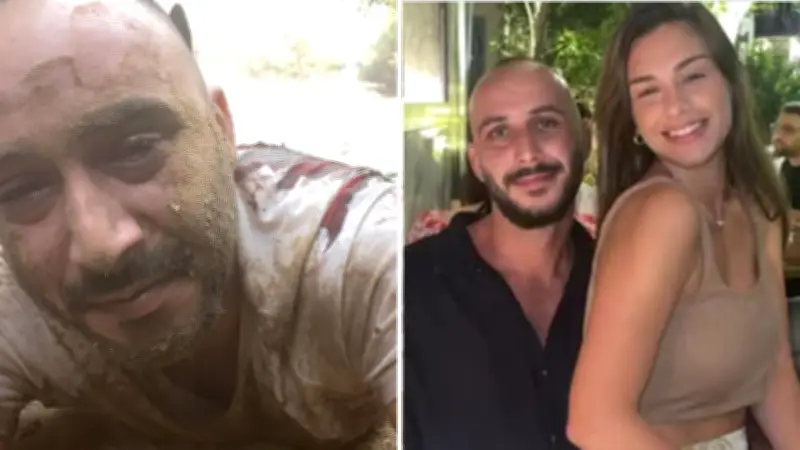
Bar Asraf, a 30-year-old Israeli survivor of the Oct. 7, 2023 Hamas attack, was found dead on Saturday evening, August 1, at the grave of his girlfriend, Liron Barda, in the Elkana cemetery in the West Bank. According to Israeli news outlet JFeed, Asraf had a gunshot wound to the chest, and although emergency medical teams arrived promptly, he was pronounced dead at the scene.
Barda, 26, was murdered by Hamas terrorists during the attack on the Nova music festival near the Gaza Strip, where 378 innocent people were slaughtered. Asraf's death, almost three years after Barda's killing, underscores the enduring psychological toll of the Oct. 7 massacre on survivors and the families of victims.
A Heroine Who Refused to Flee
Barda was working as a bartender at the Nova Festival when the attack began. She chose to stay behind to help the wounded rather than escape to safety. Her father, Avi, recalled in an interview with Israel Hayom: “I spoke to her that morning; I asked her to leave the area — she refused, she said there were wounded people, and she was staying.” He added, “This was Liron — I would have been surprised if she agreed to flee.”
Her bravery was widely recognized, and her story became a symbol of selflessness during the deadliest assault on Israeli civilians in the nation's history. Barda's refusal to abandon the injured trapped many others in the chaos, and her actions were praised by those who knew her.
A Life Bound to Grief
Following Barda's death, Asraf remained closely connected to her family, frequently visiting her parents and honoring her memory. The French-Jewish activist Jérémy Benhaïm shared the news of Asraf's death in a post on X, highlighting the profound grief that had consumed him. Benhaïm's post described Asraf as unable to bear the pain of losing his partner, a sentiment echoed by friends and acquaintances.
Asraf's discovery at Barda's gravesite is a somber indication of how deeply the trauma of Oct. 7 continues to affect survivors. He was found in the Elkana cemetery, a place that had become a focal point of his mourning.
Another Survivor Lost to Suicide
Asraf's death follows a similar tragedy less than a year earlier. Roei Shalev, 28, another Oct. 7 survivor, died by setting himself on fire inside his car on a highway exit near Netanya in October 2025. Shalev had witnessed the execution of his girlfriend by Hamas and wrote a final heart-wrenching message: “I’m truly sorry. I can’t bear this pain any longer.”
The recurrence of suicide among survivors has raised alarms about the lack of adequate mental health support. In April 2024, it was reported that nearly 50 Nova Festival survivors had died by suicide in the six months following the massacre. That number, already staggeringly high, has likely grown in the ensuing years.
The Hidden Wounds of Oct. 7
The Nova Festival massacre was one of the bloodiest episodes of the Oct. 7 attack, which killed more than 1,200 people and saw hundreds taken hostage. Survivors have struggled with post-traumatic stress disorder, survivor's guilt, and profound depression, often without sufficient access to mental health services.
Asraf's death on the very grave of his beloved girlfriend is a heartbreaking symbol of how unresolved grief can become overwhelming. It also highlights the urgent need for comprehensive psychological care for those who lived through the atrocities. While the physical wounds of war may heal, the invisible scars on the psyche can prove far more lethal.
Mental health professionals have repeatedly warned that the scale of trauma from Oct. 7 is unprecedented, and that survivors require ongoing, specialized intervention. The fact that nearly 50 survivors died by suicide within just six months of the event underscores the severity of the crisis. Yet, more resources are still needed to prevent further loss of life.
The impact of Asraf's death extends beyond his immediate circle. It serves as a grim reminder to Israeli society and the international community that the consequences of terrorism are not limited to the day of the attack; they echo for years, affecting the lives of those left behind. As families bury their loved ones again, the question of how to adequately support survivors remains unanswered.
As the anniversaries of Oct. 7 approach, the memory of Liron Barda and Bar Asraf will be intertwined. Barda made the ultimate sacrifice to help others, and Asraf could not continue living without her. Their story is a testament to the deep emotional bonds forged in the shadow of horror and the devastating aftermath that follows.