Nigeria's Terrorism Crisis Deepens with 46% Surge in Killings, Opposition and CSOs Blame FG
Despite strategic efforts by the current administration to enhance Nigeria's international image, the country's severe insecurity challenges have undermined these initiatives, as Nigeria now ranks fourth in the Global Terrorism Index (GTI) 2026. The report, released yesterday, reveals that Nigeria experienced its most lethal year of terrorism since 2020, with deaths surging by 46 percent to 750 fatalities in 2025. This marks a deterioration from 2024, moving the country up two places to become the fourth most impacted nation by terrorism globally.
This alarming trend persists despite the Federal Government allocating N6.57 trillion to security and defence in the 2025 budget, one of the largest in Nigeria's history. The GTI 2026, compiled by the Institute for Economics & Peace (IEP), a non-profit think tank based in Sydney, Australia, measures terrorism impact across 163 countries over 13 years, using indicators such as attacks, deaths, injuries, and hostages.
Global and Regional Context of Terrorism
Globally, terrorism deaths fell by 28 percent in 2025, dropping to 5,582, with 81 countries showing improvements. However, Nigeria stands out as a major exception. While several sub-Saharan African nations recorded declines, Nigeria was the only country in the region where both deaths and incidents increased simultaneously. The Sahel region of Africa, described as the global epicentre of terrorism, accounted for nearly half of all terrorism-related deaths for the third consecutive year in 2025.
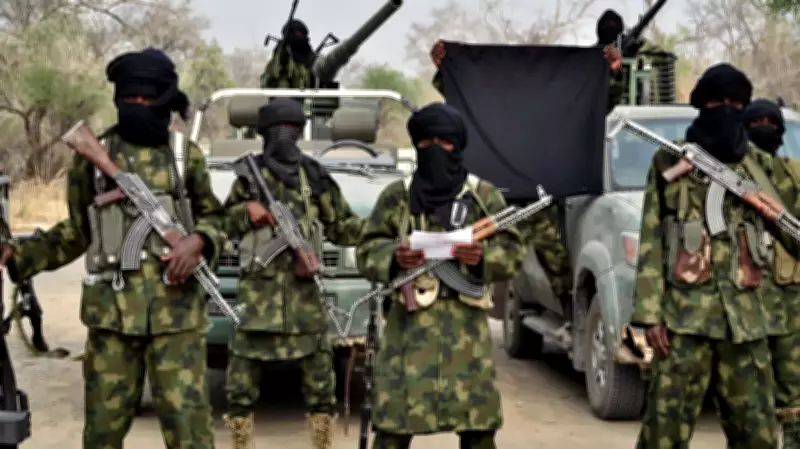
Nearly 70 percent of global terrorism deaths occurred in just five countries: Pakistan, Burkina Faso, Nigeria, Niger, and the Democratic Republic of the Congo. In Nigeria, Islamic State West Africa Province (ISWAP) and Boko Haram were responsible for most terror attacks in 2025, with civilians being the most targeted group, accounting for 67 percent of attacks, while the military faced 19 percent.
Specific Attacks and Regional Impact
Boko Haram was behind Nigeria's second most lethal terrorist attack of the year. In May, armed militants raided the villages of Mallam Karamti and Kwatandashi in Kukawa local government area, Borno State. Borno remains the epicentre of Nigeria's terrorism crisis, accounting for over two-thirds of all attacks and deaths in 2025. Together, ISWAP and Boko Haram were responsible for 80 percent of terrorism-related deaths in Nigeria. Additionally, Lakurawa, a relatively new group that emerged in 2024, recorded 10 attacks and 74 deaths in 2025.
The surge in violence is concentrated in the North-East, North Central, and North-West regions, where extremist groups continue to expand operations. This escalation has prompted concerns from traditional leaders, including the Sultan of Sokoto, Muhammadu Sa'ad Abubakar, who has called for a more aggressive military approach against terrorists.
Criticism from Opposition and Civil Society
Opposition parties and civil society organizations have strongly criticized the President Bola Tinubu-led administration for Nigeria's poor ranking, accusing government officials of prioritizing political engagements and personal indulgences over citizen safety. The GTI findings indicate that increased funding has not translated into improved security outcomes, as Nigeria remains one of the few countries where both terrorism deaths and incidents rose in the past year.
Bolaji Abdullahi, spokesperson of the African Democratic Congress (ADC), stated that Nigeria's escalating terrorism is a direct result of government inattention and political preoccupation. He argued that the APC-led administration is focused on winning the 2027 election rather than protecting Nigerians, and called for regional and international cooperation to address the crisis.
Ini Ememobong, National Publicity Secretary of the Peoples Democratic Party (PDP), accused the federal government of failing Nigerians while indulging in politics. He urged a shift from reactive responses to a whole-of-society approach to insecurity. Former presidential candidate Peter Obi described the report as a painful indictment of failed leadership, attributing the trend to poor governance and systemic failures.
Expert Analysis on Underlying Causes
Security expert Kabir Adamu blamed Nigeria's worsening terrorism crisis on socio-economic deprivation, governance gaps, and geographic vulnerabilities. He explained that northern Nigeria's fragile socio-economic conditions make populations more susceptible to insurgent influence, while weak institutions and poor counter-terrorism strategies allow groups like ISWAP and Boko Haram to expand. Adamu emphasized that kinetic operations alone cannot resolve the crisis, advocating for a whole-of-government and whole-of-society approach.
Jamilu Aliyu Charanchi, national coordinator of the Coalition of Northern Groups (CNG), linked the crisis to a lack of true leadership and corruption, warning against over-reliance on foreign military assistance. Salaudeen Hashim, a public policy and security analyst with the Civil Society Legislative Advocacy Centre (CISLAC), connected the rise in terrorism to governance failures and elite resource capture, noting that deprivation drives recruitment into insurgent groups.
Corruption Risks in Defence Sector
In a related development, a new report by Transparency International Defence and Security, in collaboration with CISLAC and Transparency International Nigeria, warns that Nigeria's defence and security architecture is undermined by entrenched corruption risks. The 2025 Government Defence Integrity Index (GDI) ranks Nigeria as facing a very high risk of corruption, with critical weaknesses in financial management, operations, and procurement.
The report highlights extensive secrecy around defence finances, ineffective oversight by the National Assembly and audit institutions, and the absence of anti-corruption safeguards in military operations. It notes that these factors weaken operational effectiveness and erode public trust amid worsening insecurity. Defence operations scored a critical 12 out of 100, with procurement vulnerabilities and personnel system concerns further exacerbating risks.
Francesca Grandi of Transparency International pointed out that none of the 17 countries assessed have a military doctrine treating corruption as an operational risk, a gap that exposes civilians to abuse and weakens trust in security forces. The report calls for urgent reforms to strengthen transparency, improve oversight, and embed anti-corruption measures within defence operations to combat insurgency, banditry, and other threats effectively.