In a poignant opinion piece, analyst Oluwafemi Popoola writes about the growing fear among teachers and parents after gunmen attacked a school in Oriire, Oyo state. Using the killing of teacher Michael Oyedokun, he paints a troubling picture of a country slowly getting used to tragedy. He asks a painful question many Nigerians are quietly beginning to ask: who could be next?
A Toast to the Dead
The famous toast from Indian Revelry, an 1835 poem by William Francis Thompson, captures the intimacy of death. It was a dark toast, born from a dark reality, reflecting a grim camaraderie among people trapped in circumstances beyond their control. The dead were remembered, the living carried on, and fate was accepted with reluctant courage. But beneath the bravado lay a painful truth: when death becomes routine, society risks becoming numb to it.
Nigeria and the Normalization of Violence
Across Nigeria, we have become accustomed to hearing of killings, kidnappings, massacres, and attacks with a frequency that would have shocked previous generations. We mourn, we rage, we post tributes, and then we wait for the next tragedy. It feels as though we are standing with glasses raised, offering a toast to the dead already, while wondering who among us will be next.
For several days, I could not bring myself to write about Oriire. The tragedy was too close, too familiar, too real. As a teacher working within the same Oyo State education system, standing daily before a classroom filled with young dreams and innocent faces, I could not shake off that haunting thought: it could have been me. I saw in those classrooms a reflection of my own. In the frightened children, I saw my pupils. In the fallen educators, I saw myself. This could have happened to any of us.
More than forty children and teachers were abducted from their school by armed terrorists. A place of learning suddenly became a theatre of horror. A classroom became a crime scene. The familiar sounds of lessons and laughter were replaced by gunfire, screams, and fear. The sanctity of education was shattered in a matter of minutes.
Oriire: When a School Became a Crime Scene
Then came the moment that broke many of us. I was in the staff room when a colleague showed me a video circulating online. At first, many of us rejected it. In an age of artificial intelligence and digital manipulation, we desperately wanted to believe it was fake. We prayed it was another cruel fabrication designed to provoke outrage. But it was not.
The video showed Michael Oyedokun, a Mathematics teacher, being brutally beheaded by his captors. Even now, writing those words feels unbearable. The room fell silent. One teacher burst into tears. Another stared blankly at the wall. Some lowered their heads. Others simply walked away, unable to process what they had seen. How does a teacher, a man whose life was devoted to equations, lessons, and young minds, meet such a violent end? How does a nation allow those entrusted with shaping its future to become victims of such barbarity?
Michael Oyedokun and a Nation in Grief
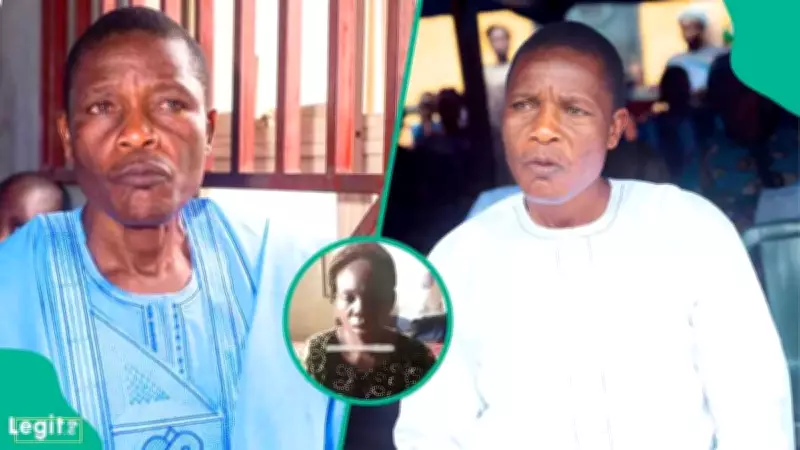
The grief of Michael's family mirrors the grief of a nation that increasingly seems unsure how to mourn. In a heartbreaking interview with Punch Newspaper, his elder brother, Samuel Oyedokun, uttered words that should haunt every public office holder in Nigeria: “Nigeria, you killed my brother. Nigeria happened to me. I saw his head cut off. I saw the dagger. I saw the blood.” Those words are more than a cry of pain. They are an indictment.
A teacher has been taken from us, Michael Oyedokun, and with him, the fragile certainty that classrooms are still sacred. But even his death does not stand alone. It drags behind it a more unbearable silence: dozens of children who have not returned, whose voices now echo only in the memories of waiting parents.
Children Trapped Between Fear and Waiting
Somewhere beyond the reach of maps and morning news, boys and girls between the ages of two and fifteen are held in places where time no longer behaves like time. Childhood, in those spaces, is not laughter or learning; it is waiting, confusion, and fear too large for their small bodies to carry. Their parents wake into each day suspended between hope and collapse. A ringing phone is no longer communication; it is a verdict. A rumour is like a possibility of life or death. The days no longer pass; they accumulate like wounds.
The words of Christ in Matthew 19:14 still ring like a moral indictment: “Let the little children come to me, and do not hinder them, for the kingdom of heaven belongs to such as these.” But here, children are hindered not only from heaven, but from the most basic promise of earth: safety. Those who should be memorising multiplication tables are instead learning the grammar of survival. How to stay quiet, how to obey, how not to disappear further.
A Nation Learning to Live with Statistics of Pain
Sometime last year, the National Bureau of Statistics released a nationwide survey on crime and security covering 2023 and 2024. The findings painted a frightening picture. Across Nigeria, approximately 2.2 million kidnapping incidents occurred within that period. Ransom payments reportedly reached a staggering ₦2.2 trillion. On average, families paid about ₦2.7 million to buy back the lives of their loved ones. While many victims eventually regained freedom, thousands never returned home. Some were killed. Others disappeared forever.
The numbers tell one story, but the emotional reality tells another. Increasingly, Nigeria feels like a country trapped inside a metaphor of doom. Terror has become so familiar that it almost seems clothed in legitimacy, moving openly through communities while emissaries of death answer its call. From Benue to Taraba, from Plateau to Zamfara, from Borno to Oyo, grief travels with astonishing freedom. It marches through villages, schools, farms, highways, and homes, leaving behind a trail of widows, orphans, broken families, and unanswered questions.
Security reports identify the Orire attackers as members of Jama'atu Ahlis Sunna Lidda'awati wal-Jihad, a faction associated with Boko Haram. What once felt like a distant northern rupture has become a national wound without borders. Terror, as the British historian Hannah Arendt once warned in her reflections on violence, does not merely destroy bodies; it destroys the “space between people”—the trust that allows society to exist at all. That space is now shrinking in real time.
The Politics of Silence and Inaction
Perhaps what should alarm us most is not only the violence itself, but our growing fluency in living with it. We have become, slowly and almost imperceptibly, a people trained to absorb horror. We scroll past massacres between breakfast and traffic updates. We discuss kidnappings with the same emotional weight as football scores. We mourn briefly, efficiently, and return to routine. The abnormal has learned to dress like the normal.
Meanwhile, the machinery of politics continues without interruption. Alliances are negotiated. Aspirations are announced. Campaign strategies are refined. But in Oriire and other shattered corners, families sit in rooms where silence has become a second religion, waiting for children who may never walk through the door again. The moral hierarchy of the nation begins to look inverted—where electoral calculations carry more urgency than human survival.
The Russian novelist Fyodor Dostoevsky once wrote in The Brothers Karamazov that “the degree of civilisation in a society can be judged by entering its prisons.” If that is so, then perhaps ours can also be judged by entering its abandoned classrooms—places where chalkboards still stand, but laughter has been erased.
A Yoruba proverb warns: Bi a kò bá gbọ́ ìkìlọ̀ òní, a ó gbọ́ ìró ìjà ní ọ̀la. It means if we refuse today’s warning, tomorrow will speak in the language of war. Oriire has already spoken. Michael Oyedokun's grave has spoken. The tears of waiting parents have spoken. The frightened faces in those captivity videos have spoken. The only unanswered question is whether those entrusted with power are listening or whether we shall soon gather again, raise our glasses once more, toast another victim, and wait for the next name to be called.
Oluwafemi Popoola is a journalist, media strategist, political analyst, and columnist with 8 years’ experience, providing in-depth commentary on governance, public policy, and democracy in Nigeria and beyond. Disclaimer: The views and opinions expressed here are those of the author and do not reflect the official policy or position of Legit.ng.