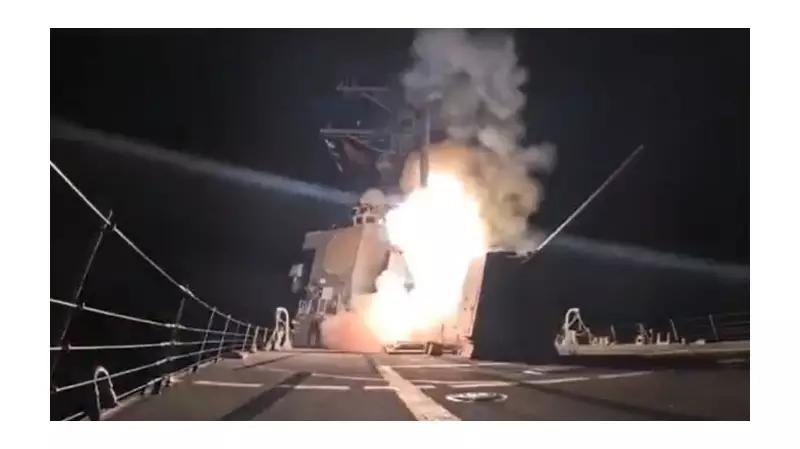
Reactions ranging from fear and praise to deep skepticism have followed the recent joint military operation between the United States and Nigeria in Sokoto State. The airstrikes, which targeted suspected Islamic State (ISIS) hideouts on Christmas Day, have ignited a complex debate over their purpose, legality, and potential impact on Nigeria's protracted security challenges.
Official Statements: Coordination and Clarification
The operation, confirmed by both Washington and Abuja, was described as a coordinated effort to degrade terrorist elements in Nigeria's northwest. US Congressman Riley Moore stated that President Donald Trump authorized the strikes to help halt attacks on Christians in Nigeria, emphasizing that the action was taken in coordination with the Nigerian government. "We did this in coordination with the Nigerian government... to help secure their country and end the slaughter of Christians in Nigeria," Moore posted on X, adding that Trump "gave the terrorists a taste of their own medicine."
Nigerian officials provided nuanced perspectives. The Foreign Affairs Minister, Yusuf Tuggar, confirmed that Abuja supplied intelligence for what he termed "joint ongoing operations," with President Bola Tinubu's authorization. However, the Special Adviser on Public Communications, Daniel Bwala, described details as "sketchy," questioning the specific congressional authorization for such action in Nigeria while acknowledging the US's global jurisdiction against ISIS.
In a move to calm economic concerns, the Minister of Finance, Wale Edun, asserted that the precise, intelligence-led strikes did not signify a state of war. "What Nigeria is confronting is terrorism. This distinction is important," Edun stated, arguing that such security actions strengthen the foundations for peace and economic growth.
Criticism and Caution from Analysts and Politicians
Despite official reassurances, the operation has drawn significant criticism. Former presidential candidate Gbenga Olawepo-Hashim framed the foreign intervention as a symptom of profound domestic security failures. "The emergence of an IS foothold reflects long-standing governance failures and weakened institutions," he argued, cautioning that airstrikes alone are an insufficient solution.
This view was echoed by the US-based Centre for Strategic and International Studies (CSIS). Their assessment warned that isolated military actions might temporarily degrade militant capabilities but fail to address the root causes of violence, which include banditry, farmer-herder conflicts, and governance deficits. CSIS also noted limited evidence that jihadist groups in northern Nigeria currently possess the capacity to directly attack the United States.
The Youth Party welcomed international support but warned against framing Nigeria's insecurity through a purely religious lens. "Terrorism in Nigeria is a crime against humanity, not a war between religions," the party's statement read, urging that any foreign intervention must prioritize civilian protection and respect national sovereignty.
On-Ground Impact and Broader Security Context
In Sokoto, residents near the affected areas reported panic, bright flashes in the sky, and intense heat, with security forces subsequently cordoning off the zones. No official casualty figures have been released, and both Nigerian and US authorities have declined to confirm militant deaths.
The strikes occur against a backdrop of severe and renewed insecurity across northern Nigeria. In a grim reminder of the ongoing threat, a roadside bomb attack in Zamfara State just days later killed several passengers, prompting condemnation from the Speaker of the House of Representatives, Tajudeen Abbas.
With US Defence Secretary Pete Hegseth hinting that "more [are] to come," the Christmas Day operation in Sokoto has opened a new, contentious chapter in Nigeria's fight against terrorism, raising critical questions about sovereignty, strategy, and the path to sustainable security.