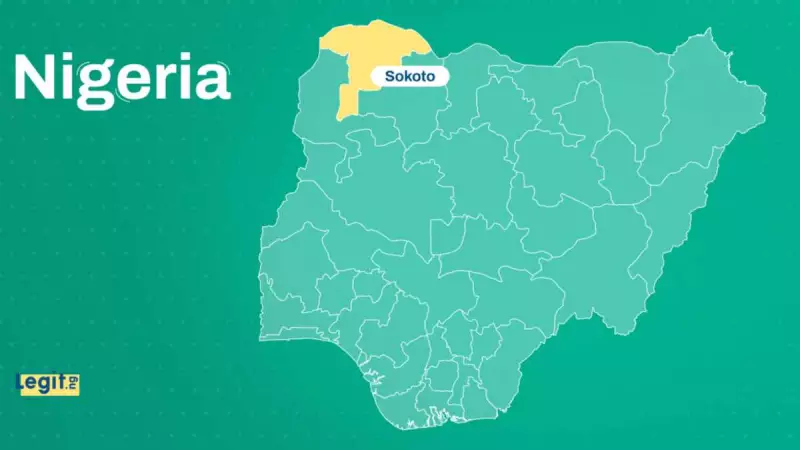
A detailed security assessment has revealed the intricate operational methods of terrorist factions in Sokoto State, coming on the heels of a significant joint military operation between the United States and Nigeria. The missile strikes, which occurred on 25 December 2025, targeted camps associated with Islamic State affiliates in Nigeria's North-west region.
Precision Strikes Follow Intelligence Cooperation
The aerial operation was authorized by US President Donald Trump and received approval from President Bola Tinubu. Officials from both nations characterized the mission as a precision effort designed to weaken terrorist infrastructure in Sokoto. The Nigerian government, led by President Tinubu, contributed crucial intelligence, while the United States Africa Command (AFRICOM) executed the strikes.
Foreign Minister Yusuf Tuggar confirmed that President Tinubu sanctioned the action based on shared intelligence with the United States. AFRICOM stated the strikes were aimed at disrupting the operational capabilities of designated terrorist groups, marking a notable instance of foreign-assisted military action on Nigerian soil in recent years.
The Fragmented Nature of Sokoto's Security Threat
Security analysis indicates that the terrorist landscape in Sokoto differs markedly from the structured insurgency in the North-east. The threat in the North-west is described as fragmented, involving a volatile mix of heavily armed bandit groups and cross-border jihadist elements.
Militant leaders like Bello Turji have conducted raids on villages and highways. Meanwhile, groups such as Lakurawa have exploited porous borders, local conflicts, and weak security presence. Experts note that the terrorism threat here is not monolithic but a complex web of criminal banditry, jihadist influence, and deep-seated communal grievances.
Local Invitations and the Growth of Extremist Groups
The report uncovers a critical factor in the expansion of militant groups: local invitation. Research indicates that in 2017, community leaders in parts of Sokoto's Gudu Local Government Area invited Lakurawa fighters to provide protection against bandits spilling over from neighbouring Zamfara State.
"They were invited to provide security to our communities," a traditional ruler told researchers. This initial support, which included donations of cash, livestock, and logistical aid, allowed the group to establish a foothold. The situation deteriorated when the militants began imposing strict rules and eventually turned on their hosts, killing one of the leaders who had initially welcomed them.
Debating Allegiances and the Civilian Toll
Analysts remain divided on the exact allegiances of groups like Lakurawa. Some studies link them to Jama’at Nusrat al-Islam wal-Muslimin (JNIM), an al-Qaeda affiliate in Mali. Others suggest that shifting alliances in the Sahel may have drawn factions closer to the Islamic State's Sahel Province. However, researchers like Malik Samuel of Good Governance Africa caution that clear evidence of Islamic State ties is lacking.
The primary victims of this complex violence are civilians. Farmers, villagers, women, and children endure killings, mass kidnappings, and displacement. While the US justification for the strikes cited the targeting of Christians, Nigerian officials and independent observers emphasize that the insecurity in Sokoto affects individuals across all faiths, driven by multifaceted factors beyond religious lines.
The assessment concludes that without sustained security reforms and enhanced regional cooperation, militant groups will continue to capitalize on Sokoto's fragile environment, despite the impact of recent military actions.