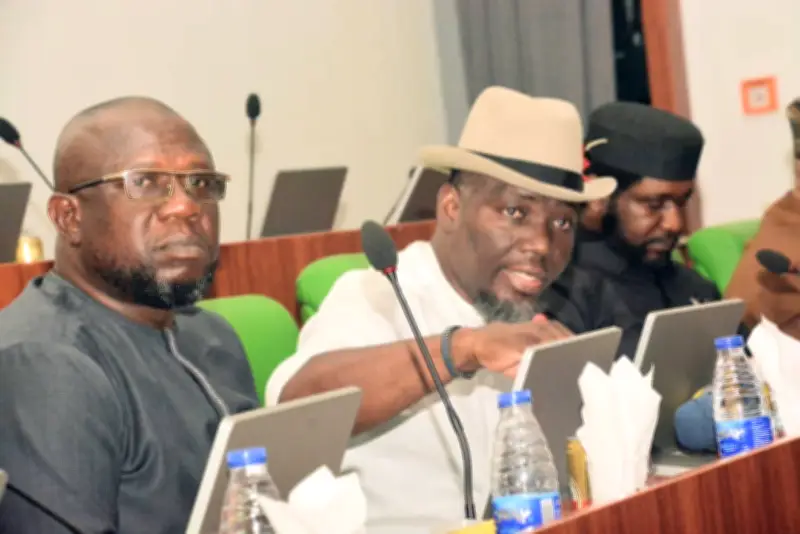
The House of Representatives Committee on South-South Development Commission has called for immediate and concrete measures to address the prolonged gas seepage in Bille Community, Rivers State, and the oil spill affecting Odidi Federated Community in Delta State. Chairman of the Committee, Hon. Julius Gbabojor Pondi, made the demand on Thursday during a stakeholders’ engagement on the Bille gas incident and a legislative hearing on the Odidi oil spill in Abuja.
Committee’s Demand for Action
Pondi stated that the two incidents have exposed oil-producing communities to prolonged environmental hazards, economic hardship, and threats to livelihoods. He insisted that government agencies and operators must move beyond assurances to measurable action. The Committee’s concern was heightened after its engagement with the Nigerian Upstream Petroleum Regulatory Commission (NUPRC) and the National Oil Spill Detection and Response Agency (NOSDRA) on July 30, 2026.
He described the gas seepage, which has persisted for about nine months without a clear resolution, as unacceptable. “The implications are serious. Beyond the potential risks to health, safety and the environment, the incident has imposed severe economic hardship on the people of Bille,” Pondi said.
Impact on Bille Community
Bille, a predominantly fishing community in Degema Local Government Area, has reportedly suffered disruptions to fishing, water supply, education, and household incomes since the incident began on November 6, 2025. NOSDRA Director, Dr Yusuf Rigasa, told the Committee that the agency had detected multiple gases, including hydrogen sulphide, methane, volatile organic compounds, and carbon dioxide, at several locations in the community.
Investigations identified “multi-point subsurface gas is bubbling” around areas including the premises of Government Primary and Secondary School, forcing the school to be abandoned. Gas bubbling was also detected around waterways and mangrove areas.
Technical Findings and Assessments
According to Rigasa, air-quality tests conducted across 19 stations in December 2025 recorded gas concentrations above applicable regulatory thresholds. Laboratory analysis also showed elevated levels of total petroleum hydrocarbons in groundwater, surface water, and sediment. He said NOSDRA’s technical assessment indicated that the gas was probably biogenic, resulting from the decomposition of organic matter, while stressing that the agency had not established a hydrocarbon source or linked the seepage to any operator.
NUPRC, he added, had found no pipelines in the immediate affected areas, while a reservoir survey was ongoing to determine whether there was an underground hydrocarbon connection.
Community Appeals and Odidi Hearing
The Bille Kingdom Chiefs Council, however, said the community remained in crisis, with contaminated water sources, declining fishing activities, and growing health concerns. Secretary-General of the council, Chief Luckyman Egbila, appealed for immediate provision of potable water, medical support, and a permanent solution to the seepage. He said a N100 million palliative intervention from the Rivers State Government had provided some relief but was insufficient to address the prolonged crisis.
On the Odidi oil spill, Pondi said the legislative hearing would establish when the spill occurred, its cause, containment efforts, environmental impact, and the status of remediation. He pledged that the Committee’s approach would be fair, objective, and evidence-based, stressing that the House would seek accountability without prejudging any party.
Pondi said the situations in Bille and Odidi reflected a wider environmental crisis in the Niger Delta. “The wealth derived from the natural resources of the Niger Delta must not come at the unacceptable cost of the health, livelihoods and future of its people,” he said. He demanded clear resolutions, defined responsibilities, and measurable timelines, warning that the proceedings must not end with expressions of concern without implementation.