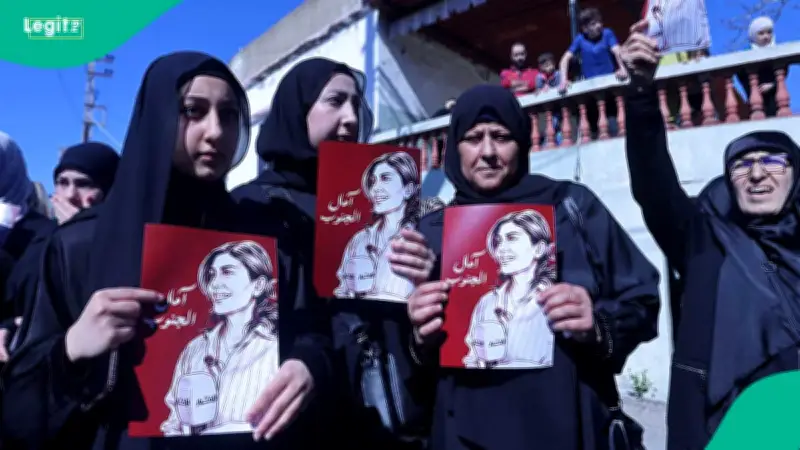
Three leading human rights organizations—Human Rights Watch (HRW), Amnesty International, and Legal Agenda—have jointly concluded that the Israeli strike which killed Lebanese journalist Amal Khalil and seriously wounded her colleague Zeinab Faraj in April 2026 constituted a war crime. The groups published their findings on Thursday, July 2026, each independently determining that Israel directly and deliberately targeted the two women despite clear evidence of their civilian status.
Deliberate Targeting of Journalists
The organizations demanded a full investigation into the strikes and called on the international community to impose a comprehensive arms embargo on Israel. Their joint report details a sequence of events in the village of al-Tiri, south Lebanon, on April 22, 2026, that they argue shows a clear pattern of intentional attacks on civilians.
Khalil, a 42-year-old journalist with the Lebanese newspaper al-Akhbar, and Faraj, a 21-year-old freelance camerawoman and photojournalist, had driven to al-Tiri to verify reports that Israeli troops had withdrawn from the area. They were following a car carrying Ali Nabil Bazzi, a municipal official from Bint Jbeil, and his companion Mohammed Hourani.
The Attack Timeline
At 2:25 pm, Israel struck the vehicle carrying Bazzi and Hourani, killing both men. Khalil immediately contacted the Lebanese civil defence for assistance. Rescue crews reached the edge of the village but were halted at a military checkpoint, awaiting Israeli authorisation to enter.
At 3:31 pm, a civil defence member called Khalil and urged her to leave in her car, as he had still not received clearance. Nine minutes later, Israel struck the journalists' car, wounding both women. They crawled into a nearby building for shelter. Faraj later recalled that Israeli quadcopter drones had hovered less than a metre from their faces while they waited.
At 4:25 pm, Israel bombed the building they were hiding in, burying both women under the rubble.
Rescue Delayed for Hours
Permission for the Lebanese Red Cross to enter al-Tiri was only granted at 5 pm. Rescuers managed to pull out Faraj, who suffered a fractured skull, a crushed hand, severe eye injuries, and damage to her right leg. Khalil remained trapped under the debris.
According to The Guardian UK, during the evacuation, an Israeli quadcopter dropped a stun grenade near the rescue workers. Witnesses reported hearing gunfire, and HRW reviewed photographs of ambulances showing bullet holes consistent with small arms fire. The rescuers were forced to retreat without Khalil.
Israeli forces finally gave clearance for rescue crews to return at 8:15 pm. Khalil's body was recovered at 11 pm. An examination at Tebnine hospital found she most likely died at approximately 7 pm, meaning she was alive for roughly two and a half hours after the final strike, trapped under rubble while rescuers were prevented from reaching her.
Israel's Response and Evidence
Israel said it "regrets any harm caused to journalists" and described the incident as part of a series of events during which two Hezbollah operatives were also killed. The Israeli military noted there was roughly two hours between the initial strike on those men and the second strike targeting the building where the journalists sheltered.
HRW Lebanon researcher Ramzi Kaiss said the evidence showed the military "knew, or should have, that Faraj and Khalil were civilians, but attacked them anyway, and then prevented paramedics from rescuing them for hours."
Heba Morayef, Amnesty International's director for the Middle East and North Africa, said the impunity Israel has enjoyed for killing journalists and civilians in Lebanon over three years has allowed its unlawful strikes to continue unchecked, and repeated the call for a comprehensive arms embargo. According to the UN human rights office, Israel has killed at least 15 journalists in Lebanon and 210 in Gaza since 2023.
Broader Context
The joint findings add to a growing body of evidence of attacks on journalists in the region. In a separate incident, Qatar-based broadcaster Al Jazeera announced on Saturday, June 20, 2026, that its journalist Ahmed Wishah was killed in an Israeli drone strike targeting a house in the Bureij refugee camp in central Gaza. Al Jazeera described Wishah as a cameraman who had been reporting from Gaza. His death marks the latest loss for the network, which has seen several of its journalists killed in the territory since the war began on October 7, 2023.