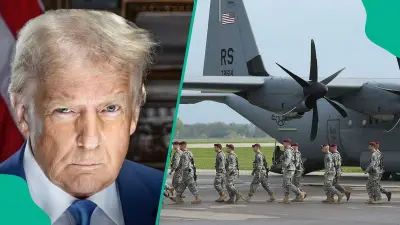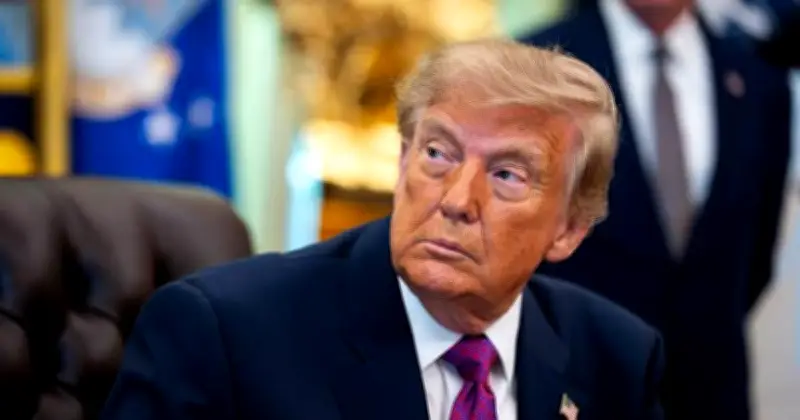
US President Donald Trump has proposed renaming the Strait of Hormuz to “Trump Strait” in a Truth Social post, following fresh US military strikes on Iranian targets near the strategic waterway. The suggestion came as tensions between Washington and Tehran escalated over alleged Iranian sea mine activity and a missile strike on a US base in Jordan.
Trump’s Proposal and Immediate Reactions
In his Wednesday post on Truth Social, Trump wrote: “Now that we have it under U.S.A. control, should we change the name Hormuz Strait to TRUMP STRAIT??? Like America itself, it would be ‘hotter’ than ever before! Thank you for your attention to this matter. President DONALD J. TRUMP.” The remark quickly drew attention across social media, with supporters and critics debating whether it was serious or another example of Trump’s trademark political rhetoric.
The proposal came shortly after the United States launched fresh military strikes on Iranian targets close to the Strait of Hormuz. According to the US president, the attacks were carried out after Iran allegedly attempted to deploy sea mines in the strategic waterway and also launched a missile attack on a US military base in Jordan. Before making the naming proposal, Trump had already warned Tehran that any retaliation would be met with even stronger military action.

Why the Strait of Hormuz Matters Globally
The Strait of Hormuz is one of the most important waterways in the world. It links the Persian Gulf to the Gulf of Oman and the Arabian Sea, making it the main shipping route for crude oil and liquefied natural gas exported from major Gulf producers. According to the US Energy Information Administration, roughly 20% of global liquefied natural gas trade passes through the strait.
The United Nations Conference on Trade and Development (UNCTAD) has also described it as one of the world’s most critical maritime chokepoints. In a report released earlier this year, the agency said the route handles around 25% of global seaborne oil trade, alongside large volumes of fertiliser and LNG. Because of its importance, any military activity in the area often sends shockwaves through international markets, with oil prices typically reacting almost immediately.
Implications for Nigeria
For many Nigerians, developments around the Strait of Hormuz are not just foreign news. Nigeria depends heavily on oil exports, while local fuel prices are also influenced by movements in the international crude market. Whenever tensions escalate in the Gulf region, global oil prices often become more volatile. That can affect shipping costs, inflation and, in some cases, the price Nigerians eventually pay for petrol and other imported goods.
As Africa’s biggest oil producer, Nigeria also closely watches developments in the global energy market because they can have a direct impact on government revenue and foreign exchange earnings. Meanwhile, Nigerians continue to maintain a strong reputation in global energy, diplomacy and international business. Professionals from the country work across major multinational oil companies, international organisations and shipping industries, contributing to discussions and decisions that shape the world’s energy landscape.
Whether Trump’s proposal goes beyond a social media post remains to be seen. For now, however, it has added another headline to an already tense standoff between Washington and Tehran.