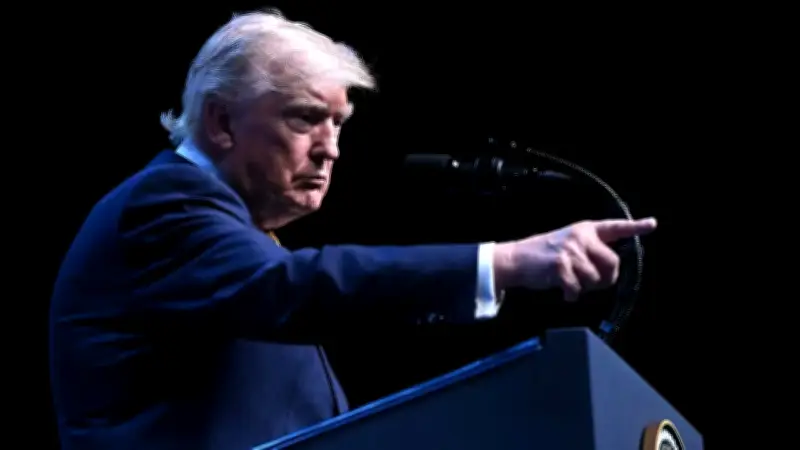
President Donald Trump has stated that the United States is "only semi-negotiating" with Iran, as tensions over the Strait of Hormuz continue. In a brief phone call, Trump indicated he is prepared to let economic pressure mount rather than launch a new military offensive, asserting that Iran "is in very bad shape" economically.
US-Iran Talks: A Mixed Picture
Trump's comments come amid contradictory signals from Tehran. While the US president claimed "very good discussions" are underway, Iranian Foreign Minister Seyed Abbas Araghchi denied any active negotiations. Araghchi stated that talks could not resume unless the US ends violations of a recent Memorandum of Understanding (MoU) between the two countries.
An agreement governing maritime traffic in the Strait of Hormuz, negotiated among Iran, Oman, and the United States, has been pending for several days. Araghchi noted that Iran and Oman are "very close" to an agreement on a temporary shipping route, but stressed that no US-Iran negotiations are currently taking place.
Economic Pressure vs. Military Action
Trump's approach appears to favor economic coercion over military force. "We are low keying it," he said, suggesting a strategy of sustained sanctions. This aligns with his earlier warning that Iran would be "hit very hard" if the strait is not reopened "very soon."
However, the president has also made bellicose statements, including a "last chance before decapitation" warning. He claimed talks about opening the strait could happen "literally by tomorrow," adding, "I mean they're going to go quickly, one way or the other. It's not very complex."
Impact on Global Oil Supplies
The Strait of Hormuz is a critical chokepoint, with approximately 20% of global fossil fuel consumption passing through it. The uncertainty surrounding its status has significant implications for world energy markets, potentially affecting oil prices and supply chains.
As of now, no concrete agreement has been announced, leaving the strait's future in limbo. The contradictory statements from Washington and Tehran underscore the fragile nature of the situation, with economic pressure and military threats both on the table.
The international community watches closely as the world's most important oil passageway remains a flashpoint for potential conflict.