The United States military has carried out airstrikes against terrorist targets in northwestern Nigeria, an operation confirmed by both U.S. President Donald Trump and Nigerian authorities. The move, while framed as a counter-terrorism collaboration, has ignited a complex debate across Nigeria concerning national sovereignty, foreign policy motives, and domestic political ramifications.
The Operation and Official Stances
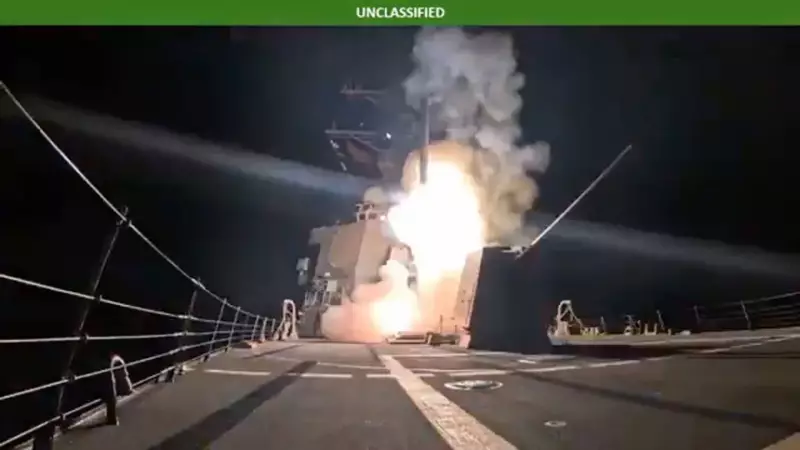
President Donald Trump announced the operation, stating the targeted militant group had "targeted and brutally murdered mostly innocent Christians, at rates not witnessed in many years, and even centuries!" The strike, visually confirmed by footage released by the U.S. Department of Defense dated Thursday, December 25, was described as targeting "ISIS Terrorist Scum."
On the Nigerian side, Foreign Minister Yusuf Tuggar informed multiple media outlets that the U.S. action was coordinated with the Nigerian government. This official line positions the strike as a product of bilateral security cooperation, involving intelligence sharing and joint operational planning.
Power Projection and Sovereignty Concerns
The event is a clear example of U.S. power projection—the ability to deploy military force far beyond its borders. This is underscored by reports that the U.S. had been conducting surveillance and intelligence-gathering flights over significant parts of Nigeria since late November, a fact highlighted by flight tracking data and officials cited by Reuters.
While some Nigerians welcome the military action against terrorists, others are deeply skeptical. The asymmetrical power dynamic that allows the U.S. to operate on Nigerian soil raises pointed questions about sovereignty. A segment of the populace, though desiring the defeat of terrorists, resents the perception that Nigeria is not a fully sovereign nation in such security matters. The public boasting by the U.S. about its strikes exacerbates this feeling of vulnerability.
Domestic Drivers: U.S. Politics and Nigerian Realities
Analysts point to several domestic factors influencing the strike. For the U.S., President Trump's actions appear aimed at appealing to his political base, particularly Christian groups within the MAGA movement, by demonstrating forceful action against Islamic extremists targeting Christians. However, this narrative overlooks that terrorism in Nigeria claims victims of all faiths, as seen in a recent attack on the Al-Adum Juma'at Mosque in Maiduguri's Gamboru market, which killed five and injured about 35 Muslim worshippers.
Within Nigeria, the political clock is ticking toward the 2027 presidential election. The current administration found it politically inexpedient to refuse cooperation with the U.S. following Trump's genocide allegations. However, this cooperation introduces risk for the ruling party's Muslim-Muslim ticket, potentially affecting its electoral prospects. Economically, Nigeria's need for continued U.S. aid and the desire to lift certain restrictions motivates its collaborative stance.
For America, maintaining influence in West Africa is crucial as China's presence grows rapidly in Nigeria and the U.S. loses strategic footing, having been required to vacate key drone bases in Mali and other parts of the region.
Strategic Implications and Unanswered Questions
The choice of northwest Nigeria as a strike zone has puzzled many, as the region is considered relatively stable compared to the terrorist strongholds in the Northeast active since 2009. This has sparked debates among Northern political and religious leaders about the underlying rationale.
A significant strategic concern is that airstrikes without a complementary ground troop strategy may simply displace terrorists. The fear is that militants could be pushed from rural forests into more populated areas, potentially shifting their tactics from insurgency to increased kidnapping and banditry, thereby spreading insecurity to new zones.
Ultimately, while security cooperation between nations is not inherently problematic, this event lays bare the intricate layers of international power play, domestic politics, and the enduring challenge of crafting a counter-terrorism strategy that truly strengthens, rather than complicates, long-term national security.