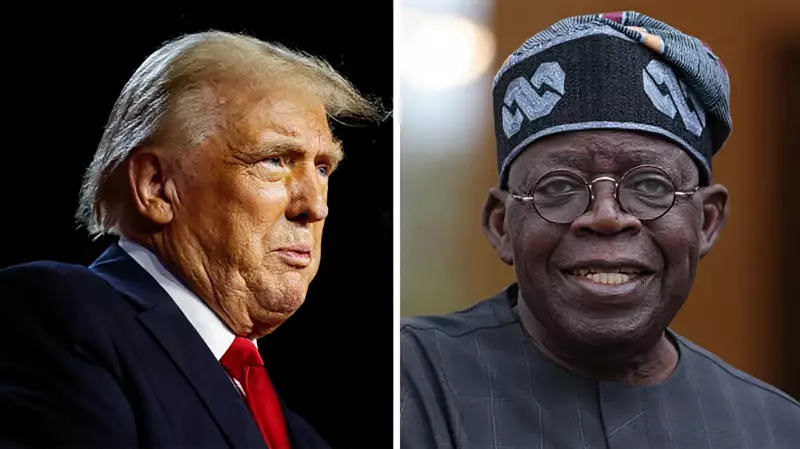
On Christmas Day, 2025, United States warplanes conducted airstrikes against suspected Islamic State positions in Sokoto State, an action confirmed by both US President Donald Trump and Nigerian authorities. President Trump framed the operation as a decisive blow against militants targeting "primarily innocent Christians," reinforcing a narrative that has defined his administration's approach to Nigeria. This military intervention, however, has ignited a complex national conversation extending far beyond the battlefield, touching on sovereignty, diplomacy, and competing narratives about Nigeria's security crisis.
Diplomatic Appeals and the Clash of Narratives
While the Nigerian government confirmed its cooperation in the operation, the event underscores a persistent diplomatic struggle. The Federal Government has repeatedly contested the "Christian genocide" narrative promoted by the Trump administration, arguing that the violence plaguing the nation affects both Christian and Muslim communities and is rooted in long-standing insurgency and criminality, not solely religious persecution. Despite sending delegations to Washington to challenge this framing and the contentious "Country of Particular Concern" label, US officials appear unmoved, highlighting a deep ideological fracture in how the two allies perceive the conflict.
Political analyst Tobi Adetunji urged a focus on internal security weaknesses before challenging foreign narratives. "Every insecurity challenge a nation faces is first internal," Adetunji stated, questioning the sufficiency of Nigeria's diplomatic engagements. He expressed skepticism that US perceptions had changed, noting a lack of public reports on such discussions. He stressed that Christian-targeted violence is a subset of a broader national security failure affecting all citizens.
Legal and Sovereignty Implications of Foreign Intervention
The airstrikes have provoked intense legal debate regarding Nigeria's territorial integrity. Lawyer Evans Ufeli cautioned that any foreign military action without explicit federal consent violates Nigeria's sovereignty under the UN Charter and could warrant international sanctions. He emphasized that even with consent, operations must adhere to international humanitarian law, including the Geneva Conventions' principles of distinction and precision to avoid civilian casualties.
Another legal perspective, offered by Chinwike Ezebube, argued that terrorism's global nature can justify cross-border interventions under international law. "Since what they are trying to curb has a global effect, it may not be seen as breaching Nigerian territorial integrity," Ezebube said, acknowledging that the issue becomes contentious when viewed through the lens of local sovereignty and political interests. Senior lawyer Akeem Aponmade viewed the joint action as a "win-win" face-saving measure that allowed the US to avoid a blatant violation of international law while providing Nigeria with needed assistance. He, however, called for clearly defined rules of engagement to protect national sovereignty.
Mixed Reactions: From Support to Outright Condemnation
Reactions from across Nigerian society reveal deep divisions. The pan-Yoruba socio-political organisation, Afenifere, offered full support, describing the strikes as "timely and necessary" to restore safety after years of relentless insecurity. Similarly, Human Rights Writers Association of Nigeria (HURIWA) director Comrade Emmanuel Onwubiko called it a "justified and long-overdue response" welcomed by millions of Nigerians.
Conversely, prominent Northern Islamic cleric Sheikh Ahmad Gumi called for an immediate halt to military cooperation with the US, warning that American involvement could worsen security and polarize the nation along religious lines. He argued that Nigeria possesses sufficient personnel to handle its security challenges if properly organized.
The Peoples Democratic Party (PDP) criticized the government's communication strategy, faulting the fact that Nigerians learned of the operation first from US officials. The party urged more transparent and proactive communication to maintain public confidence.
Security expert Dr. Kabir Adamu expressed surprise at the target location—Jabo in Sokoto State—which he said is not among the known 80 bandit or terrorist enclaves his firm monitors. "Why not Sambisa Forest? Why not where Bello Turji is?" he questioned, while acknowledging that prior diplomatic talks likely led to an agreement enabling the strikes.
Former UN official Professor Babafemi Badejo provided a nuanced view, noting that sovereignty entails a responsibility to protect citizens. He suggested that when a state is unable to fulfill this duty, international intervention can be justified. He urged the Tinubu administration to demonstrate serious political will in combating all terrorist groups and their financiers.
The Sokoto airstrikes have thus become a defining moment, forcing a national reckoning on security, sovereignty, and the stories told about Nigeria's most profound crisis.