The recent military intervention by the United States against terrorist hideouts in Sokoto State has plunged Nigeria into a critical juncture, sparking intense national debate over sovereignty, governance, and the role of foreign powers in domestic security. Beyond the immediate political and security shockwaves, the Christmas Day operation has also triggered concerns among investors, prompting the Federal Government to issue swift reassurances about the nation's economic stability and reform agenda.
Divergent Reactions: From Yoruba Backing to Governance Critique
The Alliance for Yoruba Democratic Movements (AYDM), a coalition of approximately 130 pan-Yoruba groups, has hailed the U.S. action as a bold and necessary step. In a statement signed by General Secretary Popoola Ajayi and Rasaq Arogundade, the AYDM argued that violent extremism had severely threatened Nigeria's sovereignty, making global partnerships essential.
The coalition did not stop there. It issued a stark call for the immediate arrest of prominent Islamic cleric, Sheikh Ahmad Gumi, whom it labelled the "ideological face of terrorism" in Nigeria. The group accused Gumi of providing intellectual cover for extremist violence and threatened to campaign for his prosecution at the International Criminal Court.
Furthermore, the AYDM linked the security crisis to a fundamental clash of values, demanding a radical restructuring of the Nigerian state to allow for ethnic self-determination. It also urged the government to expand its security alliances to include nations like Russia and Israel, citing their extensive counter-terrorism experience.
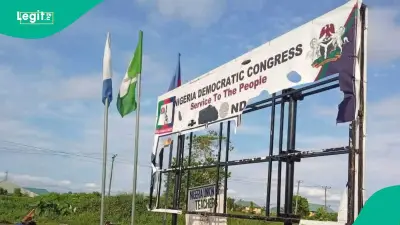
In sharp contrast, former presidential candidate Gbenga Hashim presented the U.S. strikes as a damning indictment of Nigeria's security and governance failures under the APC-led administration. Hashim stated that the intervention reflected growing international alarm over the deteriorating situation, particularly in the North-West where terrorist groups are gaining ground.
He attributed the crisis to deep-rooted poverty, institutional weakness, and prolonged governance failure, warning that external interventions would fail without urgent internal reforms and decisive leadership. Hashim questioned the Tinubu administration's readiness to confront extremist networks, suggesting that political compromises continue to hamper an effective response.
Government's Economic Reassurance and Ongoing Security Threats
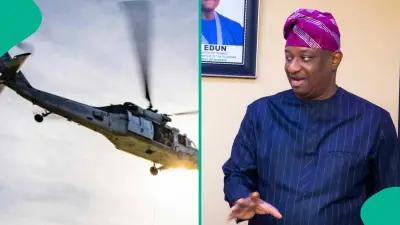
Amid the political firestorm, the Federal Government moved quickly to calm financial markets. The Minister of Finance and Coordinating Minister for the Economy, Wale Edun, personally signed a statement describing the Sokoto operation as a "precise, intelligence-led" action targeting only terrorist elements.
Edun argued that such security measures, far from destabilising the economy, actually strengthen the foundations for peace and sustainable growth. He highlighted Nigeria's economic resilience, noting a GDP growth of 4.23% in Q2 2025 and 3.98% in Q3, with a declining inflation rate now below 15%. Edun also pointed to recent credit rating upgrades by Moody's, Fitch, and Standard & Poor's as endorsements of the government's reform trajectory.
However, even as the government sought to project stability, fresh security incidents underscored the persistent threat. Suspected Islamic State West Africa Province (ISWAP) fighters raided Ja Jibiri and Ladu villages in Yobe State on December 27, injuring a village head, abducting a driver, and looting a health facility.
Separately, in Kano State, troops clashed with bandits in the Goron Dutse area of Shanono Local Council, killing nine criminals. The bandits, however, managed to abduct six persons and rustle 40 cows during the prolonged gunfight, which also claimed the life of a vigilante member.
International Justification and Strategic Analysis
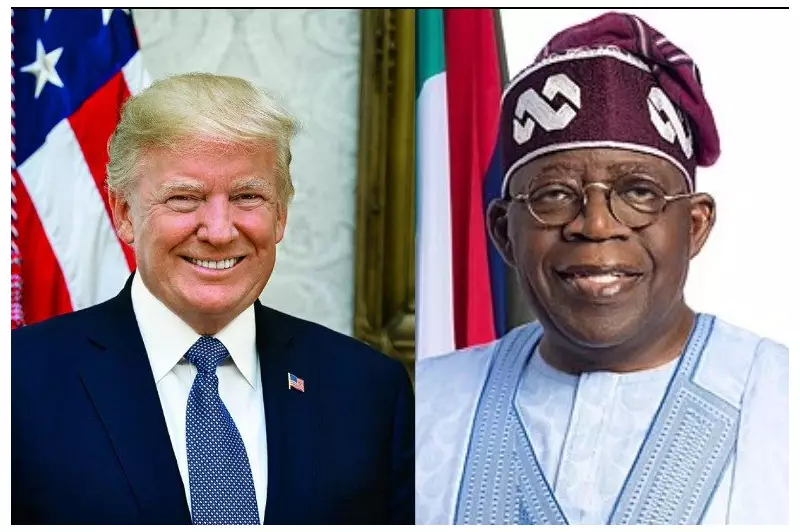
The U.S. action received justification from a senior Republican lawmaker, Mike Turner of Ohio, who sits on the House Armed Services Committee. Turner stated that the strikes in Nigeria and Syria were consistent with Washington's long-standing policy against Islamic extremism, a stance maintained across both terms of former President Donald Trump.
He framed the operation as a continuation of the global conflict with the Islamic State (IS), rejecting notions of a major policy shift. Trump himself had earlier characterised the missile strikes as a "Christmas present" for IS militants in Nigeria, vowing further action if attacks on Christians continued.
Providing strategic context, the Yoruba Ronu Leadership Forum explained why Sokoto was a logical first target. Its President, Akin Malaolu, described Sokoto as the critical "first bus stop" for extremist groups moving from the Sahel into Nigeria, given its historical significance as the former seat of the Sokoto Caliphate. The group warned that the intervention might push terrorist cells into urban centres, necessitating heightened vigilance in cities, markets, and places of worship across the country.
The events of the past days have undeniably placed Nigeria at a complex crossroads, where issues of national sovereignty, internal security failure, economic confidence, and international partnership are now inextricably linked, demanding nuanced and courageous leadership.