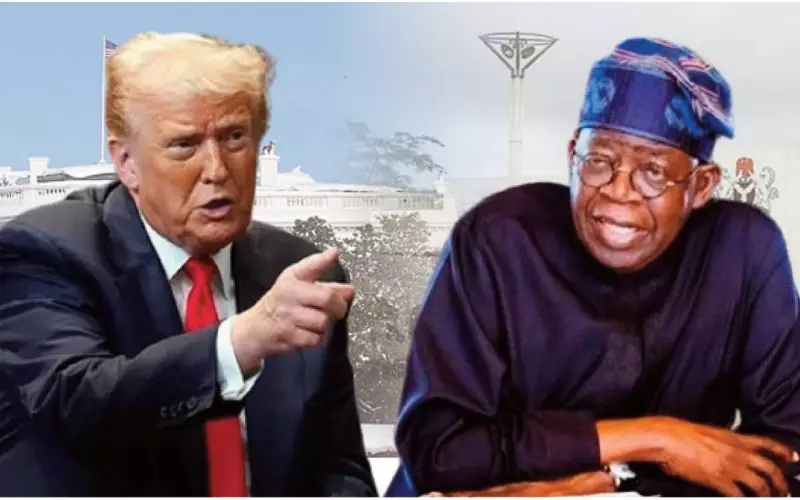
On Christmas Day, 25 December 2025, a significant military operation unfolded in northwestern Nigeria, marking a new chapter in the country's complex security landscape. The United States, in coordination with Nigerian authorities, launched a series of airstrikes targeting militant bases linked to the Islamic State group. The operation, first announced by US President Donald Trump, initially sparked concerns over national sovereignty before both governments confirmed it was a joint effort sanctioned by Nigerian President Bola Tinubu.
Operation Details and Joint Involvement
The Nigerian government, through Information Minister Mohammed Idris, stated that the attack was carried out with the "full involvement of the Armed Forces of Nigeria." This clarification was crucial to dispel early fears of a unilateral breach of sovereignty. The strikes were executed using guided missiles launched from large Reaper drones. According to Abuja, these drones operated from "maritime platforms domiciled in the Gulf of Guinea." Debris from the munitions was reported in Jabo village within Sokoto State's Tambuwal Local Government Area and in nearby Kwara state. Nigerian authorities confirmed that no civilian casualties occurred during the operation.
Targets and Analyst Scrutiny
Washington stated the objective was militants affiliated with the Islamic State. US African Command reported multiple casualties but did not specify the exact targets among the numerous armed groups in Nigeria. The Nigerian government provided more precise locations, identifying two major ISIS terrorist enclaves within the Bauni forest in Tangaza Local Government Area of Sokoto state as the targets.
However, security analysts have questioned the strategic choice of Sokoto in the northwest. This region is predominantly plagued by armed criminal gangs, commonly referred to as "bandits," rather than entrenched jihadist networks. Victoria Ekhomu, an analyst and head of the Association of Industrial Security & Safety Operators of Nigeria, noted that the northeast, particularly Borno state, remains the epicentre of Nigeria's jihadist insurgency. She argued that if strikes were to be conducted, they should focus on the most affected areas, not the least.
Nigeria's Foreign Minister referenced a complex web of threats, listing activities of JNIM, ISWAP, Lakurawa, and Mahmuda. The mention of Lakurawa is notable, as some researchers link this Sokoto-based jihadist group to the Islamic State Sahel Province (ISSP), active in Niger and Mali. The timing of the strikes on Christmas Day has also drawn commentary. Ekhomu suggested the date, coinciding with the celebration of the birth of Jesus Christ, might indicate President Trump's specific focus on Christian persecution narratives, which he had previously raised in late 2024.
Broader Context and Future Implications
Nigeria has been battling a jihadist insurgency in its northeast since 2009, primarily against Boko Haram and its rival faction, the Islamic State West Africa Province (ISWAP). The conflict has since seen spillovers and the emergence of affiliated groups in other regions, including the northwest. There are growing fears that Al-Qaeda-linked Group for the Support of Islam and Muslims (JNIM), a powerful Sahel jihadist group, could establish a foothold in Nigeria following an attack on the Nigeria-Benin border in October 2024.
Both US and Nigerian officials have indicated that more strikes are expected in the future. Security analyst Brant Philip described the Christmas Day operation as "a symbolic start to official US operations in Nigeria," suggesting that while the immediate operational results might not be monumental, they signal a deeper, ongoing engagement. This development places Nigeria's multifaceted security challenges—encompassing banditry, communal conflicts, and transnational jihadism—under an intensified international spotlight, with significant implications for future counter-terrorism strategy and US-Nigeria relations.