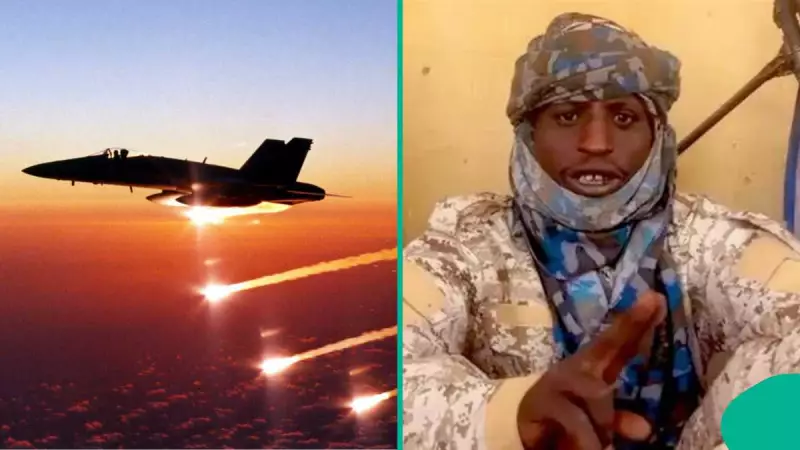
In a landmark military operation, the armed forces of the United States and Nigeria conducted coordinated missile strikes on December 25, targeting camps of Islamist militants in Sokoto State. This action represents one of the most significant foreign-enabled military interventions on Nigerian soil in recent history.
Operation Details and Presidential Authorization
The precision strikes were ordered by US President Donald Trump and received approval from Nigerian President Bola Tinubu. Officials from both nations described the Christmas Day operation as focused on designated terrorist camps linked to the Islamic State (ISIS). Nigeria's Foreign Minister, Yusuf Tuggar, confirmed that the Nigerian government provided crucial intelligence support for the mission.
The United States Africa Command (AFRICOM) stated that the strikes specifically aimed at ISIS positions within Sokoto, with the objective of degrading the group's operational capabilities. This joint action underscores a deepening security collaboration between the two countries in the face of persistent threats.
The Complex Web of Terrorism in Sokoto State
The security situation in Nigeria's North-west, particularly Sokoto State, differs markedly from the long-standing Boko Haram insurgency in the North-east. Here, the threat is more fragmented, involving a volatile mix of cross-border jihadist fighters and radicalised bandit groups. Prominent militant leaders like Bello Turji have been responsible for attacks on villages and travellers.
A particularly complex group is the Lakurawa jihadists. Initially invited by local community leaders in Tangaza and Gudu Local Government Areas back in 2017 to help combat banditry, the group later turned on its hosts. They imposed strict Islamic practices, taxed herders, and launched attacks, including the killing of a district head.
Experts are divided on the group's current allegiance. While some research, like that by analyst James Barnett, suggests Lakurawa may now be affiliated with the Islamic State Sahel Province (ISSP), others, such as Malik Samuel of Good Governance Africa, maintain the group is more closely linked to al-Qaeda's Jama’at Nusrat al-Islam wal-Muslimin (JNIM). This debate highlights the fluid and shifting nature of jihadi alliances in the region.
Civilian Impact and Aftermath of the Strikes
Years of violence from bandits and militants have taken a devastating toll on civilians in Sokoto. Farmers, villagers, women, and children have endured raids, kidnappings, and killings, forcing many to flee their homes and disrupting local economies and social life.
While President Trump justified the missile strikes by claiming terrorists had targeted Christians, Nigerian officials and independent observers emphasize that the insecurity in Sokoto affects individuals of all faiths. They point to a combination of criminal banditry, jihadi violence, and inadequate state protection as the root causes of the instability.
Following the December 25 strikes, credible reports from community leaders indicated that suspected terrorists had begun relocating from the affected areas, moving in small groups to evade further targeting. This underscores the persistent and adaptive nature of the security challenge, suggesting that military action alone may not be a definitive solution without broader strategies to address governance and economic grievances in the region.