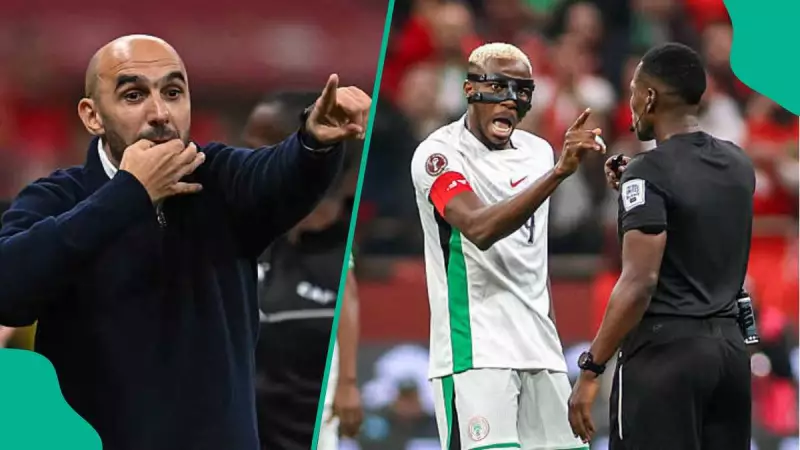
Morocco's national team coach, Walid Regragui, has issued a strong rebuttal to allegations of refereeing favouritism made by several opposing nations, including Nigeria, at the ongoing 2025 Africa Cup of Nations (AFCON). The host nation's path to the final has been clouded by claims from defeated opponents who suggest the Atlas Lions have benefited from questionable officiating decisions.
Opponents Cry Foul Over Officiating Decisions
The controversy ignited following Morocco's knockout stage victories. The Algerian Football Federation lodged formal complaints with both CAF and FIFA after their quarterfinal exit, citing specific refereeing errors. This set a precedent for other nations.
Cameroon, eliminated by Morocco in the Round of 16, pointed to two critical penalty incidents that were not awarded. In that match, Moroccan defender Adam Masina was involved in challenges on Bryan Mbuemo and Etta Eyong inside the box, but referee Dahane Beida allowed play to continue. Morocco went on to win the match 2-0.
The most vocal complaints came from Nigeria after their dramatic semifinal defeat. The Super Eagles lost 4-2 on penalties following a tense 0-0 draw after extra time. Nigerian players, including star striker Victor Osimhen, Akor Adams, Moses Simon, and head coach Eric Chelle, publicly criticized the performance of Ghanaian referee Daniel Nii Laryea. They claimed his decisions consistently favoured the Moroccan side, sparking widespread debate on Nigerian social media and sports platforms.
Regragui's Firm Defence: Performance Over Prejudice
In the face of these mounting allegations, Coach Walid Regragui was unequivocal in his response. He dismissed the notion that referees have handed his team an advantage, attributing Morocco's success solely to their football and the immense support of the home crowd.
"We're the team to beat. As the team to beat, people will try to find all sorts of reasons to say Morocco has an advantage," Regragui stated. "The only advantage that Morocco has at this Africa Cup is playing in front of 65,000 spectators. The rest is on the field, we speak on the field."
He further defended his team's campaign by highlighting that Morocco has also been on the wrong end of contentious calls. The coach cited rejected penalty appeals in their group stage matches against Mali and Tanzania. Regragui also pointed to statistical evidence, suggesting Morocco creates more scoring chances and has not profited from goals being disallowed against their opponents.
"When you want to get rid of something, you find a pretext," he added, implying the accusations were merely excuses from disappointed rivals.
Road to the Final and Lingering Tensions
The fallout from these allegations prompted a reaction from Confederation of African Football (CAF) President, Patrice Motsepe, though the specifics of his response were not detailed in the initial reports. The situation has added a significant layer of off-pitch drama to the tournament's climax.
Despite the controversy, Morocco's footballing journey continues. The Atlas Lions are now set to face Senegal in the AFCON 2025 final on Sunday, January 18, where they will aim to win their first continental title in decades on home soil. For Nigeria and the other complainant nations, the tournament ends with a bitter taste, their exit framed not just by defeat but by a profound sense of sporting injustice.
The claims and counter-claims have undoubtedly intensified the rivalry between North African and West African football powerhouses, setting the stage for highly charged encounters in future competitions. The debate over refereeing standards at major tournaments like AFCON is likely to continue long after the final whistle blows in Rabat.