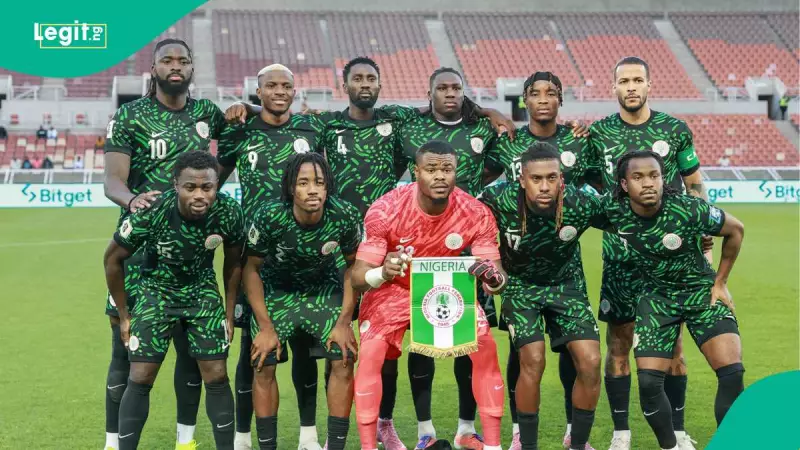
In a dramatic twist that has sent shockwaves through Nigerian football, the Super Eagles' dream of reaching the 2026 FIFA World Cup has been handed a significant lifeline. This follows a formal protest lodged by the Nigeria Football Federation (NFF) to world football's governing body, FIFA, over the alleged use of ineligible players by the Democratic Republic of Congo during their crucial playoff clash.
The Controversial Playoff Defeat
The Super Eagles' hopes for a place at the 2026 tournament were seemingly dashed in December 2025 after a heartbreaking penalty shootout defeat to DR Congo in the African playoffs held in Morocco. This loss meant Nigeria failed to qualify for a second consecutive World Cup, having also missed out on the Qatar 2022 edition after a playoff defeat to Ghana.
The match took a decisive turn when star striker Victor Osimhen was forced off with an injury at halftime, severely weakening Nigeria's attack and allowing the Congolese Leopards to gain control. The result also intensified scrutiny on the team's Franco-Malian coach, Eric Chelle, who was hired in January 2025 specifically to salvage the qualifying campaign but ultimately fell short of his primary objective.
NFF Files Official Protest Over Player Eligibility
The landscape changed completely when reports emerged that DR Congo may have fielded multiple players who were not eligible to represent the Central African nation. The NFF swiftly acted on these allegations. Dr. Ademola Olajire, the NFF's Director of Media and Communications, confirmed to the press that the federation had indeed submitted a formal protest to FIFA.
Echoing this confirmation, the NFF's General Secretary, Dr. Mohamed Sanusi, provided further details to the Vanguard newspaper. He argued that DR Congo had misled FIFA into clearing the players in question. The core of the protest hinges on the Congolese constitution, which, according to Nigerian journalist Osasu Obayiuwana, forbids dual citizenship.
This constitutional clause implies that any footballer switching international allegiance to DR Congo must formally renounce their previous nationality to legally hold a Congolese passport. The NFF's protest suggests that several players, including those holding European passports, may not have fulfilled this legal requirement, rendering them ineligible.
FIFA's Investigation and Potential Consequences
FIFA has now opened an investigation into the matter, focusing particularly on the playoff matches. If the allegations are proven, the consequences for DR Congo could be severe, including possible expulsion from the World Cup qualifying process or the annulment of their results.
Originally, DR Congo was scheduled to face the winner of the semi-final between Jamaica and New Caledonia in an intercontinental playoff for a final World Cup slot. However, the ongoing investigation casts serious doubt on this fixture. Should DR Congo be disqualified, Nigeria could be reinstated into the qualification pathway, offering the Super Eagles an unexpected and monumental second chance.
In a related development, FIFA previously responded to viral rumors concerning the eligibility of former Manchester United defender Aaron Wan-Bissaka, who played for DR Congo in the playoffs. A FIFA official debunked those specific reports at the time, stating the player had been cleared. However, the current NFF protest appears to encompass a broader set of players and documentation issues beyond any single individual.
What This Means for Nigeria's Football Future
While the football world awaits FIFA's final ruling, the development has reignited passionate debate among Nigerian fans. Coach Eric Chelle, despite the initial qualifying failure, remains in charge and is now preparing the team for the 2025 Africa Cup of Nations in Morocco, which kicks off on December 21.
The potential for a World Cup reprieve represents a huge moment for Nigerian football. It underscores the importance of strict adherence to regulatory frameworks in international sport. For now, the Super Eagles, their management, and millions of supporters across Nigeria hold their breath, hoping that this administrative lifeline translates into a sporting one on the road to the 2026 FIFA World Cup.