Former Super Eagles Coach Rohr Explains Why Bayern Munich Star Did Not Play for Nigeria
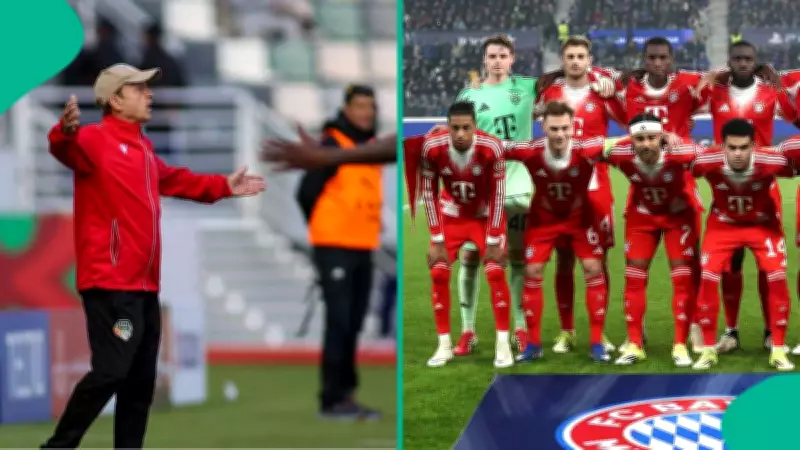
Former Super Eagles coach Gernot Rohr has provided detailed insight into why Bayern Munich star Michael Olise never represented Nigeria at the senior international level during his managerial tenure. The German tactician, who managed Nigeria's national football team between 2016 and 2021 before being relieved of his duties by former Nigeria Football Federation (NFF) president Amaju Pinnick, explained the circumstances that led to the talented winger choosing France over Nigeria.
Rohr's Successful Recruitment Record
During his time as Super Eagles manager, Gernot Rohr, alongside former NFF president Amaju Pinnick, successfully convinced several foreign-born players to represent Nigeria. Notable among these were Alex Iwobi, Ola Aina, and Joe Aribo, who all became key figures in the national team setup. Rohr's tenure was marked by significant achievements, including qualifying Nigeria for the 2018 FIFA World Cup in Russia and guiding the West African giants to a third-place finish at the 2019 Africa Cup of Nations (AFCON).
The COVID-19 Pandemic Factor
Rohr disclosed that Michael Olise had been invited to feature for Nigeria during the qualifiers for the 2021 Africa Cup of Nations. According to the current Benin Republic manager, the COVID-19 pandemic played a crucial role in preventing the winger from traveling to Nigeria at that critical time. The global health crisis created unprecedented challenges for international football and player movement.
"The COVID-19 virus played a vital role because he (Michael Olise) was willing to come to Nigeria," Rohr explained. "There was no competitive football for a while, and when he moved to the English Premier League at the end of the season (2020/21), he had other options and eventually made his decision. I am happy that he is currently doing well with the French national team."
Timeline of Missed Opportunity
Gernot Rohr had extended an invitation to Michael Olise when the winger was playing for Reading FC in the EFL Championship. The Olympic silver medalist was placed on the standby list for Nigeria's matches against the Benin national football team and Lesotho national football team. However, his participation was hindered by the absence of a Nigerian passport at that crucial juncture.
During the COVID-19 outbreak, Olise eventually opted to represent the French national football team after securing a move to Crystal Palace in 2021. This decision came after the pandemic disrupted international football schedules and created uncertainty around player commitments and travel restrictions.
Olise's Current Success with Bayern Munich
The 24-year-old Michael Olise is currently playing for Bayern Munich, where he won the Bundesliga title in the 2024/25 season. As a France international, Olise has become a key player for Bayern Munich in the 2025/26 season, demonstrating his world-class abilities on the European stage.
In the current Bundesliga campaign, Olise has scored 10 goals and provided 16 assists in 23 appearances. His Champions League performance has been equally impressive, with 3 goals and 7 assists in 9 matches, maintaining an 87% passing accuracy. This includes a memorable brace against Atalanta in the Round of 16, showcasing his growing influence at the highest level of European football.
Rohr's Continued Connection to Nigerian Football
Despite no longer managing the Super Eagles, Gernot Rohr maintains a connection to Nigerian football and recently offered advice on how the national team can qualify for the 2026 FIFA World Cup. The manager who guided Nigeria to the 2018 edition in Russia acknowledged the current challenges but emphasized that qualification remains possible despite having only three points from the first four games.
Rohr's insights into the Michael Olise situation highlight the complex factors that influence player decisions in international football, particularly during unprecedented global events like the COVID-19 pandemic. The story serves as a reminder of how timing, circumstances, and external factors can significantly impact national team recruitment and player development pathways.