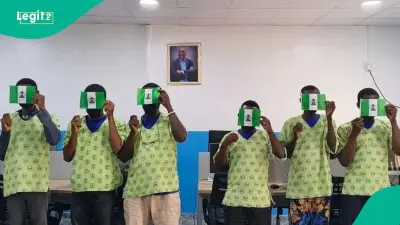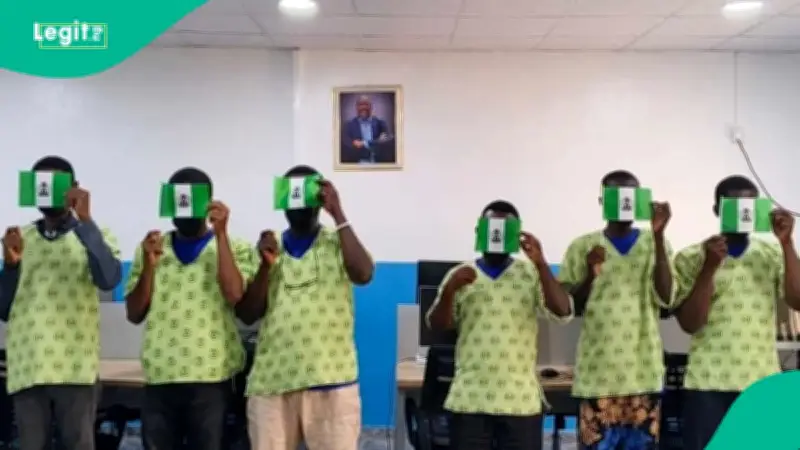
The Nigerian Correctional Service (NCoS) has participated in the 6th International Chess for Freedom Competition for the first time, joining inmates from six countries in an event designed to promote rehabilitation through intellectual activity inside custodial facilities. Participants came from England, Romania, North Macedonia, Albania, Belgium and Latvia. Nigeria's leg of the competition was held at the Bidemi Oladipupo IT Hub within the Medium Security Custodial Centre in Kirikiri, Lagos.
First Participation in International Chess for Freedom
As reported by The Punch, the Lagos State Command of the NCoS announced the development in a statement signed by its Public Relations Officer, Superintendent of Corrections Joseph Osho, on Thursday. Nigeria's involvement was made possible through a collaboration between Anchor Heritage Initiative and Chess in School, two organisations working to expand educational access and encourage strategic thinking among prison populations.
The NCoS described the debut as a meaningful step in its broader correctional reform agenda, arguing that custodial centres have a role to play in developing talent and preparing inmates to re-enter society. “Chess is more than a game of moves and counter-moves. It encourages patience, concentration, discipline, critical thinking and the ability to anticipate consequences, qualities that are essential for personal growth and responsible decision-making,” the service said in the statement.
Chess as a Tool for Mental Growth and Discipline
The NCoS also noted that the game gives inmates a platform to strengthen their mental capacity, grow in confidence and engage constructively with others. “The walls may determine where a person can physically go, but the board creates a different kind of space, a space where the mind can explore, strategy can flourish, and possibilities can emerge,” the statement added.
The Chess to School shared photos from the competition via its X handle @Chesstoschool on Wednesday, October 14, 2026. The event marked a significant milestone for the Nigerian correctional system, which has historically focused on confinement rather than intellectual development.
Rehabilitation Beyond Custody
The service used the occasion to reinforce its position that incarceration should go beyond physical confinement. It said custodial facilities must also serve as environments where inmates can acquire skills, undergo personal change and build the foundations needed for life after release. The NCoS stressed that partnerships with reputable organisations are central to achieving those goals, and expressed confidence that chess competitions and similar initiatives would support inmates in making a successful transition back into their communities.
In a related development, the National Open University of Nigeria reaffirmed its commitment to inclusive education as 56 inmates were listed among over 24,000 graduates for its 15th convocation. The university expanded access to learning through its distance education model, enabling inmates and other underserved groups to complete academic programmes. The Vice-Chancellor stated that the initiative supported rehabilitation and reintegration, presenting education as a pathway to rebuild lives after incarceration.