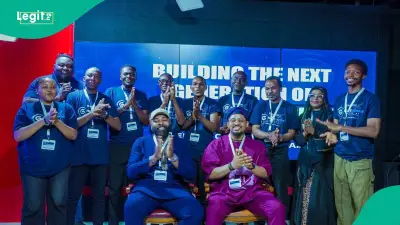
Microsoft has issued a stark warning that Africa risks becoming a net consumer of artificial intelligence (AI) technologies unless the continent significantly accelerates its adoption and development of the technology. The warning, delivered during a digital briefing on Thursday, highlights critical gaps in infrastructure, skills, and policy that are holding back the region.
Microsoft's Assessment of Africa's AI Readiness
According to Microsoft's Vice President for Africa, Lillian Barnard, the continent currently accounts for less than 1% of global AI patents and investments, despite having 18% of the world's population. Barnard stated that without urgent action, Africa will remain a passive user of AI solutions developed elsewhere, missing out on the economic and social benefits of the technology.
“We are at a tipping point. If we do not invest in the foundational elements of AI—such as data centers, cloud infrastructure, and digital skills—Africa will be left behind, importing AI tools rather than creating them,” Barnard said during the briefing.
Key Barriers to AI Adoption in Africa
Microsoft identified three primary barriers to AI adoption on the continent: inadequate digital infrastructure, a shortage of skilled AI professionals, and a lack of coherent national AI strategies. The company noted that only a handful of African nations, including South Africa, Kenya, and Nigeria, have begun developing AI policies, while most countries lack any formal framework.
Barnard emphasized that the gap in AI readiness is widening. “While developed nations are racing to deploy AI in healthcare, agriculture, and education, much of Africa is still struggling with basic internet connectivity and electricity reliability,” she added.
Economic Impact and the Risk of Dependency
Microsoft warned that the economic consequences of AI dependency could be severe. The company projects that AI could contribute up to $1.5 trillion to Africa's economy by 2030 if adoption is accelerated. However, if the current trajectory continues, the continent could lose out on the majority of that value, instead spending billions on imported AI services.
“The risk is not just economic—it is also about sovereignty and self-determination. If we do not build our own AI capabilities, we will be subject to the priorities and biases of technologies built elsewhere,” Barnard said.
Microsoft's Initiatives and Call to Action
To address these challenges, Microsoft announced the expansion of its AI Skills for Africa program, which aims to train 100,000 individuals in AI-related fields by the end of 2027. The company also pledged to invest an additional $500 million in cloud and AI infrastructure in Africa over the next five years, focusing on data centers in South Africa, Nigeria, and Kenya.
Barnard called on African governments to prioritize AI in national development plans, create regulatory sandboxes for innovation, and invest in STEM education. “The time to act is now. We cannot afford to be spectators in the AI revolution,” she concluded.