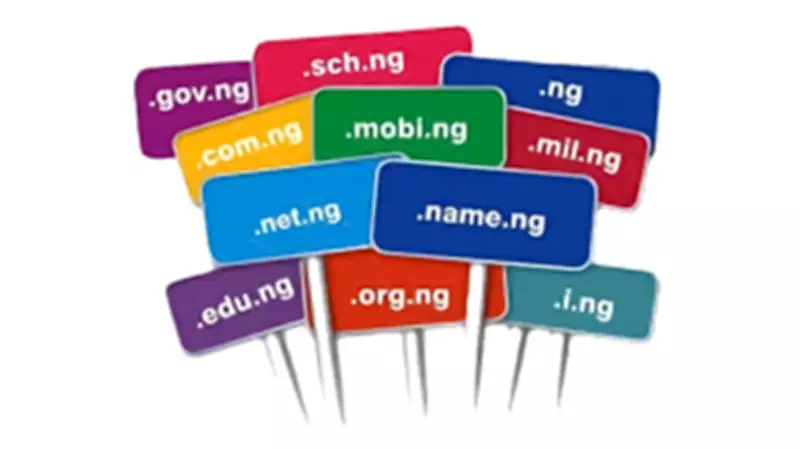
Nigeria's .ng Domain: The Foundation of Digital Sovereignty and Economic Empowerment
In the 21st century, digital ecosystems have become as crucial as physical territories, with Nigeria's .ng domain emerging as a cornerstone of its sovereign Internet identity. This country code top-level domain (ccTLD) is more than a mere technical suffix; it represents the bedrock of Nigeria's digital future, fostering trust, retaining capital, and fueling the digital economy. As Adeyemi Adepetun reports, anchoring local commerce within a secure, home-grown ecosystem is vital for national progress.
The Imperative of Owning Digital Identity
Adesola Akinsanya, President of the Nigeria Internet Registration Association (NiRA), poses a critical question: "Who truly owns Nigeria's digital identity?" He warns that relying on foreign domains like .com, .net, or .org means Nigerians are merely tenants renting their digital future, rather than owners. This analogy extends to digital public infrastructure, where experts like George Adekunle compare it to building a multi-billion naira headquarters in Lagos with land titles held abroad, risking security and stability under foreign laws.
Economic Impact and Capital Retention
A domain name is digital real estate, powering businesses and ecosystems. When Nigerian businesses opt for .com over .ng, they export economic value through registration fees and offshore data hosting, leading to capital flight. In contrast, every .ng registration supports a local economic value chain, benefiting Nigerian registrars, web developers, and marketers, and keeping revenue within national borders. Biyi Oladipo, a NiRA Board of Trustees member, highlights that .ng domains activate opportunities from websites to transactions, job creation, tax generation, and GDP growth.

Currently, Nigeria has about 240,000 .ng domains, a fraction of the potential in a country with over 35 million micro, small, and medium enterprises (MSMEs). Global benchmarks show strong economies correlate with robust local domains; for instance, Germany's .de has over 17 million registrations, and China's .cn leads with over 20 million, driven by state mandates. To achieve a $1 trillion economy by 2030, Nigeria must bridge this ccTLD gap, as 80% of its online identity is hosted elsewhere.
Cybersecurity and Local Jurisdiction Advantages
Beyond economics, the .ng domain serves as a trust signal in an era of rising misinformation and online fraud. Managed locally by NiRA, it falls under Nigerian jurisdiction, enabling authorities to intervene in cybercrime or disputes. Additionally, .ng domains enhance local search engine optimization (SEO), prioritizing Nigerian addresses in searches and boosting visibility for small businesses.
Media Advocacy and Policy Interventions
Despite its importance, the .ng ecosystem often suffers from a media blind spot, with journalists focusing on businesses rather than foundational digital identity. Oladipo outlines media roles as educators, amplifiers, trust builders, and agenda setters to promote digital sovereignty. Transitioning to a .ng-first nation requires policy interventions, such as government mandates for .ng domains in official communications, executive orders linking business registrations to .ng, tax incentives for local hosting, and integration into national Digital Economy KPIs.
Challenges and Collaborative Solutions
The path to .ng dominance faces hurdles like perceptions that foreign domains are more prestigious, infrastructure gaps, and migration reluctance. Ridwan Badmus, a technology law expert, emphasizes stronger collaboration across government, private sector, and media to address these issues, alongside enhanced security against threats like domain spoofing and data breaches. Akinsanya frames choosing .ng as an act of digital patriotism, signaling pride and permanence for Nigerian businesses.
Ultimately, the .ng domain offers authenticity, improved local search relevance, security through local governance, and a legacy contribution to Nigeria's digital economy. It is time to spotlight this foundational element and build a truly Nigerian digital landscape.