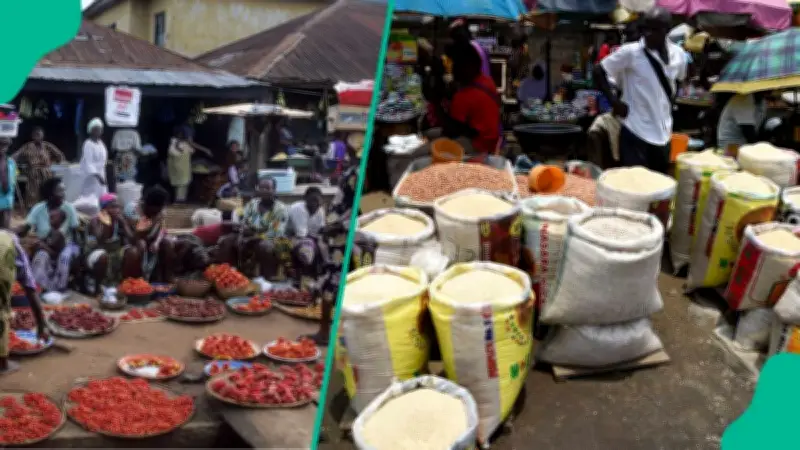
Nigerians may need to pay closer attention to food prices as some popular staples record fresh increases despite a recent slowdown in the country's food inflation rate. The National Bureau of Statistics (NBS) said food inflation eased to 19.57% in August 2026 from 20.31% in July, providing some relief to consumers. However, market prices remain uneven, with some essential food items recording significant increases in recent weeks. Rising transport costs, seasonal supply changes, flooding, and production challenges are among the factors affecting prices.
Onions and Beans Lead Price Surge
Onions are currently among the most expensive staples facing Nigerian consumers. A recent market survey found that a bag of onions in Lagos now sells for between ₦150,000 and ₦250,000, depending on the size and variety, compared with ₦50,000 to ₦70,000 in May. Traders and the National Onion Producers, Processors and Marketers Association of Nigeria attributed the increase to supply shortages, flooding in major producing states and higher transportation costs.
The price of beans has also risen sharply in Lagos. According to the News Agency of Nigeria, a derica of beans now sells for about ₦1,200 to ₦1,300, compared with ₦500 to ₦800 between April and June. Traders attributed the increase largely to seasonal factors, while consumers said the higher prices had forced some households to reduce their purchases or switch to cheaper alternatives.
Rice, Pepper, and Tomatoes Show Upward Pressure
Rice remains another major staple to watch. BusinessDay reported in September that a 50kg bag of foreign parboiled rice in Lagos had increased to about ₦68,000 from ₦58,000 in July. The pressure could persist if domestic supply remains constrained. The US Department of Agriculture's Foreign Agricultural Service has projected Nigeria's 2026/27 rice production at 8.3 million tonnes, down from 8.8 million tonnes in 2025/26.
Pepper prices are also showing upward pressure. ColdHubs' latest market report for September 28 to October 3 showed a 25kg bag of pepper selling for between ₦40,000 and ₦50,000, with the price trend classified as increasing. The report also showed significant differences between regions, with prices reaching ₦120,000 to ₦140,000 in the South-West.
Tomatoes offer another reason for consumers to monitor the market closely. Although prices fell sharply earlier in September, with a large basket at Lagos' Mile 12 Market dropping from ₦80,000 in July to ₦55,000, the latest ColdHubs data shows prices are now moving upwards again. Its latest report put 50kg tomatoes at ₦20,000 to ₦35,000 and classified the trend as increasing.
Maize, Palm Oil, and Other Staples to Watch
Maize prices have recorded a notable increase over the past three months. Data from ArketData showed the median price of white maize across 11 Nigerian markets at ₦2,100 per painter as of September 23, up 8.7% over 90 days. Yellow maize recorded an even sharper 17.6% increase over the same period, reaching a median of ₦2,500 per painter.
Palm oil is another food item showing price pressure. In Lagos, the median price was ₦1,700 per litre as of September 23, while prices varied significantly between markets. ArketData's figures showed palm oil had risen by 12.5% over the previous 90 days.
Yam prices can vary considerably depending on location and size, but the staple remains worth monitoring as households prepare for future purchases. Harvest-season supply has recently pushed prices down in some Lagos markets, creating an opportunity for consumers who can store the crop properly.
Garri and Egusi: Cheaper Alternatives and Price Trends
Garri remains one of Nigeria's most widely consumed staples and is particularly important for households looking for cheaper alternatives to rice and beans. With food prices still elevated and supply conditions changing across markets, consumers may want to take advantage of favourable prices when available rather than wait for renewed pressure.
Egusi is another popular household food worth watching. The NBS listed melon (Egusi) among commodities whose price movements contributed to the moderation in food inflation in August, highlighting how quickly prices can change as supply conditions shift.
While buying ahead can help households manage their budgets, consumers should avoid panic-buying, particularly for highly perishable items such as tomatoes and pepper. Overall, the latest market data suggests that Nigeria's food inflation picture is improving at the national level, but the relief is not uniform across individual food items or markets.