
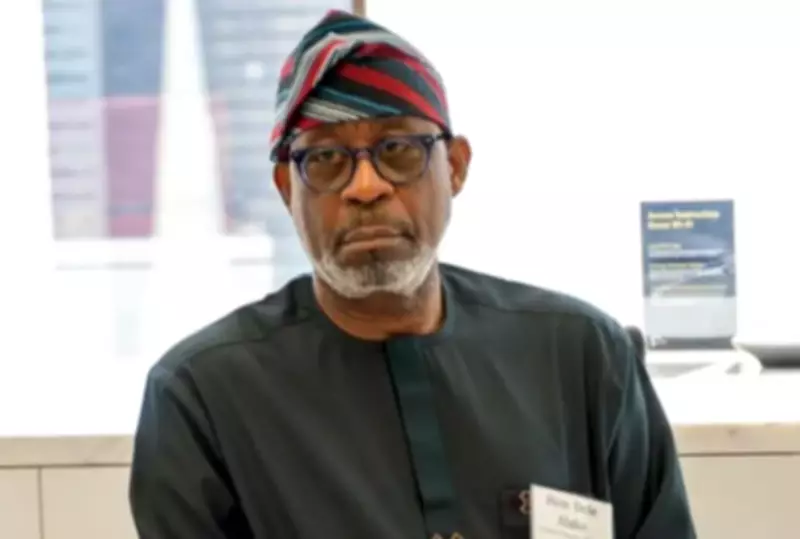
Dr Oladele Alake, Nigeria's Minister of Solid Minerals Development and Chairman of the Africa Minerals Strategy Group (AMSG), has called for enhanced regional cooperation among African nations to establish the continent as a dominant force in global mineral supply chains. Speaking at the Kenya Mining Investment Conference and Exhibition 2026, Alake emphasized that Africa must urgently redefine its role in the global mineral economy, asserting that such transformation can only be realized through coordinated regional efforts rather than isolated national strategies.
Africa at the Center of a New Industrial Era
Alake noted that Africa stands at the heart of a new industrial era driven by critical minerals, clean energy technologies, digital transformation, and advanced manufacturing. He highlighted that while the continent possesses vast deposits of lithium, cobalt, manganese, graphite, gold, copper, nickel, and rare earth elements, it continues to capture only a fraction of the true economic value generated from its resources.
“For decades, Africa has remained largely an exporter of raw materials and an importer of finished products,” Alake said. “This model has constrained industrial growth, weakened economic resilience, and limited job creation across our nations. A fragmented Africa weakens our bargaining power. A united Africa strengthens our strategic relevance.”
Urgent Need for Value Addition
The minister stressed that no African country, acting alone, can fully maximize the opportunities emerging from the rapidly evolving global minerals market. He urged African nations to harmonize mining policies, facilitate cross-border infrastructure, promote intra-African trade, and strengthen regional mineral value chains under the African Continental Free Trade Area (AfCFTA).
Alake also highlighted the rapid expansion of the Africa Minerals Strategy Group, which was established in January 2023 by sixteen founding member states and has now grown to thirty-one African countries. He described AMSG as the first truly continent-wide platform through which African countries are building a unified voice on mineral governance, value retention, and strategic positioning in global supply chains.
According to him, the Group is advancing cooperation among member states to negotiate fairer terms with global partners, harmonize regulatory frameworks, develop shared infrastructure such as mineral corridors and processing hubs, and strengthen geological data systems to attract investment.
In a statement by his Special Assistant on Media, Lara Owoeye-Wise, the minister reiterated the urgent need for value addition across Africa's mining sector, noting that the future lies with countries that process, refine, manufacture, and innovate rather than export raw materials.
“Value addition is not merely an economic aspiration; it is a development imperative,” Alake added. “It creates jobs for our youth, stimulates industrialisation, expands government revenues, and positions Africa competitively in the industries of the future. Through visionary leadership, strategic partnerships, and continental cooperation, Africa can transition from being merely resource-rich to becoming truly value-rich.”
Historic Opportunity for Africa
He further stated that the ongoing restructuring of global supply chains presents Africa with a historic opportunity, but warned that success would require stronger governance, policy consistency, transparency, environmental responsibility, and investment-friendly climates. Alake concluded that the conversation around minerals goes beyond mining and is fundamentally about Africa's industrial future, economic sovereignty, and sustainable prosperity.




