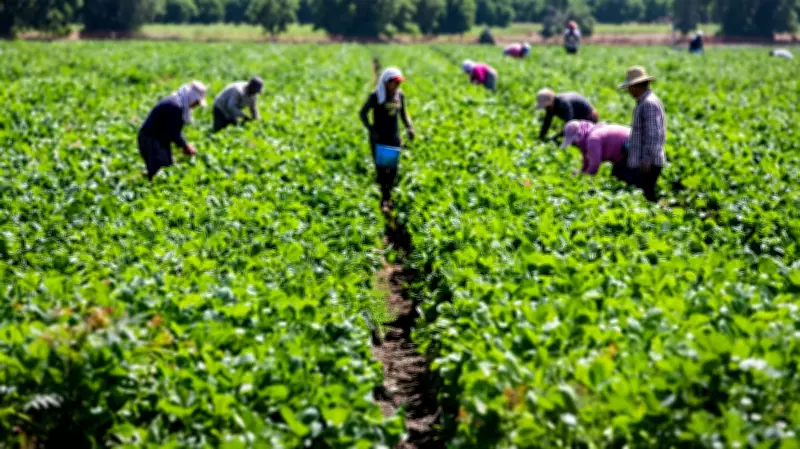
The Bank of Agriculture (BoA) has unveiled new initiatives aimed at addressing Nigeria's volatile agricultural market and protecting smallholder farmers from persistent price instability. Managing Director Ayo Sotinrin described the reforms as part of President Bola Tinubu's agricultural agenda, stating that the interventions would improve farmers' income, expand financial inclusion, and boost food security.
Key Interventions
Sotinrin, speaking during an interview on AIT, emphasised that the initiatives reflect the Federal Government's commitment to supporting farmers whose labour ensures Nigerians do not go hungry. He noted that the reforms align with the President's drive to strengthen food systems, scale production, and ensure farmers enjoy the rewards of their efforts.
The food stabilisation programme will be driven as a massive national campaign, with the country sensitised through all media platforms. Sotinrin announced a shift from direct microcredit to a digital ecosystem driven by farmer aggregation companies.
Partnership with Nigerian Air Force
The bank has partnered with the Nigerian Air Force (NAF) to expand mechanised farming and improve access to agricultural financing for serving and retired Air Force personnel engaged in farming activities. The collaboration, which will focus on concessional financing, farm inputs, and mechanisation support, followed a high-level meeting between Sotinrin and the leadership of the NAF Farms and Agro-Allied Services.
According to a statement by BoA's Team Lead, Corporate Communication Department, Ruth Didam, both organisations identified strategic areas of collaboration aimed at strengthening agricultural operations across NAF farms and enhancing productivity within the military's farming ecosystem.
The collaboration will support active-duty officers involved in farming, retired Air Force personnel transitioning into agriculture, women officers participating in farming initiatives, and spouses of personnel engaged in agricultural activities. Sotinrin said the initiative is expected to build a self-sustaining agricultural value chain within the Air Force community while contributing to national food security, economic empowerment, and income diversification for military families.
Both organisations are expected to formalise the collaboration through a Memorandum of Understanding (MoU), while technical working groups will be constituted to develop the financing framework, eligibility criteria, and disbursement protocols for the programme.