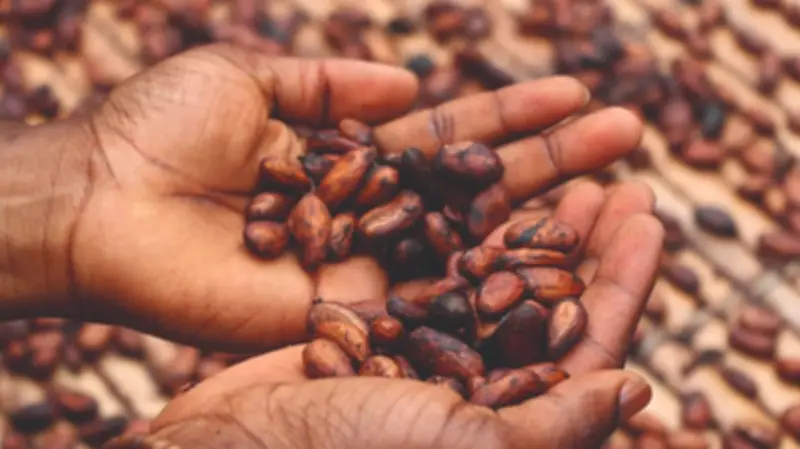
Following the 7th Steering Committee Meeting of the Côte d'Ivoire-Ghana Cocoa Initiative in Abidjan, the Cocoa and Coffee Farmers Alliance Association of Africa (COCEFAAA) has demanded a complete overhaul of the global cocoa economy. COCEFAAA Global President, Comrade Adeola Adegoke, commended the leadership of Ghanaian President John Dramani Mahama and Ivorian President Alassane Ouattara for asserting producer-country leadership rather than passively relying on external markets. However, the alliance warned that bilateral cooperation must expand into a broader continental architecture to protect smallholders across Africa from destabilizing price shocks.
Structural Inequities in the Global Supply Chain
The core of COCEFAAA's intervention targets the stark inequities in the global supply chain. While Africa accounts for roughly 80% of the global cocoa supply, it captures a mere 6% of the value of the chocolate market, currently valued at over $165 billion. The alliance stated that this imbalance “is not a market failure; rather, it reflects a structural issue where Africa provides a basic raw material while the added value, branding, and pricing control are held elsewhere”. COCEFAAA urged the steering committee to prioritize local processing capabilities, calling on other nations to mimic Côte d'Ivoire's success as the world's top grinder.
Demand for a Minimum Pricing Framework
To buffer farming families against the extreme price swings observed between 2025 and 2026, the alliance is pushing for bold structural mechanisms, most notably a standardized minimum pricing framework. Specifically, COCEFAAA called for “a price floor that is not less than $6000 per metric tonne, and that can guarantee a fairer farmer's income”. The group emphasizes that supply management and strategic reserves within Africa must dictate prices, rather than leaving the livelihood of smallholders to the whim of futures markets in London and New York.
Proposal for an African Cocoa Producers' Bloc
The group also advocated transforming the initiative into a formal “African Cocoa Producers' Bloc” encompassing other major producers like Nigeria and Cameroon. Ultimately, COCEFAAA stresses that the true measure of success will not be sophisticated communiqués, but “must be evaluated at the farm gate, prosperity, and the incomes of the cocoa farmers”. The group believes that true impact means ensuring that rural families can afford education, infrastructure is genuinely improved, and smallholder voices are fully integrated into global trade dialogues.