
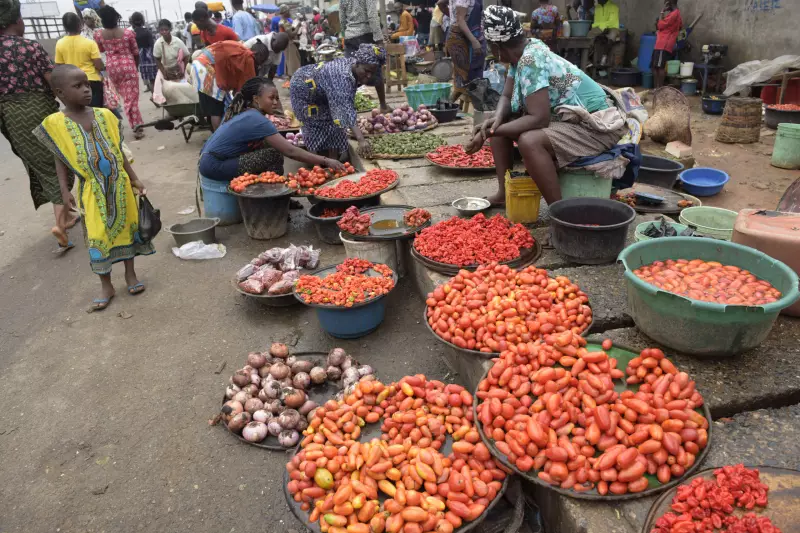
An economist has called on Nigerian governments to significantly ramp up support for the country's farmers as a critical step towards making food more available and affordable for citizens. Dr. Muda Yusuf, founder of the Centre for the Promotion of Private Enterprise (CPPE), made the call in a recent discussion, highlighting that while some progress is visible, current interventions remain insufficient.
Structural Issues Keep Cost of Living High
Dr. Yusuf, speaking on December 19, 2025, acknowledged that the cost of living for Nigerians is still painfully high, despite economic reforms initiated by the administration that began in 2023. He stressed that while the intense pricing pressure of the early reform months has begun to ease, prices have not returned to their pre-reform levels.
"I admit that the prices are still high," Yusuf stated. "It's not as if those prices have come to levels that they were before the reform." He pointed out that the situation between 2023 and now is gradually improving, but government at all levels needs to do much more to address the fundamental, structural drivers of the cost-of-living crisis.
Key Drivers of Persistent Inflation
The analyst identified several deep-rooted challenges that continue to exert pressure on prices. He cited insecurity and its devastating impact on agricultural production as a primary concern. Furthermore, he highlighted crippling logistics problems that disrupt the distribution of food and goods across the nation.
Yusuf also pointed to high import costs as a major factor. He suggested that the government may need to review import duties, particularly on manufacturing inputs, to bolster local production and reduce dependency on expensive foreign goods.
Signs of Relief and the Path Forward
Despite the persistent challenges, Dr. Yusuf noted clear signs of economic relief. He described the current trend as "disinflation," with the rate of price increases decelerating. For some commodities, he observed outright price drops, classifying this as "deflation."
He gave a concrete example: the price of a bag of rice, which soared to over N100,000 around the same time last year, has now fallen to between N60,000 and N80,000, depending on brand and quality. He attributed part of this moderation to a more stable exchange rate, which has reduced the cost of imported goods.
To build on this fragile progress, Yusuf emphasised that sub-national governments must play a far more active role. With states now receiving higher allocations from the federation account, he expects them to introduce more measures, such as subsidised transportation, to cushion the ongoing hardship faced by citizens.
He concluded that addressing these entrenched, legacy issues cannot be achieved in just two years, but "a lot more needs to be done" through targeted, specific policy interventions, especially in supporting farmers with essential inputs like fertilisers, improved seedlings, machinery, and irrigation schemes.




