Experts have underscored the need for ethical recruitment for domestic workers, stating that it should not be an exception but must become the norm. Highlighting the challenges of recruitment practices and the agency challenges faced in Nigeria, they alleged that some agencies charge up to 50 per cent of a worker's first month's salary. In contrast, others demand yearly cuts, exacerbating the financial strain on already vulnerable workers. These, they said, are not merely inefficiency but an institutional complicity.
15 Years of ILO Convention No. 189
Commemorating 15 years of the International Labour Organisation (ILO) Convention No. 189, highlighting progress toward decent work for domestic workers, reforms have strengthened rights and social protection for millions of domestic workers across the globe. However, in Nigeria, experts argued that domestic work is a paradox: essential yet undervalued, and widespread yet invisible. Even though Nigeria adopted the ILO Convention 189 in 2011 to uphold the dignity of its approximately four million domestic workers, it has yet to ratify or implement it.
Urgent Need for Legal Framework
The experts argued that 14 years of inaction, combined with widespread abuse and poor working conditions, underscore the urgent need for a robust legal framework. With over four million domestic workers nationwide, they said the sector is sustained by informal arrangements, verbal contracts, and trust-based referrals, stating that the culturally embedded practices, while familiar, leave workers, particularly girls, exposed to exploitation, fraud and abuse.
Ethics and Governance Researcher's View
An ethics and governance researcher, Lekan Olayiwola, said what appeared to be a labour issue is a national moral crisis. He said Nigeria is normalising the extinction of its daughters through care work, burying their futures in elite homes, behind closed doors. According to him, this is not merely a question of employment but a test of national character and institutional courage. He said the Domestic Workers Bill, which recently passed its second reading in the National Assembly, offered a path forward. He said that if enacted, it will mandate formal contracts, guarantee a minimum wage, regulate working hours, provide access to health insurance and social protections, including provisions for collective bargaining, and align Nigeria with international labour standards, particularly ILO Convention 189.
However, Olayiwola said legislation alone cannot heal a nation that has forgotten its daughters. He said Nigeria must not only ratify Convention 189—it must domesticate it with urgency, enforce it with integrity, and fund it with resolve, saying that “The law must not be a monument, but a movement.” Olayiwola also stated that reforming Nigeria's domestic work economy required more than policy, saying it demands moral clarity. He said it demands a new social contract that recognises domestic workers not as servants, but as citizens, one that sees the girl child not as labour, but as a legacy. He urged that Nigeria must follow suit, not just with awareness, but with accountability, like countries such as Uruguay and the Philippines, which have shown that legal literacy campaigns, paired with enforcement, could transform domestic work from a shadow economy into a pillar of inclusive growth. According to him, the Philippines' Barangay-level grievance system and Uruguay's mobile legal clinics demonstrate that justice must be reachable, not rhetorical.
Call for Unionisation
Founder/Executive Director of CEE-HOPE, Betty Abah, called for the unionisation of domestic workers. She stressed that when workers come together, they can negotiate better terms, resist exploitation, and build solidarity. According to her, without a union, domestic workers remain isolated and voiceless, but with one, they gain structure, voice, and protection. “We have seen domestic worker unions in other countries push meaningful improvements in wages, working hours, and respect. Nigeria must embrace this path immediately. With a smooth passage of the new bill into law and domestication of Convention 189, everyone, including providers and employers of domestic labour, stands to gain immensely,” she said.
Impact of Convention 189
Over the past 15 years, the Domestic Workers Convention, 2011 (No. 189), has helped drive reforms benefiting millions of domestic workers by improving labour protections, expanding access to social security, and recognising their contributions to economies and societies.
Why Does the ILO Domestic Workers Convention Matter?
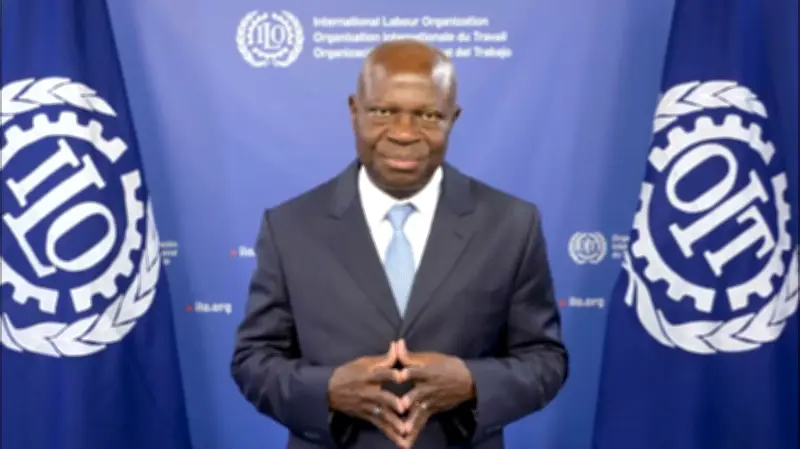
Director-General of the ILO, Gilbert Houngbo, recalled that every morning, millions of women and many men wake early to cook, clean, and care for other people's families and homes. He said that for generations, the work was invisible until Convention 189 made it visible. According to him, domestic workers have sustained households and economies while being denied basic labour rights until the Domestic Workers Convention C189. While the demand for care is growing, and with it, he said, there is a need for domestic work. Houngbo urged that all domestic workers be protected, in law and practice. “On this 15th anniversary, it is time to recommit: to ratify and implement C189, for decent work for domestic workers, and sustainable, quality care for all,” he said.