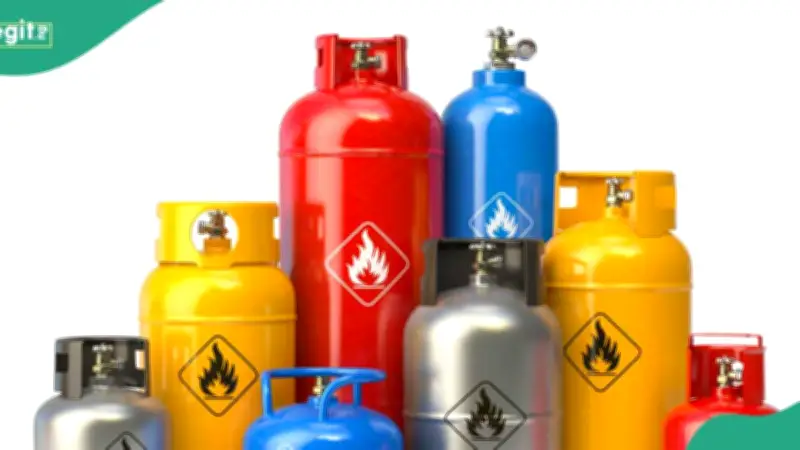
The landing cost of imported petroleum products in Nigeria, including Premium Motor Spirit (PMS), popularly known as petrol, and liquefied petroleum gas (LPG), also called cooking gas, has dropped significantly, offering fresh hope for lower energy prices across the country.
Landing Costs Drop Below Dangote Refinery Prices
New data released by the Major Energy Marketers Association of Nigeria (MEMAN) showed that the cost of bringing fuel products into Nigeria has now fallen below the ex-depot prices offered by the Dangote Refinery. The development comes as petroleum marketers reportedly imported fuel cargoes valued at about N279 billion to boost supply and take advantage of declining international market prices, according to a report by Punch.
According to MEMAN’s daily energy bulletin released on June 10, 2026, the landing cost of petrol dropped to N1,190 per litre, compared to the N1,250 ex-depot price reportedly sold by the 700,000 barrels-per-day Dangote Refinery. This represents a price difference of N60 per litre. The report also showed that imported diesel landed at N1,178 per litre, far below Dangote Refinery’s reported N1,700 price benchmark.
Cooking Gas Prices Record a Major Decline
Cooking gas prices also witnessed a sharp decline in landing costs, raising expectations that consumers may soon enjoy relief from soaring household energy expenses. MEMAN disclosed that the landing cost of LPG fell to N950,000 per metric tonne. Based on the latest figures, the expected retail price of cooking gas should hover around N925 per kilogramme. This contrasts sharply with the N1,410 per kilogramme reportedly sold by Dangote Refinery.
Despite the reduction in import costs, many Nigerians have yet to feel the impact at the retail level, as cooking gas prices remain stubbornly high across major cities. Retailers currently sell cooking gas for as high as N2,400 per kilogramme, while larger distributors maintain average prices around N1,800 per kilogramme.
Nigerians Are Yet to Feel the Relief
Although import costs have declined considerably, petrol pump prices across Nigeria remain elevated. Checks at filling stations show that petrol still sells for about N1,360 per litre at several major outlets, including stations operated by the Nigerian National Petroleum Company (NNPC) and independent marketers. The continued disparity between landing costs and retail prices has sparked concerns among consumers already battling rising living costs and inflationary pressure.
Earlier reports by Legit.ng had indicated that the landing cost of petrol had fallen further to around N1,150 per litre, intensifying expectations for a reduction in pump prices nationwide.
Rising Pressure on Households
The sustained increase in cooking gas prices has placed additional strain on millions of Nigerian households, forcing many families to abandon cleaner energy sources and return to traditional alternatives such as charcoal and firewood. Energy experts have warned that the situation could worsen environmental and health challenges if urgent interventions are not introduced. Analysts are now calling on the Federal Government to introduce temporary support measures and pricing cushions for cooking gas to reduce the burden on consumers and encourage wider adoption of cleaner cooking energy.
Marketers Release New Fuel Prices
Legit.ng earlier reported that owners of depots across Nigeria made various, mostly downward, price adjustments for petrol and diesel loading in the week of June 1 to June 5, 2026, while competition in the downstream sector of Nigeria intensified. From the weekly review of prices by depot owners, a decline was observed in Lagos, Warri, and Port Harcourt, while PMS (petrol) and AGO (diesel) prices remained stable or moved marginally. At the Lagos depot, the PMS price was slightly adjusted downward for several depot owners.