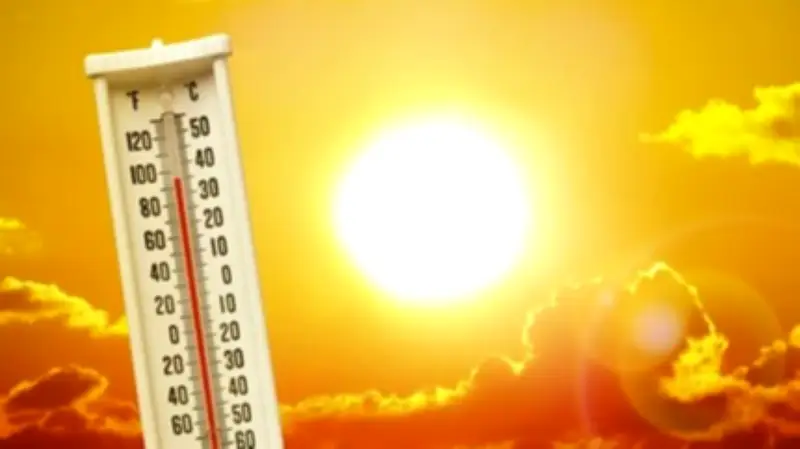
Consistent evidence has confirmed that the entire climate system continues to heat up, driving rapid temperature increases. Human activities have pushed global warming to 1.37°C in 2025, and it is projected to surpass 1.5°C in the next four years. The rate of heat accumulation in the Earth system indicates high levels of future warming, according to key findings from the Global Climate Change (IGCC) 2026 report published in Earth System Science Data.
Record Emissions and Warming
This year's update reveals that global greenhouse gas (GHG) emissions have reached an all-time high of 56.8 billion tonnes (gigatonnes or Gt) of carbon dioxide equivalent emissions (CO2e) in 2024, primarily from burning fossil fuels. Other findings show that 2025 was the third warmest year on record, consistent with the level of human-caused warming experienced. Natural variability in the climate system had a limited effect on global mean temperatures last year.
Decarbonisation Urgency
Although GHG emissions are not increasing as rapidly as in the 2000s, this year's findings continue to demonstrate how far and how fast the climate is changing due to human activity. The report highlights the need for society to massively increase decarbonisation efforts during this critical decade. Preserving and maintaining global datasets that provide up-to-date, accurate, comprehensive information for evidence-based decision-making will be critical to detecting these changes in the future.
The study established that rapid warming over the last few decades has resulted in record extreme temperatures over land. Land average maximum temperatures for any single day in a year reached 1.92°C over the last decade (2016-2025), an increase of 0.49°C compared to 2006-2015.
Expert Comments
Strategic Lead for Climate in the Copernicus Climate Change Service (C3S) at ECMWF, Dr. Samantha Burgess, said: "Our study demonstrates that nearly all of the warming over the last decade is driven by human activities. The impacts on livelihoods and ecosystems are already being felt worldwide, and will accelerate as temperatures continue to increase."
Senior Research Scholar at the International Institute for Applied Systems Analysis, Dr. Chris Smith, said: "This year's edition of IGCC has involved over 40 global datasets, many of which are now threatened by funding decisions. We need concerted international action and coordination to ensure the continuity of observations of the climate. Without this, future assessments will be much more difficult at a time when urgent climate action is needed."