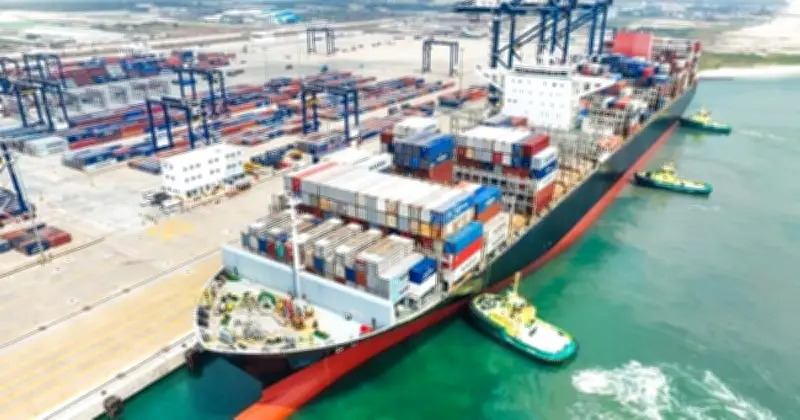
The Lagos State Government has announced plans to commence the second phase of the Lekki Deep Sea Port project as growing cargo traffic pushes the facility closer to its installed capacity. Governor Babajide Sanwo-Olu disclosed this during the Invest Lagos Summit 3.0, stating that preparations for the expansion are underway. The port, which began operations in 2023, has rapidly become one of Nigeria's most important maritime gateways.
Governor Highlights Rising Demand
Governor Sanwo-Olu emphasized that the decision to proceed with Phase Two was driven by increasing demand at the port and the need to strengthen Lagos' position as a leading trade and logistics hub in Africa. He noted that the port has experienced significant growth within a short period, prompting authorities and investors to plan for additional capacity. The next phase will help accommodate future cargo volumes and support the state's broader economic ambitions.
Strategic Importance Under AfCFTA
The governor also highlighted the port's strategic importance in positioning Lagos and Nigeria to benefit from the African Continental Free Trade Area (AfCFTA), which aims to boost trade among African countries. With access to a continental market of over 1.4 billion people, expanding the port is expected to attract more investment, increase trade activities, and strengthen Nigeria's competitiveness in regional commerce.
Details of the Expansion
Managing Director of Lekki Port, Wang Qiang, confirmed plans for the expansion, stating that the next phase will focus on increasing operational capacity and improving logistics efficiency. The project is expected to enhance cargo-handling capabilities and make the Lekki corridor more attractive to international shipping lines and logistics operators. The expansion will also support businesses that rely on efficient import and export operations while reducing congestion at other Nigerian ports.
Impact on Trade and Economy
The Lekki Deep Sea Port was developed to ease pressure on older ports such as Apapa and Tin Can Island, improving Nigeria's capacity to handle larger cargo volumes and modern container vessels. As work on Phase Two approaches, attention will be on how quickly the project can be delivered and its impact on trade, investment, and economic activities in Lagos and beyond. The announcement marks another milestone in the development of the Lekki corridor, which has become a major destination for industrial, manufacturing, energy, and logistics investments in recent years.