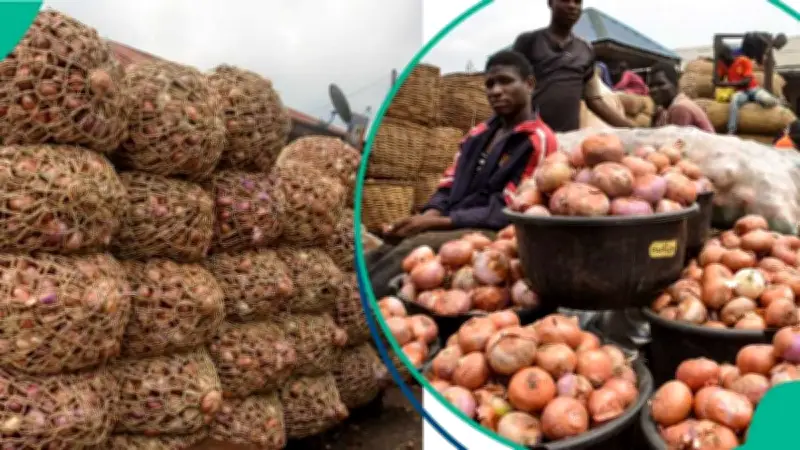
Onion prices in Lagos have surged 233%, with a paint bucket now selling for ₦10,000, up from ₦3,000 in May, as supply shortages and transportation costs drive prices higher. The ₦7,000 increase over four months highlights the growing cost of an ingredient widely used in Nigerian kitchens.
Supply Chain Squeeze Hits Lagos Markets
Traders say a bag of onions now costs between ₦150,000 and ₦250,000, depending on size and variety, compared with ₦50,000 to ₦70,000 in May. The increases are putting pressure on household food budgets and businesses that depend on onions for daily meal preparation.
The National Onion Producers, Processors and Marketers Association of Nigeria (NOPPMAN) attributed the supply squeeze to flooding across major producing states. The association identified Sokoto, Kebbi, Zamfara, Kano, Kaduna, Katsina and Adamawa among the affected states, linking farm damage with reduced availability and higher prices. It also cited rising seed costs as another challenge confronting producers.
Transport Costs Reach ₦30,000 Per Bag
Ibrahim Idris, an onion wholesaler at Oyingbo Market, said moving produce from northern Nigeria had become a major contributor to the price surge. According to him, transportation alone now costs about ₦30,000 per bag, excluding additional charges involved in delivering the onions to Lagos. He said supplies from Sokoto and other northern producing areas had declined during the current planting season, while flooding had further reduced the quantity reaching markets.
“We sold a paint bucket of onions at N3,000 in May, but now the same quantity sells for N10,000,” Idris said. Traders also identified higher fuel costs and seasonal changes in production as factors behind the increases. They said supplies are generally more plentiful during the dry season.
Smaller Bags and Spoilage Add to Pressure
The price pressure extends beyond large wholesale bags. According to traders, a small bag that sold for between ₦17,000 and ₦20,000 in March now costs between ₦60,000 and ₦70,000. For restaurants, food vendors and other small businesses, the increases raise the cost of preparing meals. Households buying smaller quantities also face a larger bill for the same ingredient. However, bag sizes and onion varieties differ, meaning the percentage increase is not uniform across every purchase.
Storage remains another challenge because onions can deteriorate before they are sold. Traders commonly remove them from purchase bags and keep them in ventilated spaces. Some spread the onions in sunlight or use uncovered baskets to reduce spoilage. One Oyingbo trader said he continued selling older stocks because newly harvested onions were more susceptible to deterioration.
Together, reduced supplies, flood damage, higher production and transport expenses, and storage difficulties are keeping Lagos onion prices under pressure.
Broader Food Price Context
Legit.ng earlier reported that Nigeria’s inflation rate slowed again in August 2026, but millions of households are still paying more for food, highlighting the gap between improving economic data and the reality at markets across the country. The National Bureau of Statistics (NBS) reported that headline inflation eased marginally to 15.39% in August from 15.43% in July, a decline of just 0.04 percentage points.