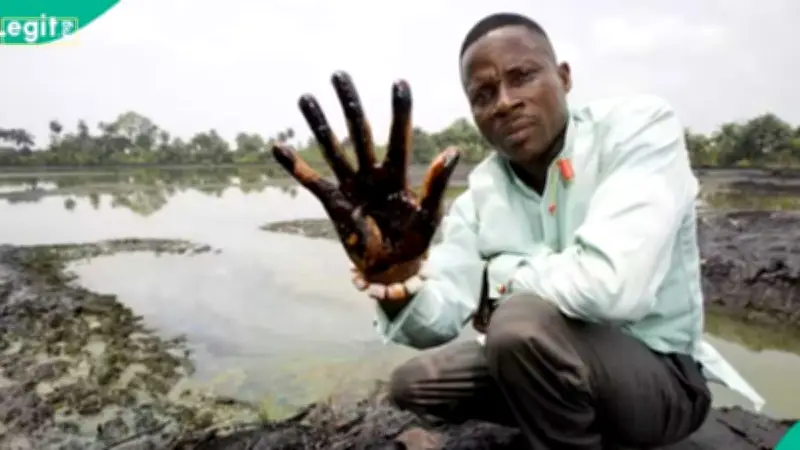
Oil industry experts and environmental stakeholders are reviewing a newly unveiled nanotechnology that its developer says could dramatically change how oil spills and environmental pollution are addressed in Nigeria and globally.
Nanotechnology Presentation at World Ocean Day
The technology was presented during the World Ocean Day event in Port Harcourt by Suka Monta, an Ogoni-born energy and environmental expert operating under a franchise whose name has not yet been disclosed.
Monta said the organic-based system is capable of breaking down hydrocarbons and petrochemicals into water in a fraction of the time required by conventional remediation methods, describing it as potentially "the best in the world" for environmental cleanup.
He claimed the technology can operate across surface, soil, and groundwater simultaneously, significantly reducing the long timelines traditionally associated with restoring oil-polluted environments in the Niger Delta.
Claims of Rapid Cleanup
Monta told journalists that: "What can take 30 years for the conventional approach, as stated by the UN report for Ogoni cleanup, and still re-pollute and re-contaminate the environment, will take us a matter of months, or a few years. For massive sites, what takes 30 years can take two years to clean up and restore the environment to its original state."
He added that smaller spills could reportedly be neutralised within hours.
According to Monta, the technology avoids the multi-phase approach common in traditional remediation, which often involves excavation, treatment, and backfilling, and can disrupt ecosystems and local communities.
He argued that conventional chemical dispersants and heavy excavation methods can cause additional ecological damage, warning that effective cleanup must preserve soil organisms such as earthworms. He said: "If earthworms die in the course of remedying the environment, then you have not cleaned the environment; you have displaced another ecosystem."
Organic-Based Process
Monta said the new process is organic-based, requires minimal excavation, and is designed to be less disruptive to farmlands and surrounding communities. He also described it as more cost-effective compared to large-scale remediation projects such as those under the Hydrocarbon Pollution Remediation Project (HYPREP) in Ogoniland.
He further disclosed that demonstrations of the technology had been conducted for officials of the Federal Ministry of Environment, HYPREP, and a major international oil company operating in Nigeria, adding that results had been independently verified. Monta said: "They said that they wanted to see the magic, and they saw the magic."
He noted that the oil company re-tested the outcomes using its own equipment and described the results as "amazing."
He added that the company behind the technology is prepared for immediate deployment in Nigeria and is already applying the same system in the Amazon basin, which he said shares similar ecological conditions with the Niger Delta.
Stakeholder Calls for Policy Action
Beyond the technological claims, stakeholders at the event also called for stronger policy focus on Nigeria's coastal and marine resources, urging the Rivers State Government to establish a dedicated Ministry of Blue Economy to coordinate development in the sector.
Participants further advocated for a comprehensive environmental audit of Rivers State, leveraging expertise from the Ogoni cleanup programme, and urged collaboration between government, oil firms, and international partners.
Environmental advocate Fyneface Dumnamene Fyneface of the Youth and Environment Centre (YEAC) Nigeria called for a wider Niger Delta cleanup initiative and criticised ongoing environmental degradation linked to illegal refining and pipeline vandalism.
While experts at the event welcomed renewed attention to innovative cleanup solutions, they noted that the technology's effectiveness would need to be independently validated at scale before wider adoption.
Monta, however, expressed confidence in its readiness for deployment, saying: "We are ready right now."