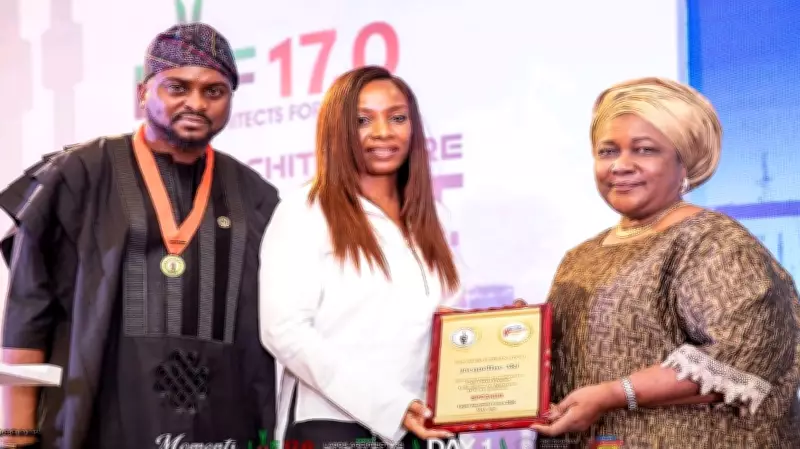
Practitioners under the aegis of the Nigerian Institute of Architects (NIA) have challenged architects to deliberately expand their roles beyond conventional practice into creative industries, digital environments and experiential design. President of the institute, Sani Saulawa, made the call during the yearly Lagos Architects’ Forum (LAF 17.0), themed “Lagos Architecture: The Movie,” organised by the Lagos State chapter of the institute.
The forum featured a students’ design competition, exhibitions of architectural works by firms, cinematic architecture displays, master classes by industry experts and other activities focused on innovation and professional development. Saulawa described the theme as imaginative and instructive, stressing that architecture should not merely be viewed as the creation of buildings but as the crafting of experiences, narratives and identities. According to him, architecture is not static but performative, lived, perceived and remembered. He urged practitioners to broaden the boundaries of the profession while remaining committed to its enduring responsibilities.
“Lagos continues to face significant challenges, including climate vulnerability, rapid urbanisation, infrastructure deficits and social inequality. Our role on this stage must therefore go beyond aesthetics or spectacle,” he said. “We must design for resilience, inclusivity and long-term sustainability. We must tell stories not only of beauty, but also of equity, functionality and environmental stewardship. Architects must be seen not as optional contributors but as critical voices in shaping national development. Let us create space for younger architects to explore new frontiers, whether in technology, sustainability or even the creative arts.”
Architects as Directors of Urban Experience
Chairman of the Nigerian Institute of Architects, Lagos State Chapter, Abiodun Fatuyi, said architects in Lagos are not just designers of spaces but directors, cinematographers and screenwriters of the urban experience. “As we explore the cinematic beauty of our built environment, we must also address the technical direction of our work. A great film is only successful if the production is sound. For us, that means prioritising safety by design,” Fatuyi said. “Our role as lead consultants and professionals is to ensure that the Lagos story is not just visually stunning, but structurally impeccable. We must deliberate on how to prevent the tragedies that occur when safety protocols are sidelined, ensuring that every project results in a safe and sustainable legacy for the people of Lagos.” He added that architects, as directors of urban experiences, must ensure infrastructure development provides a suitable foundation for future generations.
Entertainment Industry Calls for Collaboration
In his keynote address, filmmaker and actor, Kunle Afolayan, highlighted the relationship between architecture and the entertainment industry, stating that the movie industry cannot scale without architecture. He explained that architecture plays a critical role in the design of performance spaces, exhibition centres, experience hubs and production facilities. Afolayan, founder of KAP Hub, urged young architects to carve out niches for themselves, strive for excellence and embrace innovation. He said film represents the story while architecture provides the stage, advocating stronger collaboration between filmmakers and architects to improve society.
Also speaking, Lagos State Deputy Governor, Obafemi Hamzat, commended the NIA Lagos chapter for demonstrating leadership and excellence through its contributions to nation-building activities. Represented by architect Bolanle Olukare, Hamzat praised the institute’s role in environmental advocacy, youth empowerment, reforms and sustainable development initiatives that continue to positively impact residents of the state. He urged architects to remain responsive to technological changes to drive institutional transformation and provide solutions to societal challenges.
Advocacy for Cultural Identity and Safety
Earlier, Vice Chairman, NIA Lagos State Chapter, Moniba Odunlami, described Lagos as “a film still being written,” noting that architects are contributors, directors of experiences and negotiators between vision and reality. “Our advocacy remains clear and unwavering: every building needs an architect. Beyond aesthetics, we shape safety, functionality, identity and the lived experience,” she said. The royal father of the day, Gbolahan Oki, represented by Adele Adewale, urged architects to preserve the cultural identity and well-being of residents while promoting environmental sustainability. He advised professionals to focus on impactful and creative designs that can improve Lagos’ urban landscape. Oki also noted that the architectural profession has evolved significantly in Lagos and commended the NIA Lagos chapter for its commitment to creativity and the advancement of architecture in both Lagos and Nigeria.