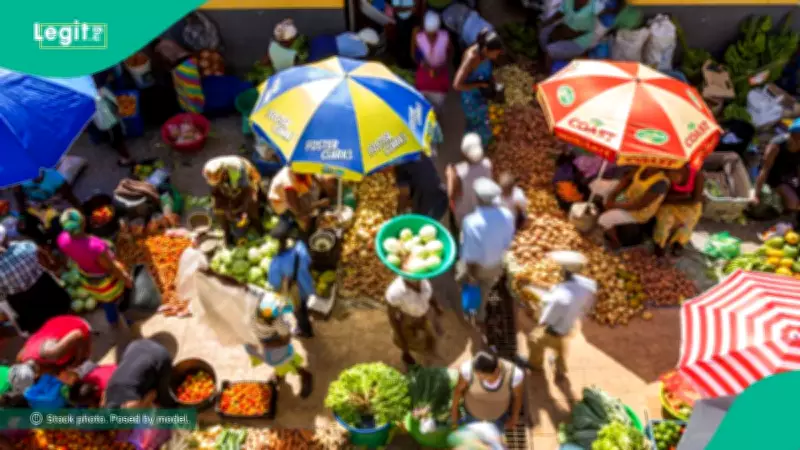
Nigeria's agricultural sector is showing early signs of recovery, with the Federal Government reporting a significant drop in the prices of staple foods such as rice and yams. The Minister of Agriculture and Food Security, Abubakar Kyari, disclosed that prices of key food items have fallen by as much as 53 per cent, offering some relief to households grappling with high living costs.
Kyari also noted that food inflation dropped to 8.98 per cent year-on-year in January, marking the first single-digit decline in over a decade. The development, he said, reflects early gains from ongoing reforms aimed at stabilising food supply and improving agricultural productivity.
Agriculture's Role in Economic Stability
Speaking at the Vanguard Economic Discourse in Lagos, the minister stressed the critical role agriculture plays in Nigeria's economy. The sector contributes between 23 and 24 per cent to the country's Gross Domestic Product and employs up to 70 per cent of the labour force. He emphasised that food security goes beyond nutrition, linking it directly to national stability and economic resilience. According to him, the government's declaration of a state of emergency on food security was a strategic move designed to address systemic challenges and boost output.
Persistent Challenges Threaten Gains
Despite the positive outlook, Kyari cautioned that the recovery remains fragile. Structural issues such as high input costs, climate-related disruptions, poor infrastructure and limited access to financing continue to weigh heavily on the sector. Fertiliser, identified as the largest cost driver in crop production, remains unaffordable for many farmers. Without intervention, yields could drop sharply, undermining recent progress. In addition, mechanisation levels remain low, with the majority of farmers relying on manual labour and only a small fraction using modern equipment. Access to finance also remains a major hurdle. The sector receives less than four per cent of total financing despite its significant contribution to GDP, highlighting a gap that continues to limit growth and innovation.
Government Interventions and Policy Direction
To address these challenges, the government has rolled out several initiatives, including expanded fertiliser support, digital farmer verification systems and a large-scale mechanisation programme designed to improve access to equipment through service providers. Kyari said the administration is shifting focus from subsistence farming to large-scale production, with an emphasis on value addition and agro-industrialisation. Climate-smart practices such as solar-powered irrigation and all-season farming are also being promoted to ensure sustainability. He added that partnerships with development organisations like the International Fund for Agricultural Development are helping to strengthen implementation and scale impact across the sector.
Livestock Sector Faces Its Own Hurdles
In a related address, the Minister of Livestock Development, Idi Mukhtar Maiha, highlighted feed shortages as the biggest constraint in livestock production. Represented by his adviser, he noted that feed accounts for about 70 per cent of production costs, making it a critical area for intervention. According to a report by The Nation, the ministry is currently implementing a national strategy that includes the establishment of fodder hubs, with a pilot project already underway in Kwara State. Plans are in place to expand the initiative nationwide to ensure year-round feed availability. Maiha also raised concerns over post-harvest losses, estimated at 30 to 40 per cent, and called for increased investment, improved financing models and stronger private sector participation.
Path to Sustainable Growth
While recent price declines offer hope, stakeholders agree that sustained progress will depend on addressing long-standing structural issues. With continued reforms, increased investment and stronger collaboration, Nigeria's agricultural sector could be on a path to long-term stability and growth.
Local rice farmers have cried out as importers crash the price. Legit.ng earlier reported that local rice farmers are sounding the alarm as a flood of imported rice continues to devastate Nigeria's domestic production, sending prices tumbling by as much as N13,000 per 50kg bag. In separate interviews with the News Agency of Nigeria (NAN) in Lagos, on Sunday, April 19, 2026, farmers described a sector pushed to the edge by the Federal Government's 2024 import duty waiver on rice and other essentials. What was meant to ease food costs has instead triggered a surge in shipments that local producers say they cannot survive.